
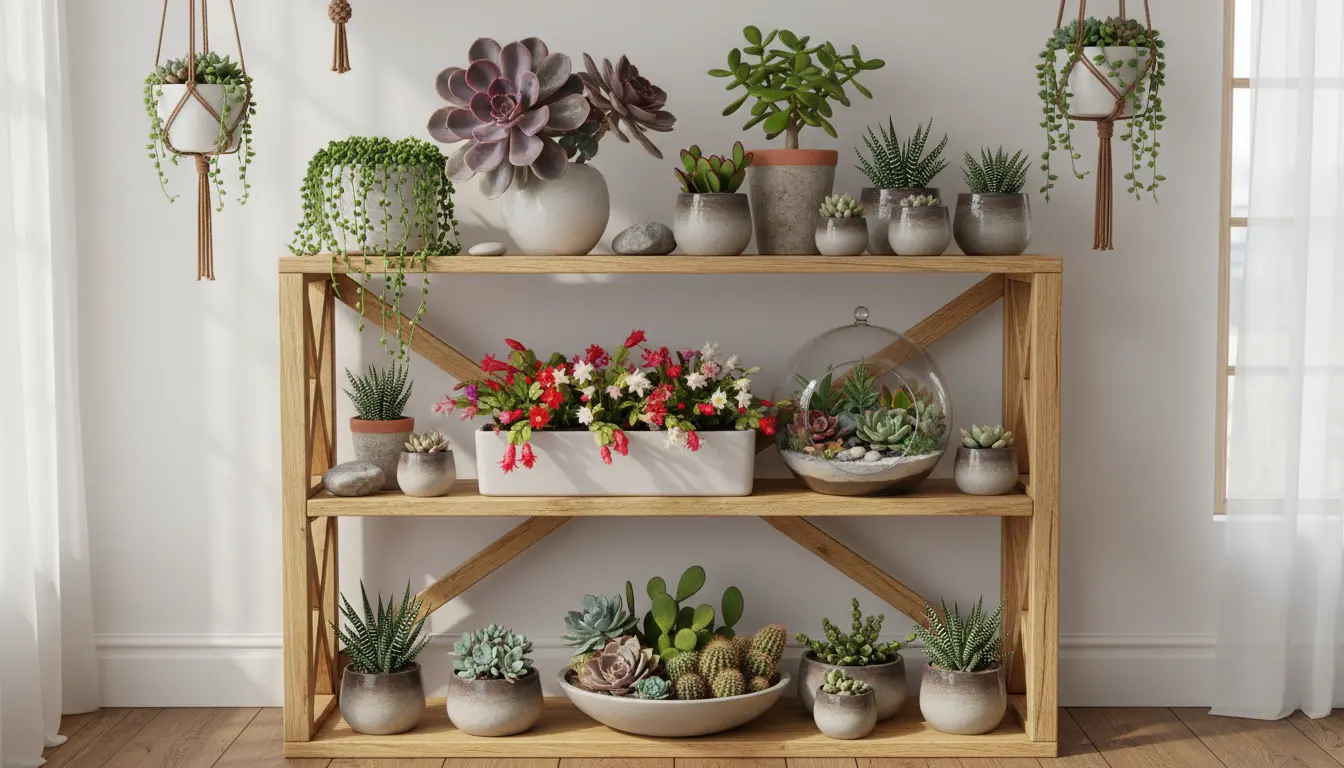
Why indoor succulents are a good choice
Indoor succulents are low-maintenance plants that store water in their leaves and stems. They suit busy homes and small spaces, and many varieties thrive with minimal attention.
Despite their reputation for being nearly indestructible, indoor succulents need consistent care to stay healthy and attractive. Follow simple rules for light, water, soil, and routine checks.
Indoor Succulents: Light and Placement

Light is the most important factor for indoor succulents. Most species prefer bright, indirect light for at least six hours a day.
Place succulents near a south- or east-facing window when possible. Rotate pots weekly so each side of the plant gets light and grows evenly.
Tips for low-light rooms
If natural light is limited, use a full-spectrum LED grow light for 8–10 hours daily. Position the light 12–18 inches above the plants and use a timer to maintain a consistent schedule.
Watering Indoor Succulents

Watering is where many beginners make mistakes. Succulents need deep, infrequent watering rather than light, daily misting.
Use the soak-and-dry method: water thoroughly until it drains out the pot’s holes, then wait until the soil is completely dry before watering again.
- Summer: water every 1–2 weeks, depending on temperature and humidity.
- Winter: reduce watering to once a month or less for many species.
- Signs of overwatering: yellow, mushy leaves and blackened stems.
- Signs of underwatering: wrinkled, shriveled leaves.
Soil and Pots for Indoor Succulents
Good soil and drainage are critical for indoor succulents. Use a fast-draining potting mix made for succulents or amend regular potting soil with perlite or coarse sand.

Choose pots with drainage holes to prevent water from pooling at the roots. Unglazed terracotta pots help soil dry faster than plastic pots.
Repotting schedule
Repot succulents every 12–24 months to refresh soil and check roots. If roots circle the pot or soil compacts, move to a slightly larger container.
Pests and Maintenance for Indoor Succulents
Routine checks keep small problems from growing. Inspect leaves and stems weekly for pests or disease.
Common pests include mealybugs and spider mites. Treat early with a cotton swab dipped in isopropyl alcohol, insecticidal soap, or neem oil.
- Remove dead leaves from the pot surface to prevent rot.
- Wipe dust off leaves with a soft brush or cloth to improve light absorption.
- Fertilize lightly in spring and summer with a balanced, diluted fertilizer formulated for succulents.
Common Problems and Quick Fixes
Yellowing or soft leaves usually indicate overwatering; reduce watering and improve airflow. Brown leaf tips can be sunburn or underwatering—adjust placement and check soil.
Leggy growth occurs when succulents stretch for light. Move the plant to a brighter spot and consider propagation from healthy cuttings.
Propagation Basics for Indoor Succulents
Propagation is an easy way to expand your collection or refresh a leggy plant. Most succulents propagate from leaves or stem cuttings.
Allow cuttings to callus for a few days before placing them on dry soil; then mist lightly until roots form. Avoid overwatering during propagation.
Case Study: Office Succulents in a Low-Light Workspace
A small accounting firm placed three mixed succulents on desks in a north-facing office. Initially, the plants showed slow growth and slight stretching after two months.
After installing a single overhead full-spectrum LED on a timer (9 hours/day) and switching to a gritty succulent mix, the plants regained compact shape. Watering was reduced to every 10–14 days. After six months, leaf color improved and no pests appeared.
Key takeaways: consistent light, proper soil, and reduced watering created a stable indoor environment for succulents to thrive.
Daily and Weekly Care Checklist
- Daily: check light exposure and rotate plants once a week.
- Weekly: inspect for pests and wipe dust if needed.
- Every 1–2 weeks: water deeply only if soil is fully dry.
- Seasonal: repot or add fresh soil every 12–24 months.
Final tips for healthy indoor succulents
Match species to your environment—research whether a plant prefers high or low light before buying. Start simple with hardy varieties like Haworthia, Sedum, or Gasteria.
Keep care consistent and observe your plants regularly. Small adjustments in light, water, or soil often solve most problems quickly.
With predictable light, correct watering, and good drainage, indoor succulents reward you with long-lasting, low-effort greenery that brightens any room.