
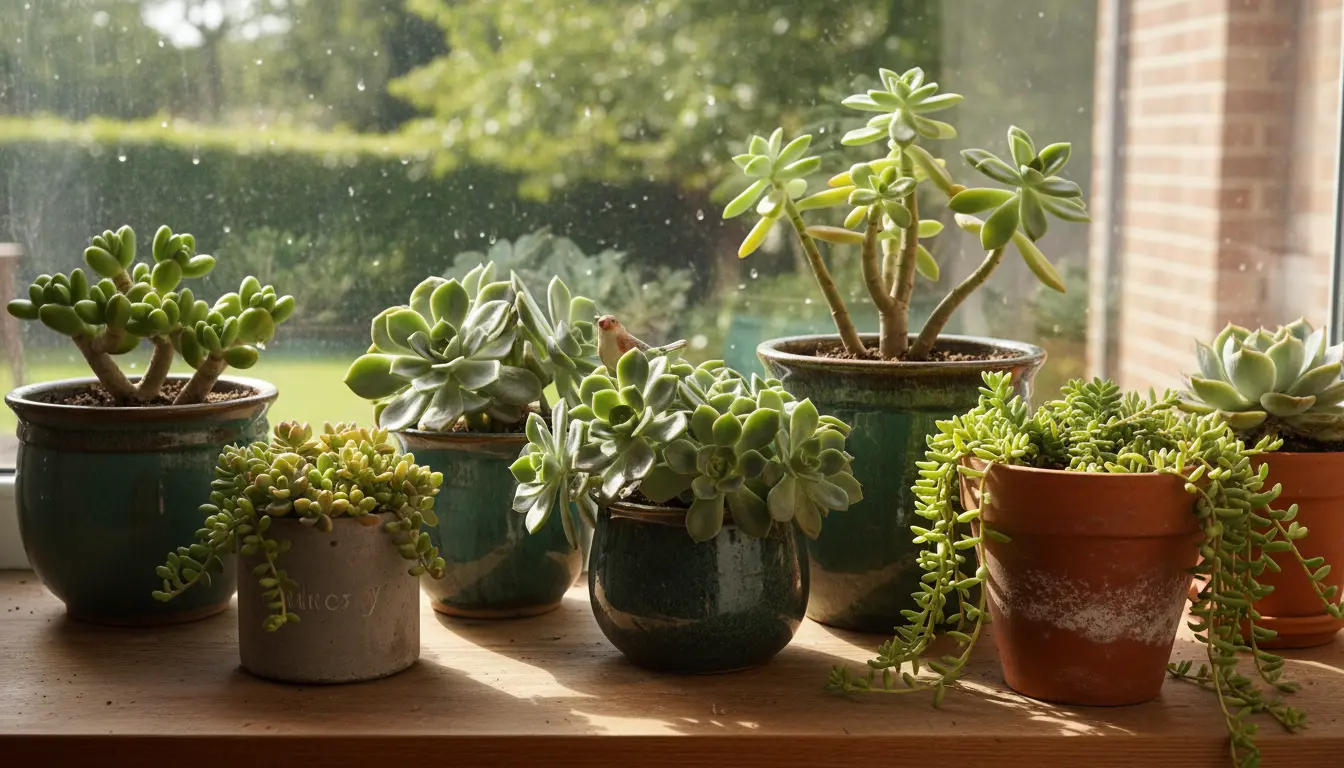
Indoor succulents are popular because they are low maintenance and add green to small spaces. This guide gives clear, practical steps to keep them healthy indoors.
What Are Indoor Succulents?
Indoor succulents are plants that store water in leaves, stems, or roots, making them tolerant of dry conditions. Common types include echeveria, haworthia, jade plant, and aloe.
Common Types of Indoor Succulents

Echeveria has rosettes and prefers bright light and dry soil. Haworthia tolerates lower light and is a good choice for north-facing windows.
Light Requirements for Indoor Succulents
Most indoor succulents need bright, indirect light for at least 4–6 hours a day. Place them near an east or west window, or supplement with a grow light if natural light is limited.
Signs of Too Little or Too Much Light
Stretching or legginess usually means too little light and a need to move the plant closer to a window. Brown or bleached leaves, especially at the top, indicate sunburn from too much direct afternoon sun.
Watering Schedule for Indoor Succulents

Watering is the most common cause of problems with indoor succulents. Use the soak-and-dry method: water thoroughly, then allow the soil to dry completely before the next watering.
How to Water Indoor Succulents
Water at the soil level until water runs from the drainage holes, then discard excess water from the saucer. Avoid misting leaves as a primary watering method because it keeps leaf surfaces wet and can promote rot.
- Check soil moisture by inserting a finger 1–2 inches deep.
- Water less in winter when growth slows—often every 3–6 weeks depending on conditions.
- Use room-temperature water to avoid shocking roots.
Soil and Potting for Indoor Succulents
Succulents need well-draining soil to prevent root rot. Use a commercial cactus mix or make your own with potting soil, coarse sand, and perlite in equal parts.
Choosing Pots and Drainage

Select pots with drainage holes to avoid water buildup at the roots. Terra cotta pots are a good choice because they allow faster evaporation compared with glazed ceramics.
Pest Control and Common Problems for Indoor Succulents
Indoor succulents can face issues like mealybugs, scale, or root rot from overwatering. Inspect plants regularly and isolate any new additions for a week to check for pests.
- For mealybugs, dab affected areas with isopropyl alcohol on a cotton swab.
- For scale, gently scrape with a soft tool and treat with insecticidal soap if needed.
- For root rot, remove the plant, trim rotten roots, and repot in fresh, dry mix.
Simple Care Routine for Indoor Succulents
A consistent routine reduces stress and keeps succulents thriving indoors. Follow these weekly and seasonal checks to stay on track.
- Weekly: Check light exposure and soil moisture.
- Monthly: Inspect for pests and remove dust from leaves.
- Seasonally: Repot when roots fill the pot or soil becomes compacted, typically every 1–2 years.
Many succulents go dormant in winter and need significantly less water. Reducing water during dormancy helps prevent root rot and encourages healthy spring growth.
Case Study: Reviving a Neglected Jade Plant
Jane had a jade plant on a dim office shelf that became leggy and dropped leaves. She moved it to a bright west window, repotted it in a well-draining mix, and switched to soak-and-dry watering.
Within six weeks, new compact growth appeared and leaf loss stopped. A small adjustment to light and watering transformed the plant, showing how simple fixes yield results.
Quick Troubleshooting Guide for Indoor Succulents
When a succulent shows stress, check these three items first: light, water, and drainage. Address the most likely cause and give the plant time to recover before making more changes.
For persistent issues, consider trimming very damaged leaves and temporarily increasing airflow around the plant. Patience matters—succulents respond slowly but predictably when conditions improve.
Following these practical steps will help you maintain healthy indoor succulents with predictable results. Keep light, watering, and soil in balance, and your plants will reward you with durable, attractive growth.