
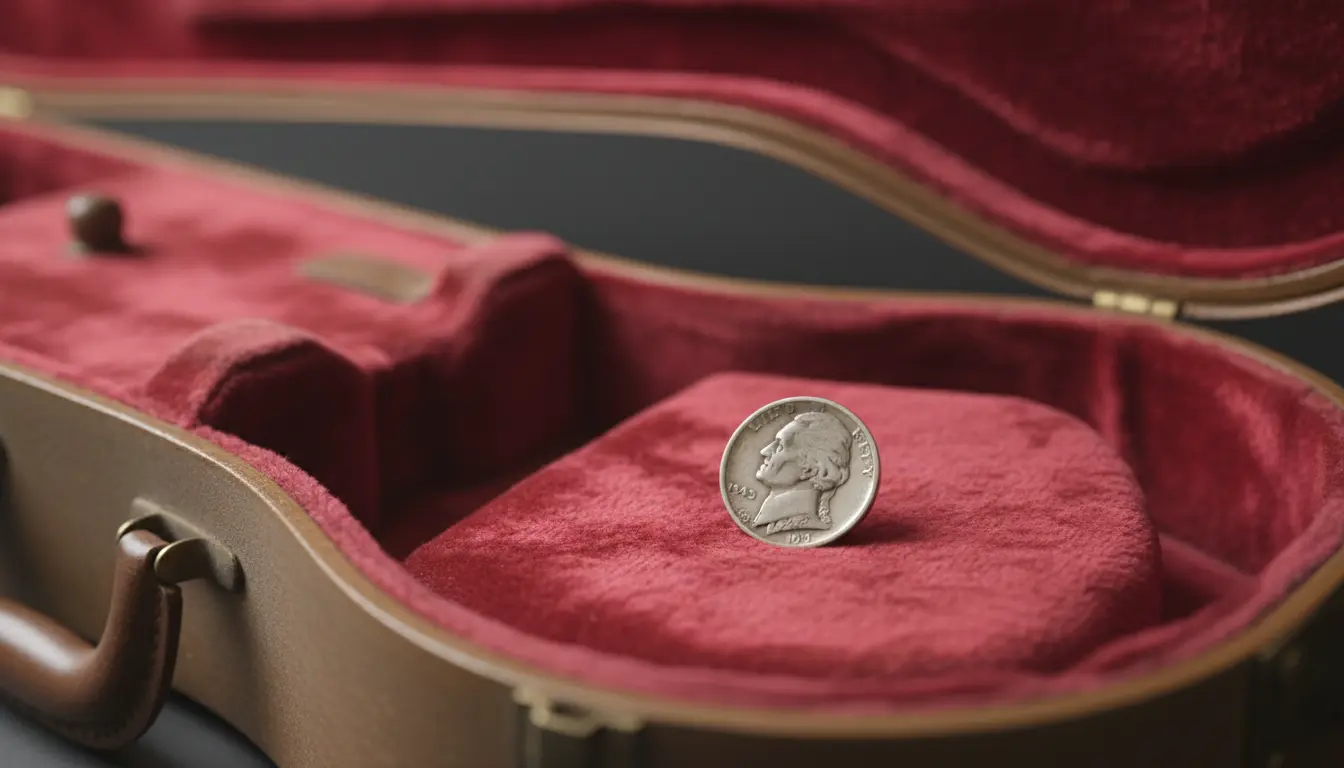
Finding an unexpected coin in an old guitar case is a moment many collectors and casual finders remember. When that coin turns out to be a rare war-era nickel, knowing what to do next can protect value and avoid costly mistakes.
Coin Discovered in Guitar Case Turns Out to Be a Rare War Era Nickel
First steps after discovery are simple: stop handling the coin with bare fingers, avoid cleaning it, and document the find. Many valuable coins lose value when cleaned or improperly stored.
Why a wartime nickel matters

Wartime nickels (U.S., 1942–1945) used a different metal composition to save nickel for war production. That change makes these coins visually distinct and interesting to collectors. Some dates and mint marks are more sought after than others.
How to identify a rare war era nickel
Identification requires a few visual checks and light, non-destructive tests. Use a magnifier, a small digital scale, and good lighting to start.
- Look for the mint mark location. Wartime nickels often have the mint mark above the Monticello building on the reverse.
- Note the coin color. Wartime composition gives these nickels a paler, silver-toned look compared with regular nickels.
- Use a precise scale. Wartime nickels were produced to the same nominal weight as regular nickels, but checking weight helps spot counterfeit or altered pieces.
- Perform a magnet test. Wartime nickels are not magnetic, so a magnet that attracts it may indicate an alloy with ferrous metal or a counterfeit.
Items to record for identification
Photograph both sides of the coin clearly and record any legible date, mint mark, or unusual wear. These details matter when comparing to reference guides or getting an appraisal.
Do not clean the coin

Cleaning a coin can remove original surface and patina, which are major factors in value. Even a mild polish can reduce a collectible coin’s grade and auction price significantly.
Instead of cleaning, place the coin in a soft, inert holder or flip and seek professional advice. Conservators or professional numismatists can recommend safe conservation when absolutely necessary.
Steps to confirm authenticity and condition
Authenticating a war-era nickel is a mix of simple in-home checks and professional services. Follow a logical sequence to preserve the coin’s condition and value.
- Document the coin: photos, date, mint mark, and condition notes.
- Perform non-destructive tests: magnification, weight, and magnet check.
- Compare to trusted references: coin guides, mint catalogs, or reputable websites.
- Consult a local coin dealer or numismatic association for a preliminary opinion.
- For high-value candidates, consider third-party grading (PCGS, NGC) before major sale.
When to seek professional grading

If the coin appears to be in unusually good condition, has a rare date, or shows a rare mint mark location, professional grading can increase buyer trust and potentially the selling price. Grading is an expense, so weigh expected value against grading fees.
Value and selling options for a rare war era nickel
Value varies widely by date, mint mark, and condition. Most wartime nickels are modestly valued, but specific years and mint marks, or coins in exceptional condition, command higher prices.
Selling options include local coin shops, auctions, online marketplaces, or selling to a collector directly. Each option has trade-offs in fees, speed, and final price.
- Local dealer: fast sale, lower seller price.
- Online auction: wider market, fees and shipping risks.
- Professional auction house: best for high-value or certified coins.
- Direct sale to collector: can fetch full market price if you find the right buyer.
Practical checklist if you find a coin in a guitar case
- Stop handling it directly — wear cotton gloves or touch edges only.
- Do not clean or polish the coin under any circumstances.
- Photograph both sides in clear light and note measurements and weight.
- Store in an inert holder or small flip to prevent damage.
- Get a preliminary appraisal from a reputable dealer or club.
- Consider third-party grading if the coin appears rare or high-grade.
U.S. wartime nickels (1942–1945) used a different metal mix to conserve nickel for military needs. That composition change makes them visually different and collectible.
Real-world example
Case study: While moving, a musician found a silver-toned nickel in an old guitar case. He photographed the coin and took it to a local coin dealer. The dealer identified it as a wartime nickel with a clear mint mark above Monticello and advised against cleaning.
The owner had the coin graded and then sold it through a regional auction house. The process took time, but the owner obtained a better price after professional grading than he expected from a quick sale to a local buyer.
Final recommendations
Treat any potentially rare coin with caution and patience. Simple actions like not cleaning and getting good documentation can preserve or increase value substantially.
If you find a coin in a guitar case, follow the checklist, consult trusted numismatic sources, and choose a selling route that matches the coin’s likely value. Careful steps will give you the best chance of a fair outcome.