
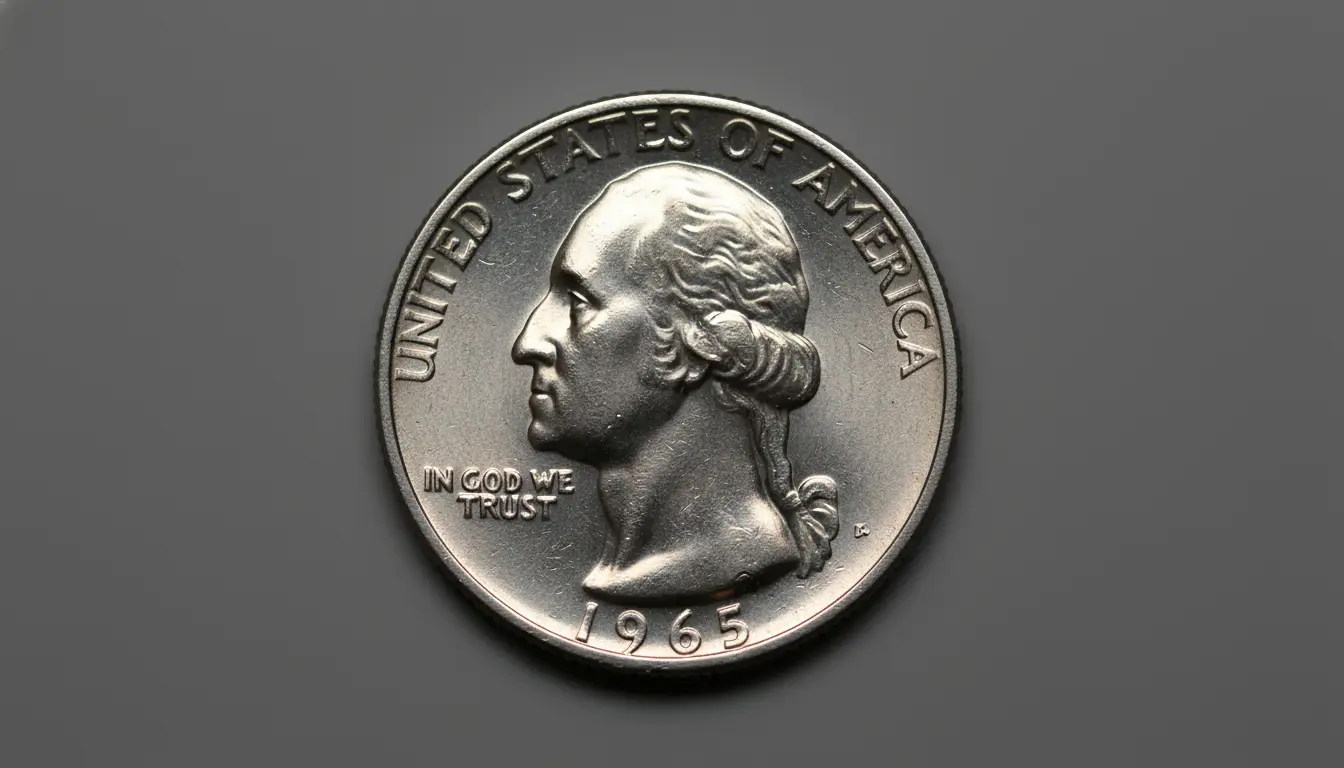
Background: Why a 1965 Quarter Shouldn’t Be Silver
The U.S. Mint stopped using 90% silver for circulating quarters after 1964. Starting in 1965, Washington quarters were struck on a copper-nickel clad core. Because of that change, any genuine 1965 quarter struck on silver planchet is extremely unusual.
This mismatch between expected composition and an actual silver strike creates rarity. Rarity, combined with collector interest in mint errors, is what drives high prices.
Why a 1965 Silver Quarter Is Rare

There are a few ways a 1965 quarter could be silver: an accidental use of leftover silver planchets, a trial or pattern strike, or a modern counterfeit or altered coin. Each explanation affects value differently.
- Accidental strikes on silver planchets are few and often highly desirable.
- Pattern or experimental strikes are documented and can be valuable but need provenance.
- Counterfeits and altered coins appear silver but are typically less valuable or worthless.
How Experts Authenticate a 1965 Silver Quarter
Authentication is essential. Professional grading services and experienced numismatists use multiple checks to verify metal content, strike characteristics, and historical plausibility.
Grading and Certification
Submit the coin to a reputable third-party grading service. Certification gives buyers confidence and typically increases sale value. Look for services with strong track records in error-coin authentication.
Tests for Silver Planchet

Common tests include:
- Non-invasive X-ray fluorescence (XRF) to measure metal composition.
- Magnet tests and specific gravity checks to rule out base metals.
- Microscopic inspection for die markers, edge bands, and tool marks consistent with Mint practice.
Do not attempt destructive testing at home. Professional labs and services can run these tests without harming the coin.
Value Drivers for a 1965 Silver Quarter
Several factors determine market value. Understanding them helps set realistic expectations before selling.
- Authenticity and certification from a respected grading company.
- Grade: sharp strikes and minimal wear command higher prices.
- Provenance: documented history or discovery adds credibility.
- Market demand for error coins and novelty items at the time of sale.

1965 quarters were officially produced on copper-nickel clad planchets. Any 1965 strike on a silver planchet likely indicates an unusual minting event or an error that collectors prize.
How to Value and Sell a 1965 Silver Quarter
If you believe you have a silver 1965 quarter, follow steps to maximize value and minimize risk.
- Store it safely in a holder and avoid cleaning it.
- Get a non-invasive precious-metal test or XRF scan from a reputable lab.
- Submit the coin to a recognized grading service for authentication and grading.
- Gather documentation: where and when it was found, any prior ownership records, and test results.
- Sell through reputable channels: major auction houses, established coin dealers, or certified online marketplaces.
Be cautious of unsolicited offers, dealers who pressure for quick sales, or buyers offering cash without provenance checks.
Real-World Example
A private collector discovered a 1965 quarter in an old coin box. At first glance the coin looked like other circulated quarters, but a slight weight difference drew attention. The collector sent the coin to a third-party grading service for authentication.
Testing confirmed a silver planchet and the strike showed Mint die characteristics consistent with an accidental silver strike. After certification, the coin attracted serious interest from collectors of mint errors and sold through a reputable auction channel.
This case shows the typical path: discovery, non-invasive testing, third-party grading, then sale through an established marketplace.
Common Scams and How to Avoid Them
Because of its rarity, a purported 1965 silver quarter can attract scams. Watch for these red flags:
- Buyers or dealers who insist you avoid grading or who offer immediate cash below market value.
- Claims with no documentation or vague provenance.
- Pressure to ship the coin before receiving payment or proof of funds.
Always insist on third-party authentication and use escrow or auction services for high-value sales.
Practical Checklist: If You Find a 1965 Quarter That Might Be Silver
- Do not clean or polish the coin.
- Handle the coin by its edges and store it in a proper holder.
- Arrange a non-destructive metal test (XRF) or consult a reputable coin dealer.
- Consider third-party grading before attempting to sell.
- Document how and where you found the coin.
Finding a 1965 silver quarter is rare and potentially valuable, but value depends on careful authentication and responsible selling. Follow professional guidance and use trusted channels to protect your investment.