
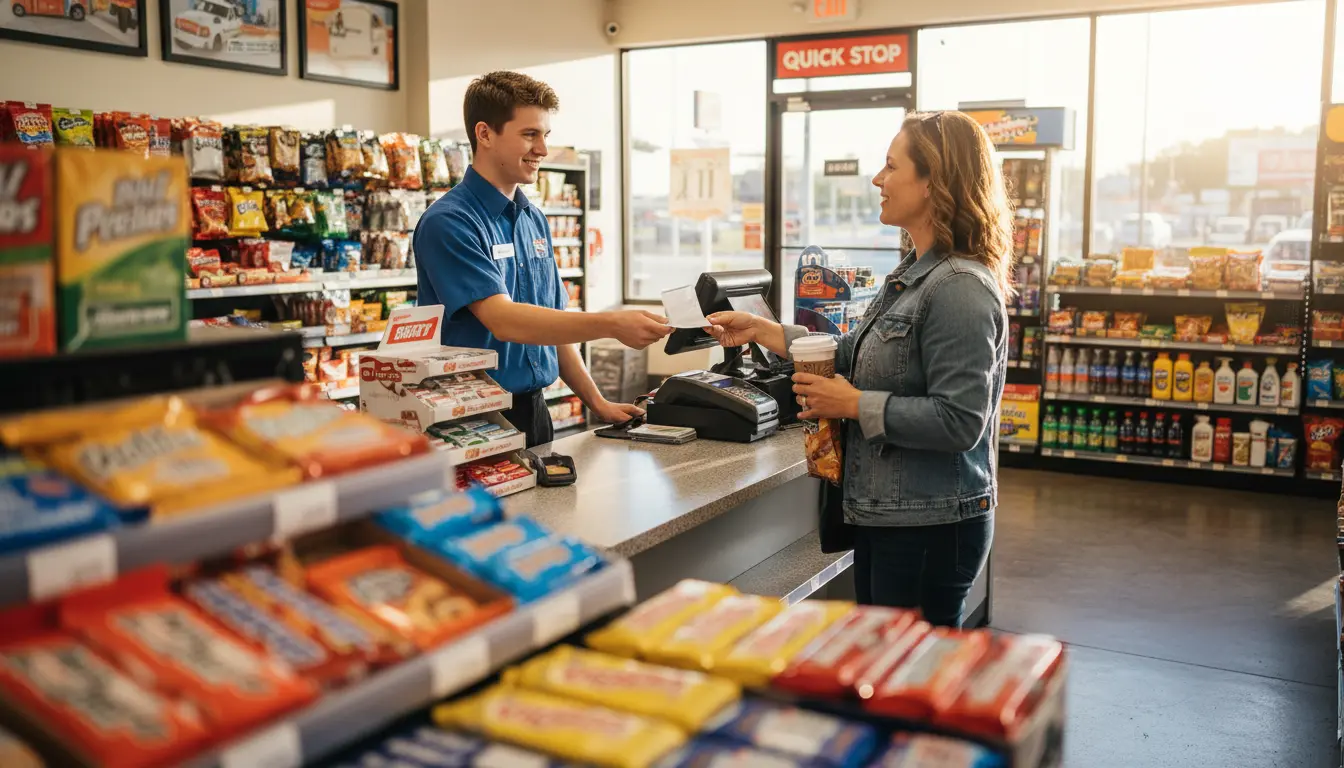
Overview of the Gas Station Clerk Role
A gas station clerk manages the front counter, helps customers, and keeps the store safe and stocked. This entry-level job combines customer service, cash handling, and basic loss prevention.
Employers look for reliability, attention to detail, and the ability to work flexible hours, including nights and weekends.
Gas Station Clerk: Key Duties

The daily duties of a gas station clerk are focused and practical. They include customer transactions, restocking, and maintaining a clean store environment.
- Run the cash register and process card payments.
- Check fuel pumps and reset dispensers as needed.
- Monitor store inventory and restock shelves and coolers.
- Clean public areas and handle minor maintenance tasks.
- Follow safety and age-restricted sale regulations.
Gas Station Clerk: Cash Handling and Payments
Accurate cash handling is central to the job. Clerks must balance tills, accept various payment methods, and spot counterfeit bills.
Use a simple routine: count the drawer at shift start, log receipts, and reconcile at close. This reduces errors and supports loss prevention.
Skills and Qualifications for a Gas Station Clerk

This position usually needs a high school diploma or equivalent, though many employers hire without formal education if the candidate shows reliability. Key skills make a clerk effective on shift.
- Customer service: clear, polite communication with a calm tone.
- Basic math: fast, accurate calculations for change and totals.
- Attention to detail: spotting expired products and price errors.
- Problem solving: handling disputes or small equipment issues.
- Integrity: trustworthiness with cash and controlled items like alcohol or tobacco.
On-the-Job Training
Most training is hands-on and short, typically a few days to a couple of weeks. New hires learn register use, safety procedures, and store policies from experienced staff.
Formal certifications are rarely required, but food-handling or alcohol-service certificates can be useful depending on the location.
Safety and Security for Gas Station Clerks

Safety is a major part of the role. Clerks must follow procedures to reduce risks from fuel, late-night customers, and theft.
- Know emergency shutdown procedures for fuel pumps.
- Keep exits clear and maintain good visibility of the forecourt.
- Use established cash-drop practices and limit register change on hand.
- Report suspicious activity immediately and avoid confronting violent customers.
Practical Safety Habits
Always lock the store when alone and use safe cash handling practices like regular bank drops. Maintain good lighting in the forecourt and keep walkways clear of spills.
Many gas station clerks earn tips from customers when they assist with services like checking oil or cleaning windshields. Even small helpful acts can improve daily earnings and customer loyalty.
Customer Service Tips for Gas Station Clerks
Good service increases repeat business and reduces conflicts. A friendly greeting and quick problem solving go a long way during a short interaction.
- Greet every customer within 10 seconds of entering when possible.
- Listen actively and confirm requests to avoid mistakes.
- Offer small extras like directions or quick product suggestions.
Pay, Scheduling, and Career Path
Compensation varies by region, with many clerks earning minimum wage or slightly above. Night shifts may include a premium or hazard pay in some locations.
With experience, clerks can advance to supervisor, shift manager, or multi-store roles. Additional training in inventory or management increases promotion chances.
Typical Shift Expectations
Shifts range from 4 to 12 hours and often include nights and weekends. Flexibility is a valued trait in hiring and scheduling.
Real-World Example: Gas Station Clerk Shift Case Study
Maria worked a 10pm–6am shift at a busy highway station. On one night she noticed a customer acting nervously near the ATM and called the manager after observing a skimming device on the machine.
The manager secured the ATM and contacted the bank. Because Maria reported the issue promptly, several customers were protected from card fraud. Her quick observation also prevented a potential financial loss for the store.
This example shows how vigilance and following procedure can protect customers and reduce liability for the employer.
Practical Checklist for New Gas Station Clerks
- Learn the register and payment processing steps thoroughly.
- Memorize emergency and fuel pump shutdown procedures.
- Practice safe cash drops and end-of-shift reconciliation.
- Keep a tidy public area and restock as needed during slow periods.
- Report thefts, spills, and equipment faults immediately.
Conclusion: Succeeding as a Gas Station Clerk
Success in this role depends on reliability, clear communication, and attention to safety and cash procedures. Small habits—counting the drawer, greeting customers, and reporting issues—make a big difference.
With consistent performance and willingness to learn, a gas station clerk can build a steady job and clear paths to supervisory roles.