
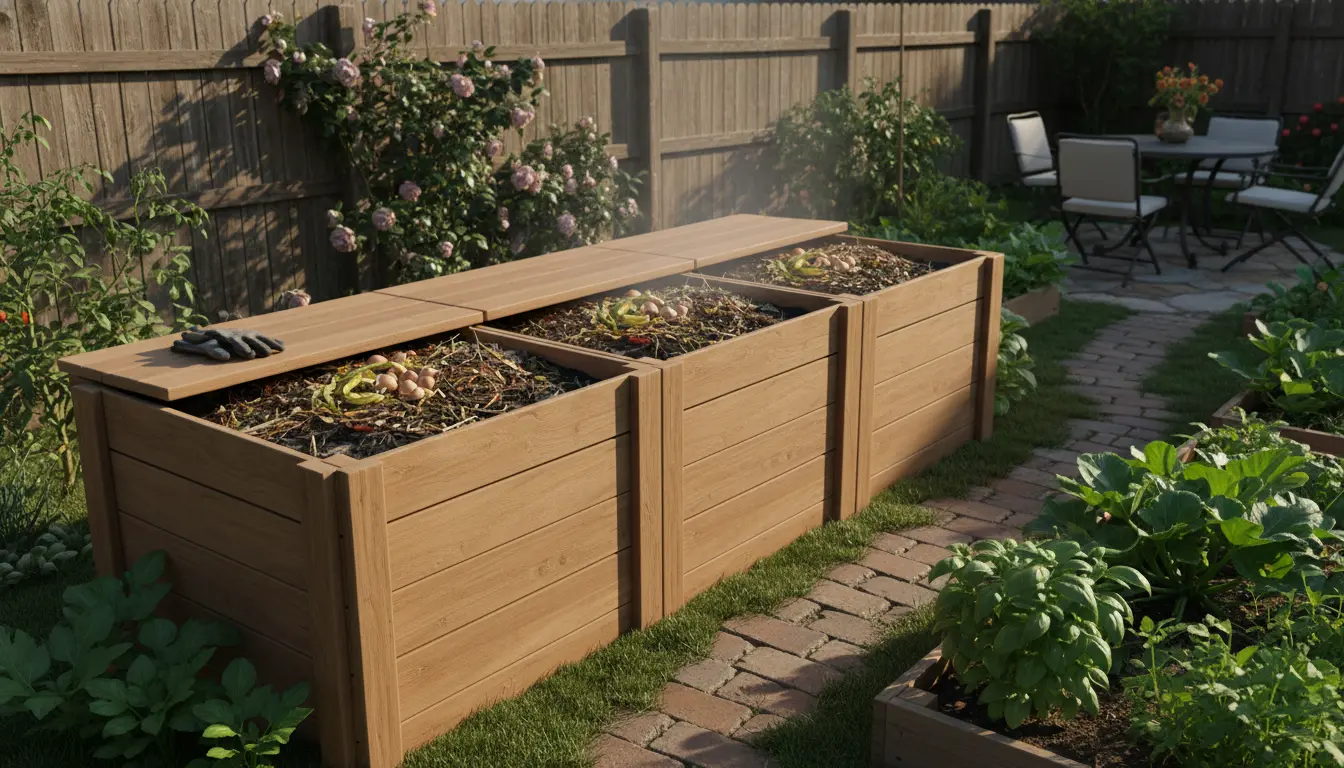
Composting at home is a simple way to reduce kitchen waste and improve soil health. This guide explains practical steps for home composting for beginners so you can start with confidence.
Home Composting Basics
Home composting converts organic waste into nutrient-rich material for gardens. It relies on microbes and proper balance of materials to break down matter efficiently.

Understanding the basics will help you avoid common problems like bad smells or slow decomposition.
Why home composting matters
Composting reduces landfill waste and lowers methane emissions. It also returns nutrients to soil and improves water retention in garden beds.
For beginners, the environmental and gardening benefits make it a worthwhile practice to adopt.
Choosing a Home Composting Method

Pick a method that fits your space, time, and commitment. Each method has different effort and time requirements.
- Compost bin: Enclosed, tidy, good for yards and beginners.
- Compost tumbler: Fast and easy to turn, good for small spaces.
- Open pile: Low cost, works for larger yards but can be messier.
- Vermicomposting (worms): Great indoors or small balconies, excellent for food scraps.
Tips to choose
Consider available space, how much waste you produce, and how quickly you want compost. Tumblers are fast but cost more; bins are balanced for most households.
What to Compost in Home Composting
Knowing what to add keeps your compost healthy. Aim for a mix of nitrogen-rich and carbon-rich materials.
Good items to compost
- Fruit and vegetable scraps
- Coffee grounds and tea bags (paper tags removed)
- Yard trimmings, leaves, small branches
- Eggshells, shredded paper, cardboard
Items to avoid
- Meat, fish, dairy and oily foods (attract pests)
- Diseased plants or invasive weeds with seeds
- Pet waste from carnivores
- Large logs or thick branches that decompose slowly
Step-by-Step Home Composting Process

Follow these steps to start a working compost pile or bin. Keep the process simple at first and refine as you learn.
- Pick a spot: Choose a level, well-drained location with some shade.
- Prepare the base: Add coarse material like small branches or straw for airflow.
- Layer materials: Alternate browns (carbon) and greens (nitrogen). Aim for roughly 3:1 brown to green by volume.
- Maintain moisture: Keep compost like a wrung-out sponge. Add water if too dry, add browns if too wet.
- Turn or mix: Turn the pile every 1–2 weeks to add oxygen and speed decomposition. Tumblers simplify this step.
- Wait and monitor: Finished compost takes 2–6 months based on method and care. Compost is ready when dark, crumbly, and earthy-smelling.
Simple examples
If you have mostly kitchen scraps, use a worm bin or tumbler. If you have lots of yard waste, an open pile or large bin works well.
Troubleshooting Common Home Composting Issues
Beginners often face minor problems that are easy to fix with adjustments.
- Bad smell: Add more browns and turn the pile to increase air.
- Too dry: Add water and green materials, then turn.
- Slow decomposition: Chop materials finer, increase turning, and check moisture.
- Pests: Avoid meat and bury food scraps; use an enclosed bin if necessary.
Small Real-World Case Study
Case: A two-person household in Portland started a 50-gallon compost bin. They collected kitchen scraps and shredded leaves for six months.
Result: By following a 3:1 brown-to-green routine and turning weekly, they produced rich compost in four months. Their garden yield improved and weekly waste to the curb dropped by 60 percent.
Maintenance Checklist for Home Composting
- Weekly: Add scraps and turn or tumble the pile.
- Monthly: Check moisture and add shredded browns if needed.
- Seasonal: Harvest finished compost and refresh the bin base.
- Continuous: Avoid adding prohibited items and chop large pieces.
Final Tips for Home Composting Beginners
Start small and be consistent. Learning comes from watching your pile and making small changes.
Composting is low-cost, scalable, and effective. With a simple routine you can cut waste and boost soil health within months.