
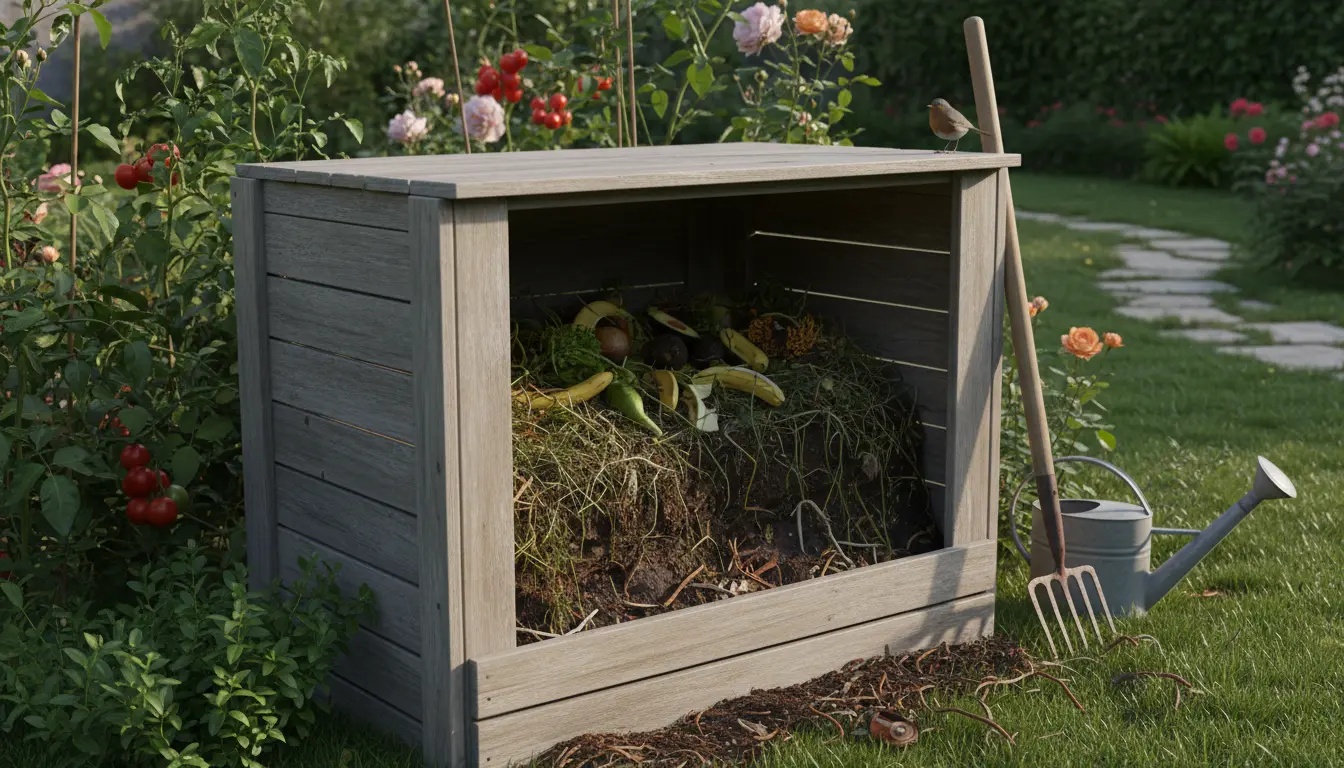
What Is Home Composting for Beginners
Home composting for beginners is the process of turning kitchen scraps and yard waste into a nutrient-rich soil amendment. It reduces landfill waste and improves garden soil without complex equipment.
This guide focuses on simple, reliable steps that work in small yards, balconies, or even apartments with indoor systems.
Benefits of Home Composting for Beginners

Composting saves money and diverts organic material from trash. It also improves soil structure and water retention, which helps plants thrive.
Beginners can get visible results quickly, making composting a rewarding first step into sustainable living.
Choosing a Composting Method
Choose a method that fits your space and schedule. Common options include a backyard bin, a tumbler, or an indoor worm bin (vermicompost).
Backyard Bin vs Tumbler vs Indoor Worm Bin
- Backyard bin: Low cost, simple to build, good for larger volumes.
- Tumbler: Faster mixing, neater, better for smaller yards with limited pests.
- Indoor worm bin: Best for apartments, quiet, and produces rich worm castings.
How to Start a Compost Bin

Starting a compost bin is a step-by-step process. Follow these practical actions to get a stable, working pile quickly.
- Pick a location: Choose a partly shaded, level spot close to water and convenient access.
- Choose your container: Buy or build a bin. Ensure it has ventilation and drainage.
- Add a base layer: Start with coarse material like twigs to help airflow and drainage.
- Layer materials: Alternate green (nitrogen) and brown (carbon) layers.
- Moisture check: Keep the pile as damp as a wrung-out sponge.
- Turn regularly: Turn every 1–2 weeks to speed decomposition and prevent odors.
For tumblers, rotate the barrel every few days. For worm bins, avoid turning; add food near the top and let worms process it.
What to Add and What to Avoid
Knowing what goes in the bin prevents odors and pests. Balance is key: aim for roughly three parts brown to one part green by volume.
Greens and Browns
- Greens (nitrogen): Vegetable scraps, fruit peels, coffee grounds, fresh grass clippings.
- Browns (carbon): Dry leaves, straw, cardboard, shredded paper, wood chips.
Avoid Adding
- Meat, dairy, oily foods — attract pests and create odors.
- Diseased plants or invasive weeds with seeds — can survive the composting process.
- Pet waste and treated wood — may contain harmful pathogens or chemicals.
Troubleshooting Common Problems

Beginners often face three main issues: odor, slow breakdown, and pests. Each has straightforward fixes.
- Smelly pile: Add more browns, turn the pile, and check moisture. Too wet or too much green causes odor.
- Slow decomposition: Chop materials into smaller pieces and increase turning frequency.
- Pests: Bury food scraps under a layer of browns, secure the bin, or switch to a closed tumbler.
Compost Maintenance Tips for Beginners
Consistency matters more than perfection. A small weekly routine keeps your system healthy and productive.
- Keep a countertop bin with a lid for collecting kitchen scraps.
- Layer browns whenever you add wet scraps to maintain balance.
- Use finished compost in pots, garden beds, or as a top dressing for lawns.
How to Tell When Compost Is Ready
Finished compost is dark, crumbly, and smells earthy. Most backyard piles take between two months and a year to finish, depending on method and management.
Use a sieve to separate larger undecomposed pieces and return them to the active pile for further breakdown.
Small Case Study: A Simple Backyard Bin
María, a homeowner with a small yard, started a 3×3 ft wooden bin. She added alternating layers of shredded leaves and kitchen scraps and turned the pile every 10 days.
Within five months she produced about 60 liters of compost. She used it to top-dress her vegetable beds and saw healthier tomato plants and improved soil moisture retention.
Practical Examples and Uses
Use compost in potting mixes (mix one part compost to two parts potting soil) to improve plant vigor. For garden beds, spread a 1–2 inch layer and lightly mix into the topsoil.
Compost tea (steeping compost in water) can be used as a mild liquid feed for potted plants.
Final Checklist for Home Composting for Beginners
- Choose a bin suited to your space and pests.
- Maintain a 3:1 ratio of browns to greens by volume.
- Keep moisture like a wrung-out sponge and turn regularly.
- Monitor for odors and pests and adjust layers accordingly.
With these practical steps, home composting is accessible and effective for beginners. Start small, observe your pile, and adjust as you learn—the results are worth the effort.