
Why Home Composting for Beginners Matters
Home composting reduces kitchen and garden waste while producing nutrient-rich soil for plants. For beginners, it is an accessible way to cut landfill waste and improve garden health without expensive equipment.
This guide explains simple steps and choices so you can start composting today, whether you have a backyard, balcony, or small kitchen.
Home Composting for Beginners: Basic Principles

Composting breaks down organic material into humus through microorganisms, moisture, and air. You only need four things: greens, browns, water, and oxygen.
Understanding those components helps avoid common beginner problems like odor or slow breakdown.
What Are Greens and Browns
Greens are nitrogen-rich materials such as vegetable scraps, coffee grounds, and fresh lawn clippings. Browns are carbon-rich items like dry leaves, paper, and cardboard.

A balanced mix is roughly two to three parts browns to one part greens by volume. That ratio supports microbial activity and reduces smell.
How to Start Home Composting for Beginners
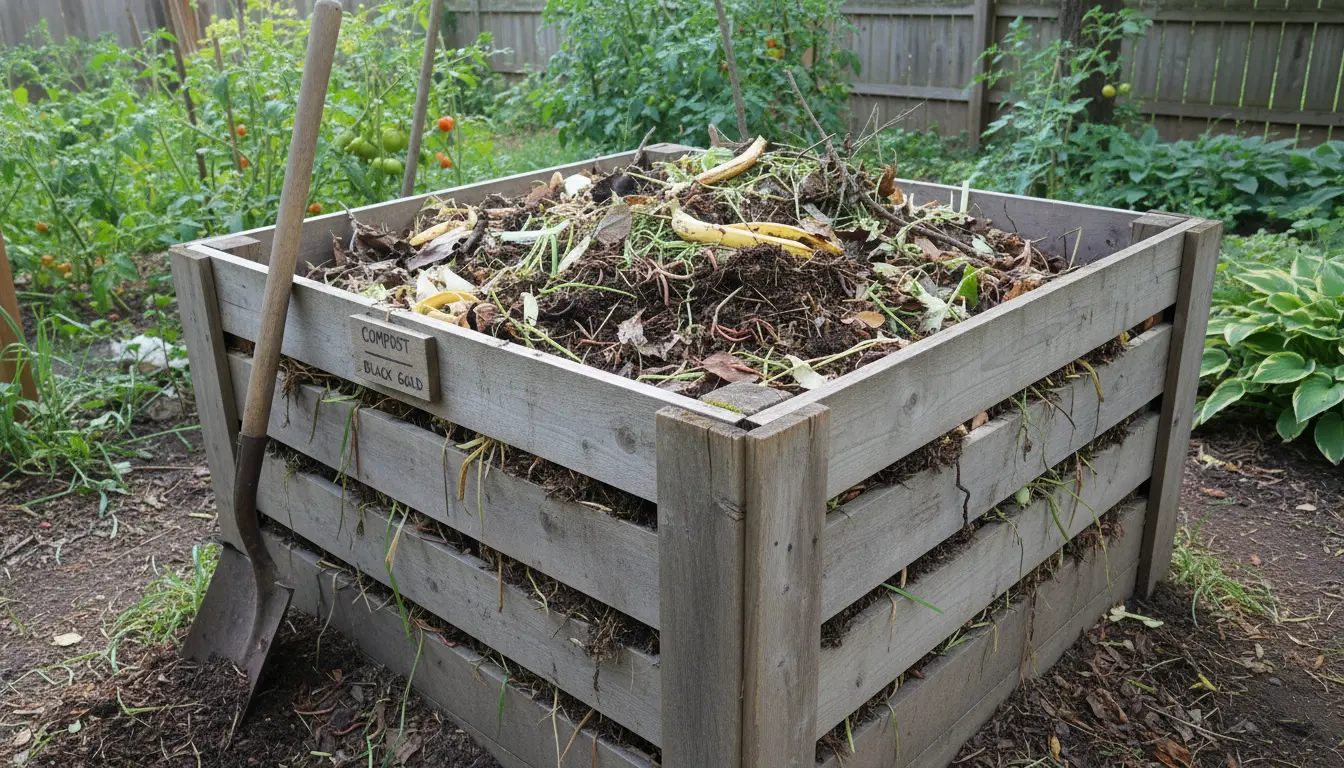
Choose a method that fits your space and time. Common options include a backyard bin, a tumbler, or a simple compost pile. Apartment dwellers can use a small bokashi or worm bin.
Follow these basic steps to set up a standard backyard bin:
- Pick a location with partial shade and good drainage.
- Place a layer of coarse material at the bottom for airflow, like small twigs.
- Add alternating layers of greens and browns, keeping pieces small for faster breakdown.
- Keep the pile moist like a wrung-out sponge.
- Turn or aerate the pile every 1–2 weeks to supply oxygen.
Small-Space Options

If you have limited space, consider vermicomposting with worms or bokashi. Vermicomposting uses red wigglers in a shallow bin and produces usable castings in a few months.
Bokashi ferments kitchen waste in a sealed container using bran inoculated with beneficial microbes. It suits apartments but requires burying the fermented output in soil or adding it to an outdoor compost.
What to Compost and What to Avoid
Good home compost materials include fruit and vegetable scraps, eggshells, coffee grounds, yard trimmings, dry leaves, paper, and cardboard. Chop larger items to speed decomposition.
Avoid meat, dairy, oily foods, diseased plants, and pet waste in typical home piles because they attract pests and create odors.
Quick Reference: Compostable vs Not Compostable
- Compostable: vegetable peels, coffee grounds, tea bags without synthetic staples, shredded paper, grass clippings, leaves
- Not recommended: bones, meat, dairy, fat, synthetic materials, treated wood, diseased plants
Maintenance and Troubleshooting for Home Composting for Beginners
Routine checks keep a compost pile healthy. Monitor moisture, smell, and temperature. A properly working pile smells earthy, not rotten.
Common issues are easy to fix:
- Odor: Add more browns and turn the pile to introduce oxygen.
- Slow decomposition: Chop material finer, increase moisture slightly, and add greens for nitrogen.
- Pests: Avoid adding meat and secure the bin. Use a closed tumbler or fine mesh if needed.
How to Tell When Compost Is Ready
Finished compost is dark, crumbly, and smells like soil. Most backyard systems produce usable compost in 3–12 months depending on management and materials.
Screen the compost if you need a fine texture. Larger bits can return to the pile for further breakdown.
Composting reduces methane emissions from landfills. Organic waste in landfill conditions decomposes anaerobically and produces methane, a potent greenhouse gas.
Tools and Materials to Get Started
Beginners do not need fancy tools. A pitchfork or garden fork, shovel, a bin or tumbler, and a kitchen caddy for scraps are sufficient.
Optional items include a compost thermometer to check temperature and a screen for refining finished compost.
Real-World Example: A Small Urban Backyard Case Study
Sarah lives in a rowhouse with a small backyard and started composting using a 60-gallon tumbling bin. She saved kitchen scraps in a countertop caddy and collected dry leaves from neighbors in autumn.
After three months of weekly tumbling and maintaining a 2:1 browns-to-greens mix, Sarah harvested crumbly, dark compost. She used it to top-dress container plants and reported healthier tomatoes the following season.
Practical Tips for Success
- Start small and learn by doing; scale up when you feel confident.
- Keep materials chopped and mixed for faster results.
- Use finished compost as a soil amendment, not a full potting mix replacement.
- If you rent, ask your landlord before installing an outdoor bin or use a compact indoor system instead.
Conclusion: Keep It Simple and Consistent
Home composting for beginners is mostly about consistency: balance materials, maintain moisture and airflow, and be patient. Small, regular efforts produce nutrient-rich compost and reduce household waste.
Choose a method that fits your space and schedule, and adjust as you learn. Composting is a practical, low-cost way to support a healthier garden and a greener home.