
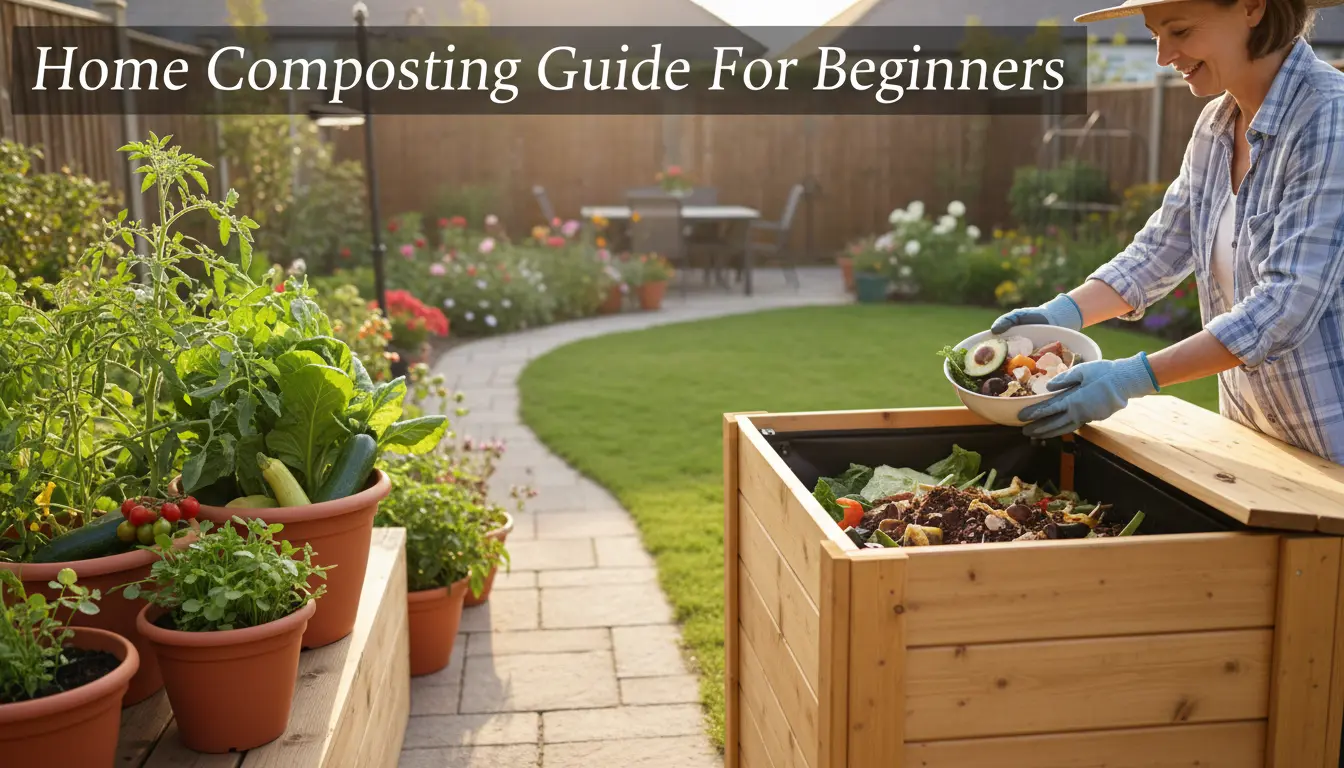
Composting at home turns kitchen and yard waste into rich soil you can use in pots and garden beds. This guide gives clear, practical steps for beginners to start home composting with confidence.
Why Choose Home Composting
Home composting reduces waste sent to landfills and cuts methane emissions from garbage. It also creates nutrient-rich compost that improves soil structure and plant health.

For many households, composting is an easy way to lower waste bills and support a healthier garden.
How to Start Home Composting
Starting is simple: pick a bin style, assemble materials, and learn the balance between greens and browns. You do not need special equipment to begin.
Choose a Compost Bin
Options include tumblers, open bins, and simple wire cages. Choose a size and style that fits your yard and budget.
- Tumbler: Faster mixing, good for small yards.
- Open bin: Low cost and easy to access for turning.
- Wire cage: Cheap and well-aerated but can be messy.
Gather Compost Materials

Collect two types of materials: greens (nitrogen-rich) and browns (carbon-rich). Both are necessary for effective decomposition.
- Greens: Fruit and vegetable scraps, coffee grounds, fresh grass clippings.
- Browns: Dry leaves, shredded paper, cardboard, small wood chips.
Mixing Ratios and Layering
A common rule is roughly 2–3 parts browns to 1 part greens by volume. This helps keep the pile from getting too wet or smelly.
Layering works well: start with coarse browns for airflow, add greens, then cover with browns. Repeat until the bin is full.
Managing Your Home Compost Pile

Active composting requires attention to moisture, aeration, and temperature. Simple checks once a week are usually enough.
Air and Turning
Compost organisms need oxygen. Turn the pile every 1–2 weeks to introduce air and speed decomposition.
If using a tumbler, rotate it several times each week. For open bins, use a pitchfork or garden fork to mix layers.
Moisture and Temperature
The pile should feel like a wrung-out sponge: damp but not dripping. Add water during dry weather and more browns if it is too wet.
Ideal temperatures for active breakdown are 120–160°F (50–70°C). Home piles often operate at lower temperatures but still produce quality compost over more time.
Troubleshooting Common Problems
Smells, pests, and slow decomposition are common early issues. Most problems have simple fixes.
- Bad smell: Add more browns and turn to increase airflow.
- Pests: Avoid meat, dairy, and oily foods; use a closed bin or bury scraps.
- Slow breakdown: Chop materials into smaller pieces and turn more often.
Using Finished Compost
Compost is ready when it is dark, crumbly, and earthy-smelling. This can take 2–12 months depending on conditions.
Use finished compost to top-dress lawns, mix into potting soil, or enrich garden beds. Apply a thin layer or mix into the top few inches of soil.
Food scraps and yard waste make up nearly 30 percent of household trash. Composting these materials can cut waste and produce valuable soil amendments.
Case Study: Small Backyard Compost Setup
Maria lives in a small suburban yard and wanted a low-maintenance solution. She chose a 55-gallon tumbler placed on a shaded patio corner.
She added kitchen scraps and shredded cardboard in a 1:2 ratio, turned the tumbler twice weekly, and kept the pile moist. After three months she had usable compost for her vegetable pots.
Result: Maria reduced kitchen waste by about 10 liters per week and increased her potted tomato yields the following season.
Tips and Practical Examples
Small actions add up. Here are simple practices that work for most beginners.
- Keep a countertop compost bin with a tight lid to collect scraps daily.
- Chop larger materials to speed decomposition.
- Save dry leaves in a bag for winter when browns are scarce.
- Use a kitchen compost pail with a charcoal filter to control odors indoors.
What Not to Compost
Avoid meat, dairy, bones, diseased plants, and pet waste. These can attract pests or spread pathogens.
Next Steps for Home Composting Beginners
Start small and learn by doing. Track what you put in and how often you turn the pile, then adjust the greens-to-browns balance as needed.
Join a local gardening group or online forum to share tips and troubleshoot issues. Composting is a skill that improves with practice.
With a basic bin, a few simple rules, and weekly attention, home composting for beginners becomes a reliable habit. The payoff is less waste and healthier soil for your plants.