
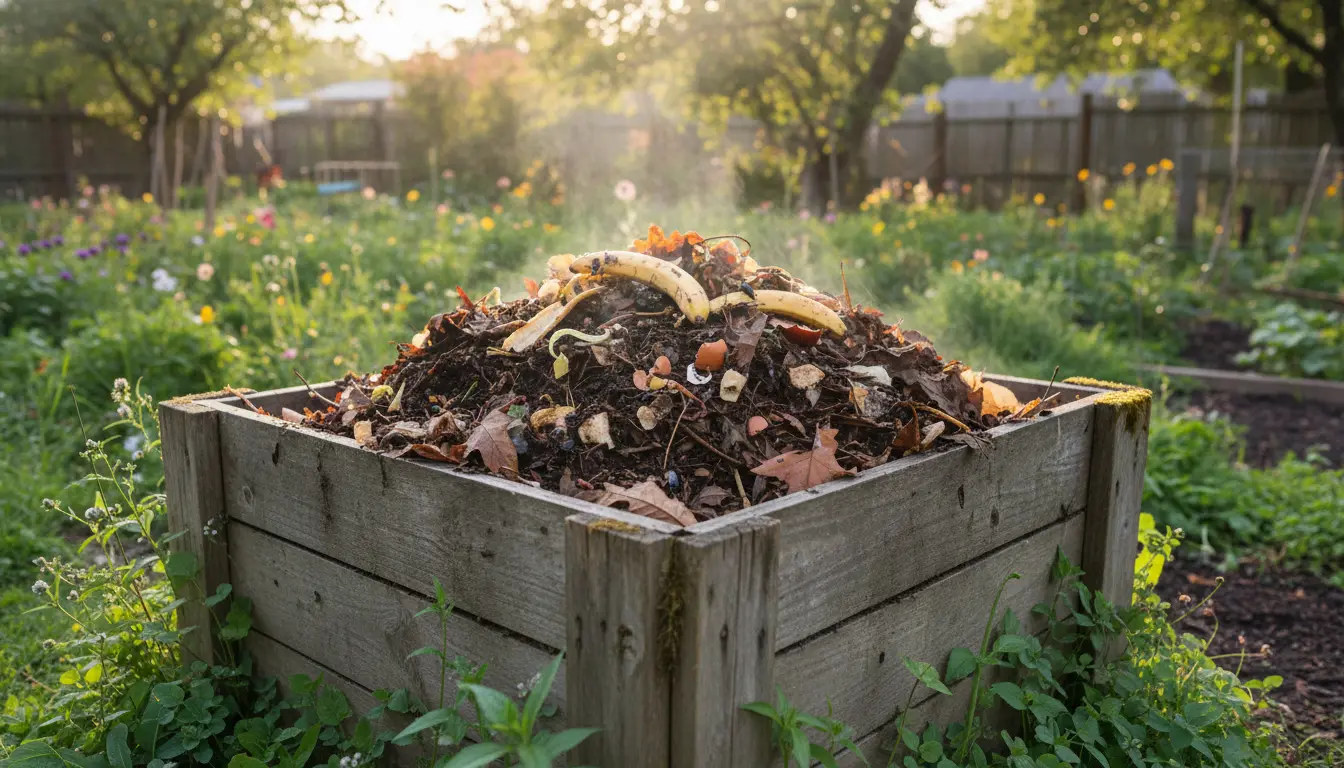
Why Home Composting Matters
Home composting turns food scraps and yard waste into nutrient-rich soil. It reduces household waste, lowers methane emissions, and supports healthier gardens.
This guide shows practical, step-by-step methods for beginners to start composting at home with minimal equipment.
What You Need for Home Composting

Starting a compost system does not require expensive tools or lots of space. Use a simple bin, a mixing tool, and basic knowledge of materials.
- Compost bin or pile (tumbler, stationary bin, or an open pile)
- Brown materials (dry leaves, cardboard, paper)
- Green materials (kitchen scraps, grass clippings)
- Water source and a pitchfork or garden fork for turning
How Home Composting Works
Composting is the controlled decomposition of organic material by microbes. The process needs carbon, nitrogen, oxygen, and moisture in balanced amounts.
Maintain a ratio of roughly 25–30 parts carbon to 1 part nitrogen by weight, often simplified to a mix of two parts brown to one part green by volume.
How Home Composting Starts

Begin with a 6–12 inch base layer of coarse brown material to allow airflow. Add alternating layers of green and brown material, keeping the pile moist but not soggy.
Turn the pile every 1–2 weeks to aerate and speed up decomposition.
Home Composting Temperature and Time
A well-managed pile can heat to 130–150°F (55–65°C), which speeds breakdown and kills many weed seeds and pathogens. Cooler piles still compost but take longer.

Expect finished compost in 2–6 months depending on materials, size, and how often you turn it.
What to Compost and What to Avoid
Knowing what to include helps keep the compost healthy and odor-free. Follow these practical lists when building your pile.
Good Materials for Home Composting
- Fruit and vegetable scraps
- Coffee grounds and tea bags (remove staples)
- Eggshells, shredded paper, and cardboard
- Grass clippings and dry leaves
Materials to Avoid in Home Composting
- Meat, fish, and dairy (attract pests and smell)
- Oily foods and large bones
- Diseased plant material or invasive weeds with seeds
- Pet waste from carnivores
Simple Troubleshooting for Home Composting
Problems with compost are usually easy to fix. Diagnose issues by smell, texture, and appearance.
- Bad odor: Add more brown materials and turn the pile to increase airflow.
- Pile too dry: Add water and some greens; keep it moist like a wrung-out sponge.
- Pile too wet or slimy: Mix in coarse brown materials and turn to improve drainage.
- Slow decomposition: Chop materials smaller, increase green content slightly, and turn more often.
Home Composting Tools and Setup Options
Choose a method that fits your space and lifestyle. Below are common setups with their advantages.
- Tumbler: Easy turning, faster results, good for small yards.
- Stationary bin: Simple and low-cost, requires manual turning with a fork.
- Open pile or trench: Best for large spaces or garden beds; lower cost but can be slower.
Optional Tools
- Compost thermometer to monitor temperature
- Shredder or scissors to cut materials small
- Compost sieve for finished product
One household compost bin can divert up to a third of standard kitchen waste from the trash, reducing landfill contributions and producing free soil amendment.
Small Real-World Case Study
Case: A three-person household started composting in a 65-gallon tumbler. They saved vegetable scraps and coffee grounds and mixed them with shredded paper and dry leaves.
Within six months they reported their household waste dropped by 30%, and they used 20 liters of finished compost for container plants and a small vegetable bed. Regular turning and balancing browns and greens were key to success.
Using Finished Compost
Finished compost is dark, crumbly, and earthy-smelling. Use it to top-dress lawns, mix into potting soil, or enrich garden beds.
Apply a 1–2 inch layer around plants or mix 10–20% compost into potting mixes for seedlings and containers.
Final Practical Tips for Home Composting
- Start small and scale up as you learn what works for your routine.
- Keep a small countertop pail to collect kitchen scraps and empty it daily.
- Record what you add for the first month to refine your brown-to-green balance.
- If pests are a problem, use a closed bin or bury food scraps in the center of the pile.
With a basic bin, a little attention to balance and moisture, and regular turning, home composting becomes a low-effort habit that benefits your garden and the environment.