
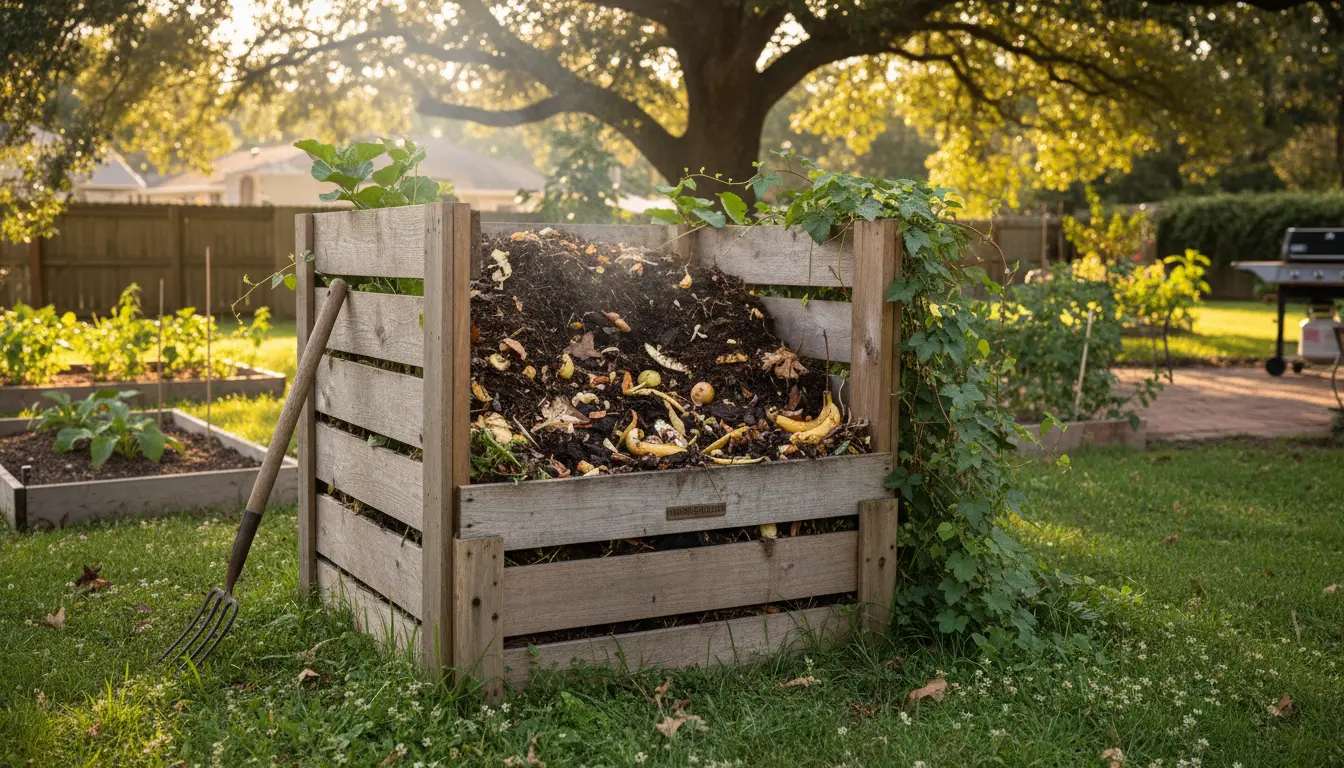
Home Composting for Beginners Getting Started
Composting at home turns kitchen scraps and yard waste into rich soil. It reduces trash, saves money, and feeds plants.
This guide gives practical steps for home composting for beginners. Follow simple routines and avoid common problems.
Why Home Composting Matters

Composting cuts landfill waste and lowers methane emissions. Finished compost improves soil structure and water retention in gardens.
For beginners, composting is a small daily habit with long-term benefits for plants and the environment.
Choose a Bin or Method for Home Composting for Beginners
Select a compost system that fits your space and lifestyle. Options include open piles, tumblers, and enclosed bins.

Consider these points when choosing a bin:
- Available space: balcony, yard, or garage.
- Maintenance time: tumblers are easier to turn; piles need more effort.
- Aesthetics and pests: closed bins help deter animals.
Bin Types Explained
Tumblers rotate easily and speed up decomposition, ideal for small yards. Stationary bins hold more volume and cost less.
Bokashi systems fit apartments and handle cooked food, but require a separate maturation stage outdoors.
What to Compost: Materials and Balance

Compost needs a mix of carbon rich (browns) and nitrogen rich (greens). Aim for a rough 3:1 ratio of browns to greens by volume.
- Greens: vegetable scraps, coffee grounds, grass clippings.
- Browns: dry leaves, shredded paper, cardboard, straw.
- Avoid: meat, dairy, oils, diseased plants, and pet waste.
Easy Material Examples
Kitchen: fruit and vegetable peels, coffee grounds, eggshells. Yard: small twigs, leaves, grass clippings. Paper: shredded newspaper or cardboard.
Chop or shred large items to speed decomposition and keep the pile active.
Moisture and Aeration Tips for Home Composting for Beginners
Compost should be as damp as a wrung-out sponge. Too dry slows decomposition; too wet creates odor and anaerobic conditions.
Turn or aerate the pile every 1–2 weeks to add oxygen. Use a garden fork, aerator tool, or turn a tumbler.
Simple Routine
- Add layers: alternate greens and browns for balance.
- Check moisture weekly and water if dry.
- Turn or mix the pile on a regular schedule to prevent compaction.
Speeding Up Compost: What Works
To accelerate composting, chop materials finely, maintain moisture, and increase aeration. Adding finished compost or garden soil introduces beneficial microbes.
Using a hot composting method with frequent turning can produce usable compost in 2–3 months.
Troubleshooting Common Problems
Bad smells usually mean too much moisture or not enough air. Turn the pile and add dry browns like shredded paper.
Slow decomposition often results from too many browns or large pieces. Add greens, water, and chop materials smaller.
How to Use Finished Compost
Finished compost looks dark, crumbly, and earthy. Use it as a soil amendment, top dressing, or in potting mixes.
Mix compost into garden beds at a rate of 1–2 inches over the surface or blend with potting soil for container plants.
Practical Uses and Amounts
- Vegetable beds: incorporate 1–2 inches before planting.
- Lawns: spread a thin layer (about 1/4 inch) to add nutrients.
- Seed starting: mix 20–30% compost with sterile seed mix.
Small Case Study: One-Week Routine for an Apartment Balcony
Maria, an apartment gardener, used a 30‑liter tumbling composter on her balcony. She collected kitchen scraps in a countertop bucket with a tight lid.
Each week she added greens and browns, turned the tumbler three times, and monitored moisture. After four months she had dark compost to top her potted herbs.
Her results: less waste to the garbage and noticeably healthier basil and mint plants.
Safety and Local Rules for Home Composting for Beginners
Check local regulations for composting if you live in an HOA or dense neighborhood. Some rules limit pile size or require enclosed bins.
Avoid composting pet feces or animal products to reduce health risks and pests.
Quick Checklist to Start Composting
- Choose a bin that fits your space and budget.
- Collect greens and browns separately for easy layering.
- Maintain moisture and aerate regularly.
- Turn the pile and monitor temperatures if possible.
- Harvest finished compost and use it in your garden.
Final Tips for Home Composting for Beginners
Start small and keep a simple routine. Composting becomes easier with practice and regular attention.
Track what works in your climate and adjust moisture, materials, and turning frequency as needed. Small adjustments yield steady progress.