
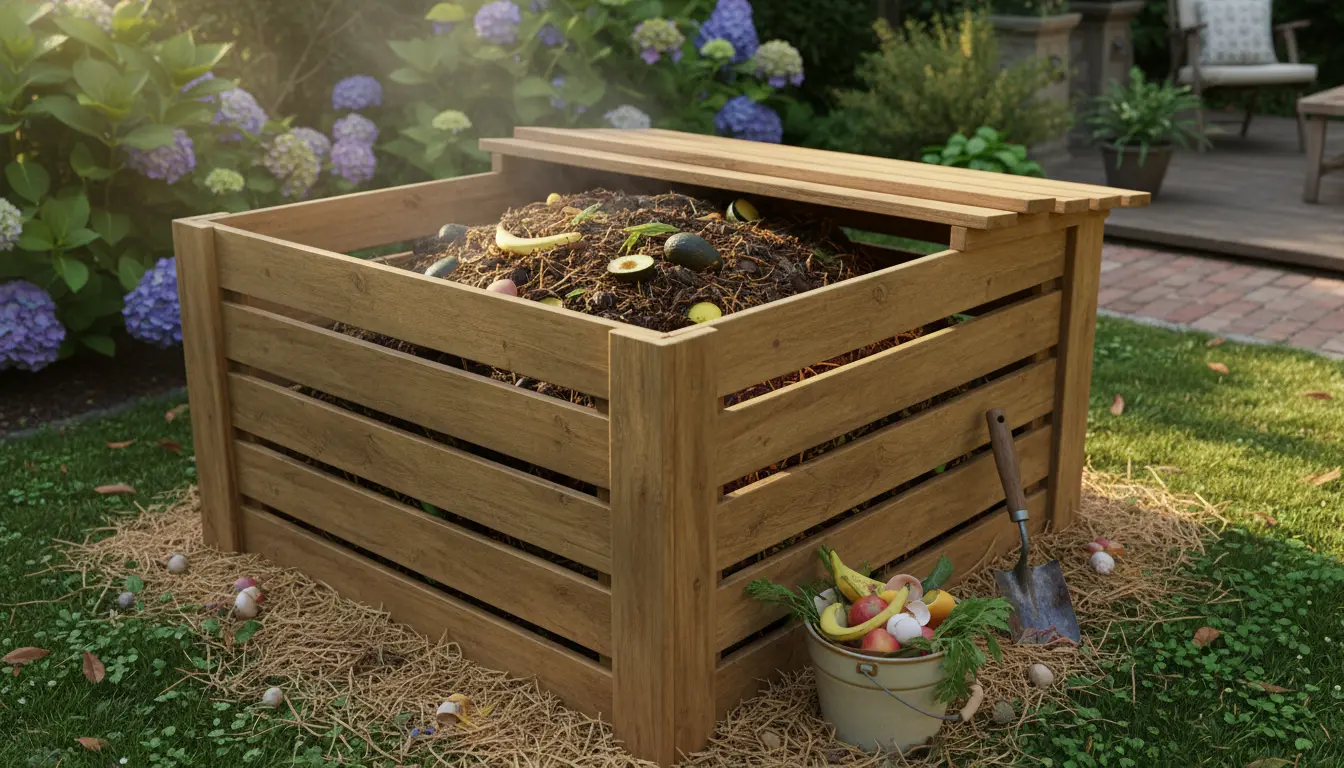
What is home composting?
Home composting is the controlled breakdown of organic kitchen and yard waste into nutrient-rich material you can use in your garden. It reduces landfill waste and returns nutrients to soil in a simple, low-cost way.
Compost can reduce household waste by up to 30 percent and improves soil water retention, cutting garden water needs by as much as 25 percent.
How to start home composting

Starting home composting involves choosing a container, collecting suitable materials, and maintaining the right conditions. You can begin with a simple bin, a tumbler, or an open pile depending on space and local rules.
Choosing a bin for home composting
Select a bin that fits your space and routine. Closed bins and tumblers reduce pests and odors, while open piles or wire bins work well for larger yards and heavy gardeners.
What to compost
Use a mix of green and brown materials to keep decomposition active and balanced. Greens provide nitrogen, while browns supply carbon.
- Greens: fruit and vegetable scraps, coffee grounds, fresh grass clippings, tea bags.
- Browns: dry leaves, shredded paper, cardboard, straw, small wood chips.
What not to compost

Avoid adding items that attract pests, spread disease, or introduce chemicals to your compost. These materials slow the process or create hazards.
- Meat, fish, dairy, oily foods
- Pet waste and cat litter
- Diseased plants or invasive weeds with seeds
- Coal ash, treated wood, or synthetic materials
Balancing greens and browns
A practical rule is roughly 2 parts browns to 1 part greens by volume for most household compost. If the pile is slimy or smells, add more browns. If it’s dry and slow, add greens and water.
Turning and moisture
Turn the pile every 1–2 weeks to add oxygen and speed decomposition. Keep compost as damp as a wrung-out sponge; too dry and microbes slow down, too wet and anaerobic smells develop.
Troubleshooting common problems in home composting

Even simple compost systems can develop issues. Knowing common signs helps you correct course quickly and keep the process healthy.
Bad smell
A sour or rotten smell usually means the pile is too wet or lacks oxygen. Turn the pile, add dry browns, and maintain better airflow by loosening compacted areas.
Slow decomposition
Slow breakdown can come from low moisture, too many browns, or large pieces. Chop materials to smaller sizes, moisten, and add some greens or garden soil to reintroduce microbes.
Pests and rodents
To avoid pests, bury food scraps under a layer of browns, use a closed bin, or compost indoors with a bokashi or small worm bin. Never leave exposed meat or dairy in open piles.
Small real-world case study
Case: A two-person household in a small city started home composting in a 60-liter tumbler on their balcony. They collected food scraps and shredded paper, keeping the tumbler shaded and turning it twice weekly.
Result: After three months they produced fine crumbly compost used to top potted herbs. They reduced their weekly trash by about 40 percent and noticed healthier plant growth from the added compost.
Tools, timeline, and uses for finished compost
Minimal tools are needed: a bin, a garden fork or hand trowel, and a pair of scissors or pruners to cut large items. Optional items include a compost thermometer and a tumbler for faster results.
- Timeline: Hot, well-managed piles can yield compost in 2–3 months. Cooler or less-managed piles take 6–12 months.
- Testing: Finished compost looks dark, smells earthy, and no longer shows original food pieces.
- Uses: Mix into garden beds, topdress lawns, refresh potting soil, or use as mulch around shrubs.
Next steps and tips for success in home composting
Make composting a habit by keeping a small counter container for scraps and transferring them to your outdoor bin regularly. Label bins and keep a simple log of additions and turns to learn what works.
- Start small and scale up as you get comfortable.
- Shred or chop bulky materials to speed decomposition.
- Maintain balance: adjust greens, browns, moisture, and aeration as needed.
- Use finished compost within a year for best nutrient value.
Home composting is a practical, low-cost way to reduce waste and improve soil health. With basic tools, a little routine, and attention to balance, most households can produce useful compost and reap the benefits in their garden or containers.