
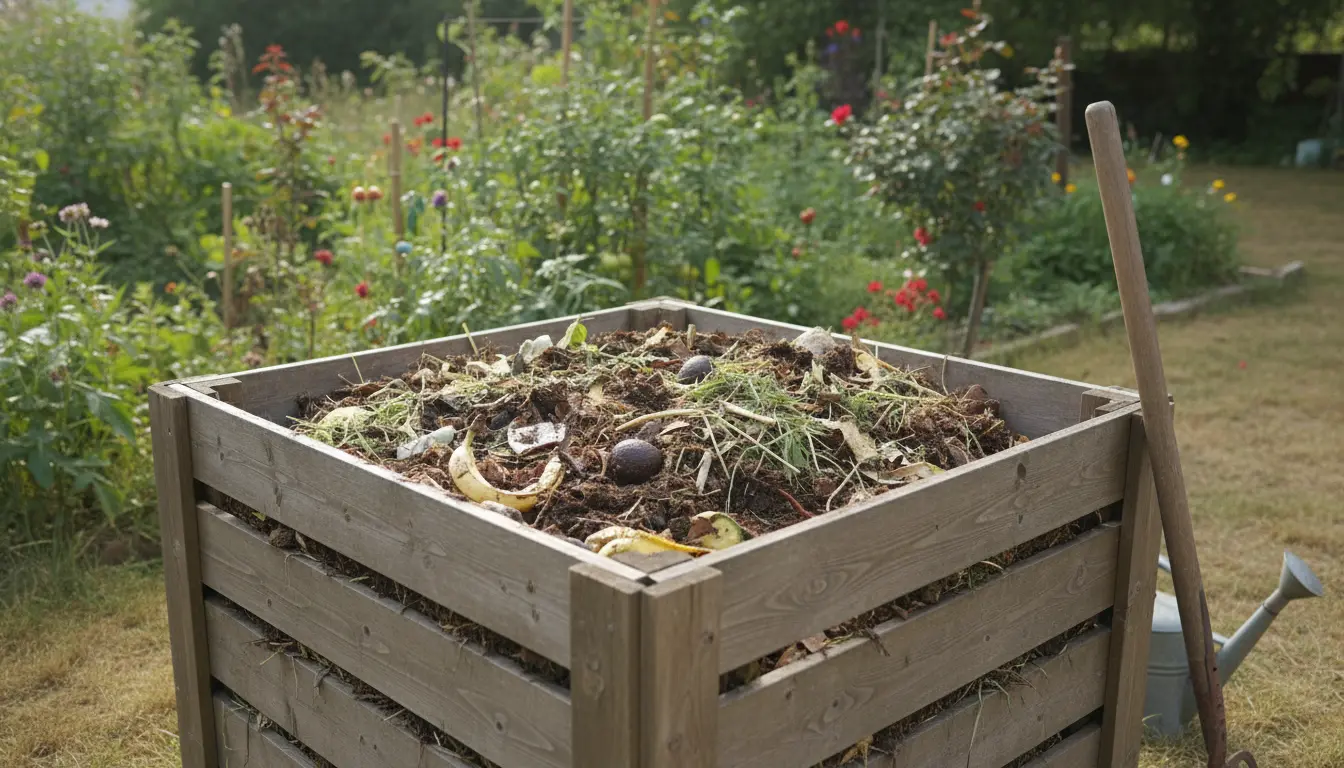
Composting at home turns kitchen and yard waste into rich soil amendment. This guide gives clear, practical steps you can use whether you have a backyard or a small balcony.
Home Composting for Beginners: What You Need
Start with a simple container, basic tools, and a plan for materials. You do not need expensive equipment to get meaningful results.
Choose a Compost Bin or Pile

Options include a stationary pile, a covered bin, or a tumbling composter. For small spaces, a sealed kitchen caddy plus a worm bin or a compact outdoor bin works well.
Consider these factors when choosing:
- Available space and sunlight
- Waste volume you produce
- Ease of turning or aeration
Gather Tools and Materials
Keep a few basic tools on hand: a pitchfork or compost aerator, a garden thermometer (optional), and a small shovel. Collect brown and green materials separately for easier mixing.
Home Composting for Beginners: The Core Method

Composting is a biological process that needs carbon, nitrogen, air, and moisture. Balance these elements to speed decomposition and avoid odors.
Balance Browns and Greens
‘Browns’ are carbon-rich materials like dried leaves, straw, and shredded paper. ‘Greens’ are nitrogen-rich items like vegetable scraps, coffee grounds, and grass clippings.
A good rule of thumb is roughly 3 parts browns to 1 part greens by volume. Adjust as needed based on smell and moisture.
Layering and Turning

Start with a coarse layer for airflow. Add alternating layers of greens and browns, keeping the pile moist like a wrung-out sponge. Turn the pile every 1–2 weeks to introduce oxygen and distribute microbes.
Home Composting for Beginners: Troubleshooting Common Issues
Problems are usually easy to fix once you identify their cause. Most issues come from imbalance in moisture, air, or materials.
Bad Odor
If your compost smells sour or rotten, it is too wet or lacks air. Fix it by adding dry browns and turning the pile to increase aeration.
Slow Decomposition
Slow breakdown often means the pile is too dry, too cold, or lacks nitrogen. Add water if dry, move the bin to a warmer spot, or add fresh green materials.
Pests and Fruit Flies
Avoid adding meat, dairy, oily foods, or large unburied scraps. Use a closed bin or bury food scraps within the pile to reduce attraction.
Composting can divert up to 30% of household waste from landfills and can reduce methane emissions from organic matter decomposing in anaerobic landfill conditions.
Home Composting for Beginners: Practical Tips and Examples
Small habits make composting easier and more consistent. Use a countertop caddy for daily scraps and empty it into your outdoor bin twice a week.
- Chop large kitchen scraps to speed breakdown.
- Use shredded cardboard or newspaper as a brown material in winter.
- Keep a designated compost shovel to avoid cross-contamination.
Case Study: Urban Apartment Composting
Maria lives in a two-bedroom city apartment and reduces weekly garbage by composting. She uses a 10-liter sealable kitchen caddy and a small worm bin on her balcony.
After six months she reports a 40% reduction in bagged waste and produced several liters of worm castings for her balcony herbs. Her steps were simple: collect scraps daily, add shredded paper as needed, and harvest castings every 2–3 months.
Home Composting for Beginners: When Is Compost Ready?
Mature compost looks dark, crumbly, and earthy-smelling. It should no longer resemble original materials and should be cool to the touch.
Using Finished Compost
Mix finished compost into garden soil, topdress potted plants, or use it as a seed-starting amendment. Apply a thin layer around plants to improve moisture retention and nutrient content.
Home Composting for Beginners: Final Checklist
Before you start, make sure you have the basics covered. This checklist keeps the process simple and efficient.
- A bin or pile suitable for your space
- Supply of browns and greens
- A plan for turning or aeration
- Simple tools for maintenance
Home composting is a low-cost way to reduce waste and enrich your soil. Start small, observe the process, and adjust the balance of materials and moisture as you learn. With a few basic routines, you can produce healthy compost year-round.