
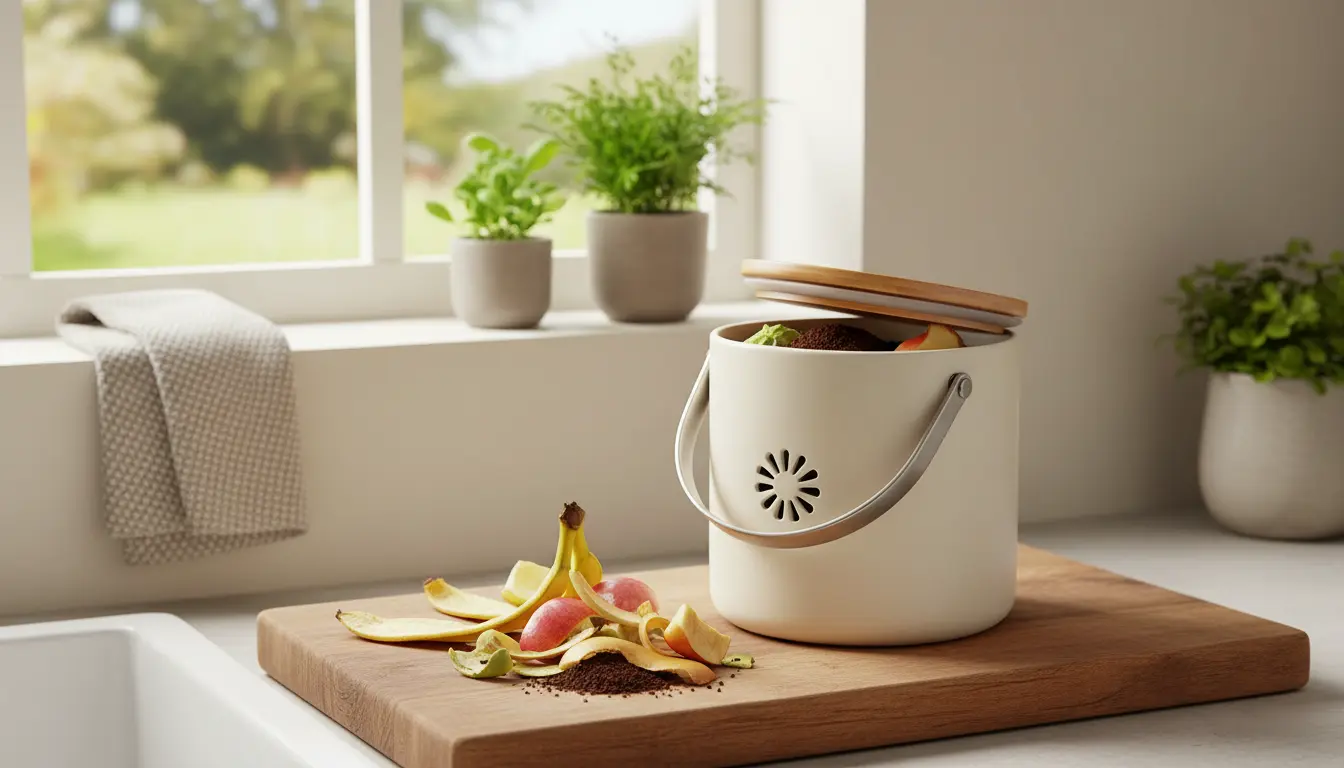
Why Home Composting Matters
Home composting turns kitchen scraps and yard waste into nutrient-rich soil. It reduces household waste and cuts methane emissions from landfills.
This guide gives clear steps, common setups, and troubleshooting tips so beginners can start composting at home.
Choosing a Home Composting Method

Your space and routine determine the best system. Choose a method that suits your climate, available space, and how much waste you produce.
Backyard Pile or Bin
Best for homes with yards. A simple tumbling bin or stationary pile works for most garden needs. Choose a size that matches your waste volume.
Bokashi and Indoor Systems
Bokashi uses fermentation to process all kitchen waste, including meat and dairy. It’s compact and works in apartments.

Indoor worm bins (vermicomposters) are another option for limited space and produce rich worm castings.
What to Compost: Greens and Browns
Effective composting needs a balance of nitrogen-rich “greens” and carbon-rich “browns.”
- Greens (nitrogen): fruit and vegetable scraps, coffee grounds, fresh grass clippings.
- Browns (carbon): dry leaves, shredded paper, cardboard, straw.
A simple ratio to start with is about 2–3 parts browns to 1 part greens by volume.
Step-by-Step: Starting a Home Compost Bin

Follow these steps to build a steady composting process that’s low-maintenance.
- Pick a bin and location. For backyard bins choose a semi-shaded, level spot. For indoor systems choose a well-ventilated area.
- Layer the base. Start with coarse browns like small branches or straw to aid airflow.
- Add greens and browns. Chop large items to speed decomposition and keep the ratio balanced.
- Maintain moisture and airflow. Aim for a damp sponge feel and turn the pile every 1–2 weeks if possible.
- Harvest finished compost. When material looks dark, crumbly, and earthy, it’s ready to use in pots or garden beds.
Troubleshooting Common Problems
Small issues are normal and usually easy to fix with a simple adjustment.
Bad Odors
Cause: Too many greens or lack of air. Fix: Add browns like shredded paper and turn the pile to aerate.
Slow Decomposition
Cause: Too dry, too cold, or not enough nitrogen. Fix: Add greens and keep the pile moist; consider insulating the bin in cold months.
Fruit Flies or Pests
Cause: Exposed food scraps. Fix: Bury fresh scraps under browns, use a closed bin, or use a Bokashi system.
Using Finished Compost
Finished compost improves soil structure, water retention, and nutrient content. Use it as a top-dressing, potting mix ingredient, or garden amendment.
- Vegetable beds: mix 1–2 inches into the topsoil before planting.
- Flower beds: apply a thin layer as mulch around plants.
- Potted plants: blend 10–20% compost into potting soil.
Simple Tools and Supplies
You don’t need fancy gear to start. A few basic items keep the process tidy and effective.
- Compost bin or tumbling tumbler
- Pitchfork or compost aerator
- Kitchen scrap container with lid
- Browns stock: shredded paper, dry leaves
Composting one household can reduce its trash volume by up to 30 percent and return valuable nutrients to the soil.
Small Case Study: Apartment Bokashi Setup
Maria lives in a two-bedroom apartment and started a Bokashi system six months ago. She produces about one small bucket of food waste per week.
Her setup: a compact Bokashi bucket under the sink, a second bucket fermenting, and a small worm bin for finished material. She buries the fermented matter in a community garden plot or feeds it to her worm bin.
Results: Maria reduced weekly garbage by half, grew healthier potted herbs, and saved $15 monthly on store potting mix.
Tips for Long-Term Success
Keep habits simple and consistent. Small daily actions add up to a reliable compost system.
- Collect scraps in a lidded container to avoid pests and smells.
- Chop large scraps to speed decomposition.
- Keep a supply of browns nearby for quick balancing.
- Monitor moisture with a quick squeeze test — not soggy, not dry.
Final Checklist: Start Home Composting Today
- Choose a method: backyard bin, tumbler, Bokashi, or worm bin.
- Gather supplies: bin, aerator, kitchen container, browns.
- Follow the greens-to-browns ratio and maintain moisture.
- Harvest compost when it is dark and crumbly and put it to use in your garden or pots.
Home composting is practical, affordable, and rewarding. Start small, learn the system, and expand as you gain confidence.