
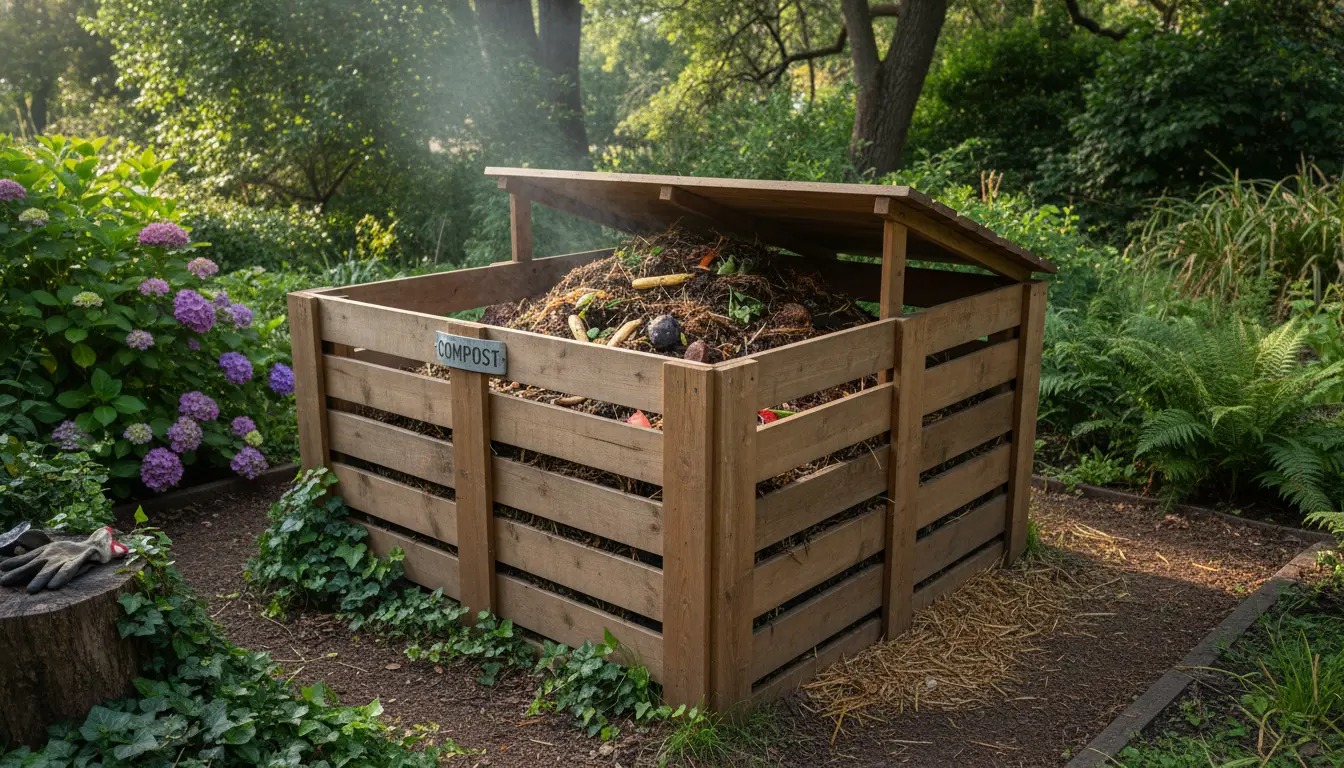
Home Composting for Beginners: Getting Started
Composting at home is an easy way to reduce waste and improve soil. This guide walks beginners through the basic steps to set up and maintain a compost pile or bin.
Follow these practical instructions to turn kitchen scraps and yard waste into nutrient-rich compost you can use in pots or garden beds.
Why Home Composting for Beginners Matters

Composting keeps organic material out of landfills where it emits methane, a potent greenhouse gas. It also returns nutrients to soil, improving plant health and water retention.
Even small changes, like collecting vegetable scraps, can make a difference over time.
What You Need for Home Composting for Beginners
Start with simple tools and materials. You do not need specialized equipment to begin.
- Container: a backyard bin, tumbler, or a simple pile in a corner.
- Materials: a mix of green (nitrogen) and brown (carbon) items.
- Tools: a garden fork or a pitchfork to turn the pile occasionally.
- Optional: a kitchen caddy to collect scraps before adding them to the bin.
Green and Brown Materials

Balancing green and brown materials helps the pile decompose evenly.
- Green: vegetable scraps, coffee grounds, grass clippings.
- Brown: dry leaves, shredded paper, cardboard, straw.
- Aim for roughly 2 parts brown to 1 part green by volume for best results.
How to Start a Compost Pile or Bin
Choose a level spot with some drainage and partial shade. A bin keeps the area tidy, but an open pile works too.
Follow these steps to build a working compost system:
- Layer a 3–6 inch base of coarse brown material to aid airflow.
- Add a mix of greens and browns in alternating layers, keeping layers thin rather than a single large load.
- Moisten each layer so the pile is damp but not soggy—think of a wrung-out sponge.
- Turn the pile every 1–2 weeks to supply oxygen and speed decomposition.
Compost Bin Options

Beginners can choose a method that fits space and effort available.
- Open pile: lowest cost, requires space and occasional turning.
- Wire bin: inexpensive, allows airflow, keeps pile contained.
- Tumbler: convenient and faster but may be more costly.
Compost can reach temperatures of 130–160°F (54–71°C) in active piles. These temperatures help kill weed seeds and pathogens when the pile is built correctly.
Troubleshooting for Home Composting for Beginners
Common issues are easy to fix with small adjustments. Use these quick checks before abandoning a pile.
- Bad smell: add more brown materials and turn the pile to introduce oxygen.
- Too dry: sprinkle water when turning the pile to reach a damp sponge consistency.
- Slow decomposition: chop large materials and maintain the brown-green balance.
Pests and Food Scraps
Avoid adding meat, dairy, or oily foods to outdoor compost—these attract pests. Use a closed bin or an indoor bokashi system for those items.
Cover fresh food scraps with a layer of brown material to reduce odors and discourage animals.
Maintenance and Harvesting
Regular turning and monitoring moisture are the main maintenance tasks. How often you turn depends on volume and method.
- Turn every 1–2 weeks for active, hot composting.
- For a low-maintenance approach, turn less often; compost will take longer but still work.
- Finished compost looks dark, crumbly, and earthy and has no recognizable food bits.
How to Use Finished Compost
Use finished compost as a soil amendment, top dressing for lawns, or mixed into potting soil. Apply a 1–3 inch layer to garden beds and lightly work it into the topsoil.
Small Real-World Example
Case study: A two-person household in a small yard started a 3-foot wire bin. They collected kitchen scraps in a countertop caddy and added dry leaves from their yard.
After six months of layering and turning every two weeks, they produced enough compost to top three raised beds. They noticed improved soil texture and healthier vegetable growth the following season.
Tips and Quick Checklist for Home Composting for Beginners
Keep this short checklist handy when starting out.
- Collect greens and browns separately.
- Chop or shred large items to speed decomposition.
- Maintain moisture like a wrung-out sponge.
- Turn the pile regularly for aerobic breakdown.
- Keep out meat, dairy, and oily foods unless using a specialized system.
Final Notes on Home Composting for Beginners
Composting is flexible: adapt methods to your space and time. Start small, learn from the pile, and adjust the balance of materials as needed.
With modest effort, beginners can produce free, healthy compost that benefits plants and reduces household waste.