
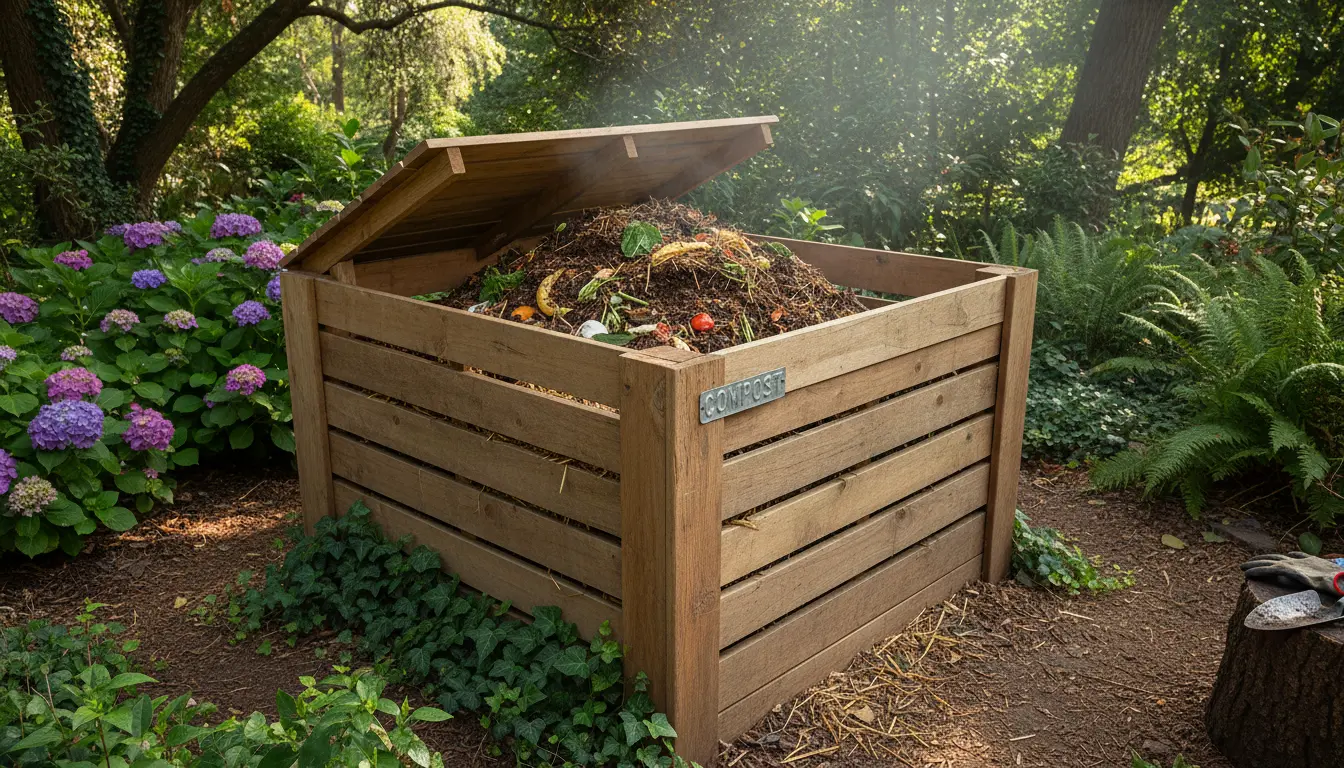
Home composting turns kitchen scraps and yard waste into nutrient-rich soil that benefits gardens and reduces landfill waste. This guide explains practical steps so anyone can begin composting at home with minimal tools and knowledge.
Home Composting for Beginners: Why Start
Composting reduces household waste, improves soil structure, and saves money on fertilizers. It also lowers methane emissions from landfills by diverting organic material to aerobic decomposition.

Beginners often worry it will be smelly or complicated. With the right balance and basic management, composting is simple and low-maintenance.
What You Need for Home Composting for Beginners
You don’t need expensive equipment to begin composting. A basic bin, a way to turn the pile, and a mix of materials will get you started.
- Container: Tumbling bin, plastic bin with holes, or an open pile.
- Brown materials: Dry leaves, shredded paper, cardboard.
- Green materials: Vegetable scraps, coffee grounds, grass clippings.
- Water source and garden fork or pitchfork for turning.
Choosing a Bin for Home Composting for Beginners
Pick a bin that fits your space and household size. Tumblers speed up decomposition, while simple bins are cheaper and effective with occasional turning.

Place the bin in a shaded, level spot with good drainage. Accessibility matters—choose a location you will use regularly.
How to Set Up Home Composting for Beginners
Follow a few basic steps to establish a healthy compost pile that decomposes evenly and smells fresh.
- Layering: Start with coarse browns for drainage, then alternate green and brown layers. Aim for roughly a 2:1 or 3:1 ratio of browns to greens by volume.
- Moisture: Moist like a wrung-out sponge is ideal. Add water during dry spells and cover if heavy rain floods the pile.
- Turning: Every 1–2 weeks, turn the pile to add oxygen and mix materials. Regular turning speeds up decomposition and reduces odors.
- Monitoring: Check temperature and moisture. A properly working pile will heat in the center and gradually cool as materials break down.
Common Materials to Use and Avoid
Good materials help balance carbon and nitrogen for efficient composting. Avoid items that attract pests or carry pathogens.
- Use: Fruit and vegetable scraps, coffee grounds, tea bags, eggshells, yard trimmings, shredded paper.
- Avoid: Meat, dairy, oils, diseased plants, and pet waste.
Troubleshooting for Home Composting for Beginners

Problems are often easy to fix once you know the cause. Address them with simple adjustments.
- Bad smells: Likely too wet or too many greens. Add dry browns and turn the pile.
- Slow decomposition: Add more greens (nitrogen) and increase turning to add oxygen.
- Pests: Use a covered bin, bury food scraps under browns, and avoid meat or oily foods.
Composting can reduce household waste by up to 30 percent. Finished compost improves water retention in soil and reduces the need for chemical fertilizers.
How to Know When Compost Is Ready
Finished compost is dark, crumbly, and earthy-smelling. Most materials break down in 3–6 months with regular turning, though passive piles take longer.
Screen the compost through a mesh to separate finished compost from larger pieces that need more time.
Using Finished Compost
Apply finished compost to garden beds, use it as potting mix component, or top-dress lawns. It improves soil structure, adds slow-release nutrients, and supports beneficial microbes.
Small Real-World Case Study
Case study: Sarah in Austin started a 60-liter tumbling composter on her apartment balcony. She collected kitchen scraps in a small counter caddy and emptied it into the tumbler twice a week.
Within four months she produced enough compost to top-dress two raised beds and reduced her weekly trash bag by half. Regular turning and a 3:1 ratio of dried leaves to kitchen scraps kept odors away and sped decomposition.
Tips and Best Practices for Home Composting for Beginners
Use these practical tips to stay consistent and get reliable results from your composting efforts.
- Collect scraps in a lidded container to avoid pests and smells until you add them to the bin.
- Keep a supply of shredded cardboard or dry leaves to balance fresh greens when needed.
- Label bins or sections to track how long material has been composting.
- Compost seasonally—add more brown material in fall when leaves are available.
Final Checklist for Home Composting for Beginners
- Choose a suitable bin and location.
- Maintain roughly 2–3 parts brown to 1 part green by volume.
- Keep moisture like a wrung-out sponge.
- Turn regularly to introduce oxygen.
- Avoid meat, dairy, and pet waste.
Starting home composting is a practical step toward reducing waste and improving soil health. With a simple bin, basic balance of materials, and a little turning, beginners can generate rich compost and see tangible benefits in months.