
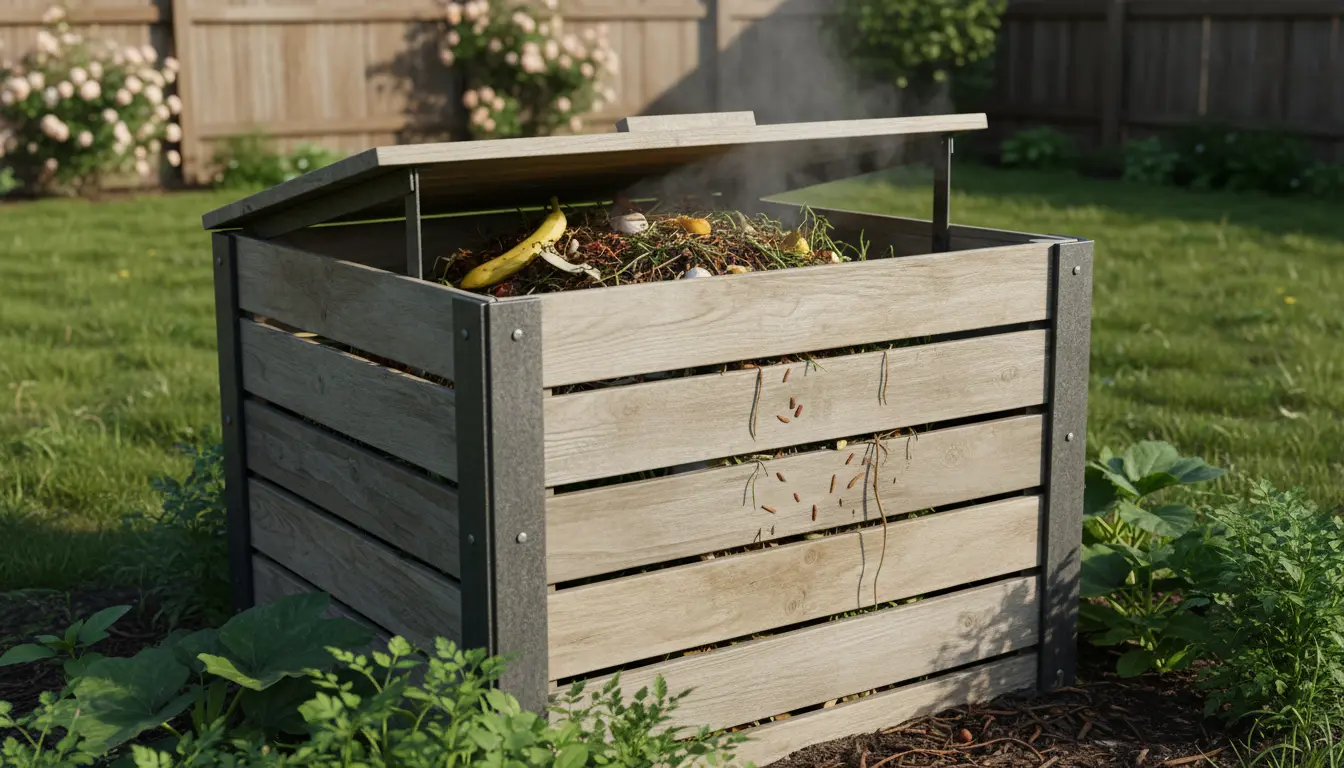
What is home composting and why it matters
Home composting is the controlled decomposition of organic waste into a nutrient-rich soil amendment. It reduces the amount of trash sent to landfills and returns valuable nutrients to your garden or containers.
For composting for beginners, the process can be simple, low-cost, and scaled to any living situation—from a backyard pile to a small balcony bin.
Getting started with home composting for beginners

Begin by choosing a system that fits your space and lifestyle. Options range from an open pile to enclosed tumblers and worm (vermicompost) bins.
Use these quick selection guidelines:
- Backyard (yard space): Simple open pile or stationary bin.
- Small yard or patio: Enclosed compost bin or tumbler to keep pests away.
- Apartment or balcony: Worm bin or bokashi system for limited space and indoor use.
Choosing a compost system
Consider cost, maintenance, and how fast you want finished compost. Tumblers speed up mixing and aeration. Worm bins produce rich compost quickly in small spaces.

Buy or build a bin with good drainage and airflow. If you choose a static pile, use a wire or wooden frame to keep it tidy.
Materials to compost
Compost needs a balance of “greens” (nitrogen-rich) and “browns” (carbon-rich). Aim for roughly a 2:1 or 3:1 ratio of browns to greens by volume for a stable pile.
- Greens: vegetable scraps, fruit peels, coffee grounds, fresh grass clippings.
- Browns: dry leaves, straw, shredded paper, cardboard, small wood chips.
Avoid meat, dairy, oils, diseased plants, and pet waste unless you have a specialized system that reaches high temperatures.
How to build and maintain your compost pile

Start with a 6–12 inch base of coarse browns (twigs, straw) for airflow. Add alternating layers of greens and browns, keeping layers thin so the pile heats evenly.
Key maintenance tasks include aeration, moisture control, and occasional turning.
Aeration and turning
Aerate the pile every 1–2 weeks by turning with a pitchfork or rotating a tumbler. Proper oxygen prevents odors and supports the microbes that break down material.
Moisture control
The pile should be about as damp as a wrung-out sponge. Add water during dry spells and mix in more browns if it becomes soggy.
Temperature and timeline
Active composting heats the pile to 120–160°F (49–71°C) and can produce finished compost in 2–4 months. Cold composting without frequent turning may take 6–12 months.
Troubleshooting common problems in home composting
Beginners often encounter a few typical issues. Here’s how to fix them quickly.
- Bad odors: Add more browns and turn the pile to introduce air.
- Slow decomposition: Chop materials into smaller pieces, increase greens, or turn more regularly.
- Pests: Use enclosed bins, bury food scraps in the center, avoid meat and dairy.
- Too wet: Mix in dry browns and improve drainage.
Composting at home can cut household waste by up to 30 percent and reduce methane emissions from landfills.
Small case study: Urban balcony compost success
Case study: Sarah, a city renter, started a 10-liter worm bin on her balcony. She fed it vegetable scraps and coffee grounds and added shredded newspaper as bedding.
After three months she harvested a small batch of dark, crumbly worm castings. She used the castings to top-dress two container tomato plants and saw better leaf color and fuller fruit set that season.
Key takeaways: worms handle kitchen waste quietly, require little space, and produce a potent soil amendment for container gardens.
How to use finished compost
Finished compost looks dark, crumbly, and earthy-smelling. Use it as a soil conditioner, top-dress, or potting mix component.
Application tips:
- Mix 10–30% compost into garden beds when planting.
- Top-dress perennials and lawns with a thin layer (about 1/4 to 1/2 inch).
- Blend compost with potting soil for container plants to improve water retention and nutrients.
Final tips for composting for beginners
Start small and keep it consistent. Track what you add and how the pile responds so you learn what balance works in your climate.
Useful tools include a pitchfork, compost thermometer, and a simple kitchen scrap container with a tight lid to collect greens between composting sessions.
Composting is a practical habit that benefits soil, plants, and the planet. With a bit of trial and adjustment, most beginners can produce useful compost within a few months.
Quick checklist to start
- Choose a system (pile, bin, tumbler, worm bin)
- Gather browns and greens
- Layer material and keep moist
- Turn or aerate regularly
- Harvest and use finished compost