
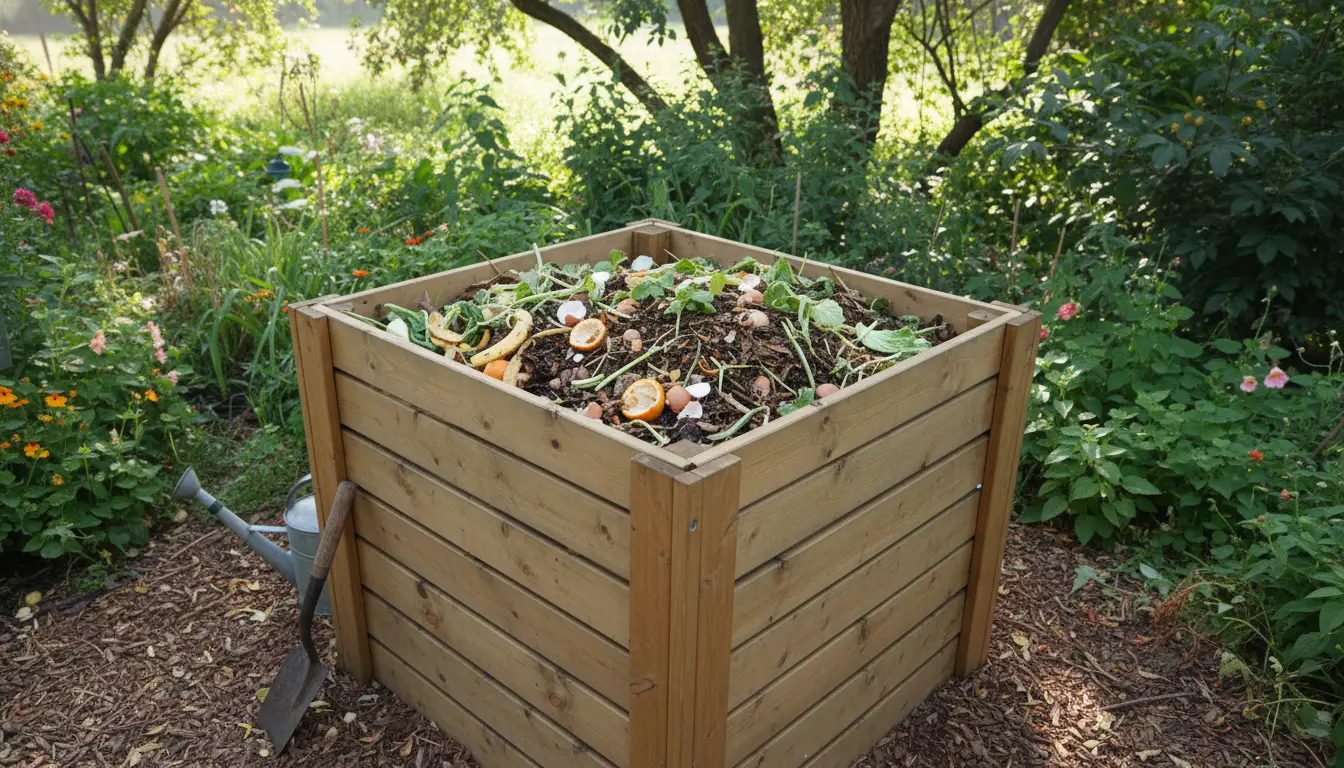
Why Choose Home Composting for Beginners
Starting a compost pile at home reduces household waste and returns nutrients to your garden. The process is low-cost and fits small yards, balconies with bins, or community plots.
This guide explains basic principles, setup options, and simple troubleshooting for home composting for beginners.
Home Composting for Beginners: Basic Principles

Composting is the controlled decomposition of organic matter by microbes. Successful composting balances carbon-rich materials (browns) and nitrogen-rich materials (greens).
Key elements are air, moisture, particle size, and temperature. Keep these in mind as you plan and manage your system.
Essential Materials to Use
- Greens (nitrogen): vegetable scraps, coffee grounds, fresh grass clippings.
- Browns (carbon): dry leaves, shredded cardboard, straw, paper towels.
- Avoid: meat, dairy, diseased plants, and pet waste from carnivores.
Choose Your Compost Method
Beginners can select from several simple systems. Pick one that fits space and time.
- Open pile: Best for larger yards, low cost, needs turning.
- Bin or tumbler: Cleaner and faster in small spaces, easier to maintain.
- Bokashi or worm bin (vermicompost): Ideal for apartments and kitchens.
Setting Up a Compost Bin for Home Composting for Beginners

Most starters benefit from a simple bin or tumbler. Choose a container with good drainage and airflow.
Place the bin on soil or a breathable surface to allow beneficial organisms to enter. A partly shaded spot helps maintain steady moisture and temperature.
Step-by-Step Setup
- Layer a base of coarse browns like twigs or straw for drainage.
- Add a mix of greens and browns, aiming for roughly 2–3 parts browns to 1 part greens by volume.
- Moisten until damp like a wrung-out sponge.
- Turn or mix every 1–2 weeks to add oxygen and speed decomposition.
Food scraps and yard waste make up about 30% of household trash by weight. Composting can divert a large portion of that from landfills.
Troubleshooting Common Problems in Home Composting for Beginners

Some issues are normal and easy to fix. Use simple checks to diagnose problems quickly.
Smell or Odor
A rotten or sour smell means too much nitrogen or not enough air. Add dry browns and turn the pile to aerate.
Slow Breakdown
Slow composting often results from large pieces or low moisture. Chop or shred materials and ensure the pile stays slightly moist.
Pest Problems
Attracting rodents usually happens when meat or oily foods are tossed in. Remove these items and bury kitchen scraps under a layer of browns.
How to Use Finished Compost
Compost is ready when it looks dark, crumbly, and earthy-smelling. Use it as a soil amendment or mulch in your garden.
- Top dress vegetable beds with a 1–2 inch layer.
- Mix compost into potting soil at 10–20% by volume for container plants.
- Use compost tea (steeped in water) as a mild nutrient boost for plants.
Small Real-World Example: Case Study
Maria is a homeowner who started home composting for beginners in her small yard. She chose a 60-gallon tumbling bin and followed the 2:1 brown-to-green rule.
Within six months she produced enough compost to top-dress three raised beds. Her household trash volume decreased by nearly 40%, and her tomato plants produced fuller fruit.
This shows that modest, consistent effort yields measurable benefits quickly.
Quick Tips and Practical Checklist for Home Composting for Beginners
- Keep materials in balance: roughly 2–3 parts browns to 1 part greens.
- Maintain moisture: damp, not soggy.
- Turn regularly: every 1–2 weeks for faster compost.
- Chop waste: smaller pieces decompose faster.
- Monitor pests and avoid risky inputs like meat and dairy.
Home composting for beginners is a practical way to reduce waste and improve soil health. Start simple, watch the balance of materials, and adjust as you learn.