
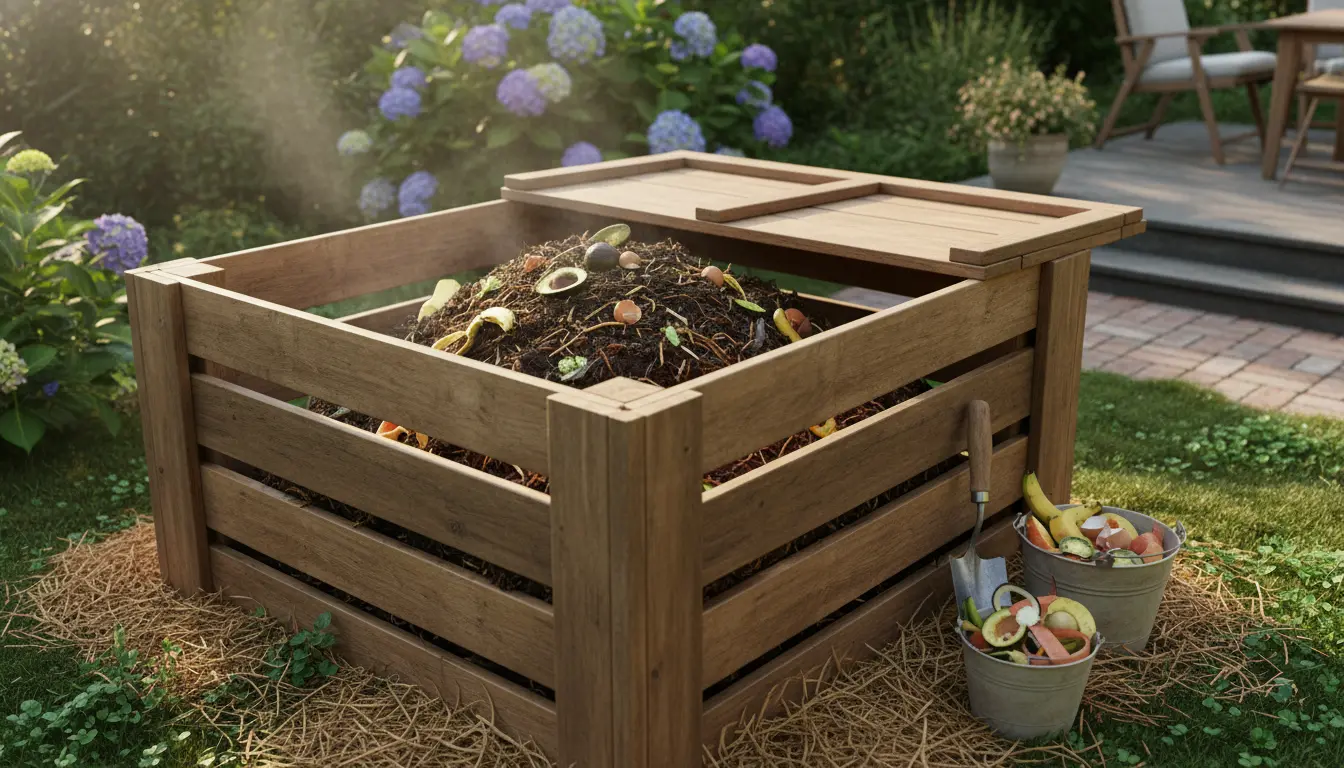
What is Home Composting?
Home composting is the controlled breakdown of organic kitchen and yard waste into nutrient-rich material for soil. It reduces household waste, cuts disposal costs, and improves garden soil structure.
Why Choose Home Composting
Composting at home lowers the amount of trash sent to landfills and reduces methane emissions. It also returns valuable nutrients to your garden, promoting healthier plants without chemical fertilizers.
How to Start Home Composting

Starting composting requires basic tools and a little planning. Follow these simple steps to build a reliable system that fits your space and lifestyle.
Step 1: Pick a Compost System for Home Composting
Choose a system based on space, budget, and how quickly you want finished compost. Common options include open bins, tumblers, and worm bins (vermicomposters).
- Open bin: Inexpensive, good for yards, requires turning.
- Tumbler: Faster decomposition, easy turning, compact.
- Vermicompost: Great for apartments, processes kitchen scraps quickly with worms.
Step 2: Select Location
Place the compost container on level ground with some shade. Good drainage and partial sunlight help microbial activity without drying the pile.
Step 3: Gather Materials

Balance green and brown materials to maintain effective decomposition. Greens supply nitrogen; browns add carbon and structure.
- Greens: fruit and vegetable scraps, coffee grounds, fresh grass clippings.
- Browns: dry leaves, cardboard torn into pieces, shredded paper, straw.
Step 4: Build and Maintain the Pile
Start with a layer of coarse browns for airflow. Alternate greens and browns in 6–8 inch layers. Keep the pile moist like a wrung-out sponge.
- Turn the pile every 1–2 weeks for faster results.
- Aeration prevents odors and speeds decomposition.
Troubleshooting Home Composting Problems
Simple adjustments fix most issues. Watch for smell, pests, and slow decomposition, then respond with targeted steps.
Common Problems and Fixes
- Bad odors: Add more brown materials and turn the pile to add oxygen.
- Pests such as rodents: Use a closed bin, bury food scraps, or use a rodent-proof tumbler.
- Pile too dry: Add water and greens; cover the pile during dry spells.
- Slow breakdown: Chop materials smaller, maintain moisture, and turn more often.

Adding small amounts of finished compost to a new pile introduces helpful microbes and speeds decomposition. A handful of garden soil can also kick-start the process.
Monitoring and Using Finished Compost
Finished compost is dark, crumbly, and smells earthy. It usually takes 2–12 months depending on method and maintenance. Sift large pieces and return them to the pile to continue breaking down.
Use finished compost as a soil amendment, top dressing, or potting mix ingredient. It improves water retention and nutrient availability in soil.
Small Real-World Case Study
Case: A two-person household in a suburban lot started a 3-bin compost system. They added most kitchen scraps and weekly yard clippings.
After six months the household recorded these changes:
- Household waste to landfill reduced by 55%.
- Garden soil organic matter increased enough to reduce watering by 20% during summer months.
- They harvested two wheelbarrows of finished compost and used it to refresh vegetable beds.
Their system required 10 minutes of maintenance twice a week during active months and occasional pest-proofing measures.
Practical Tips for Consistent Home Composting
- Keep a small countertop bin with a tight lid for daily collection.
- Chop or shred materials to speed decomposition.
- Record pile temperature or appearance to learn what works for your climate.
- Use a balance of roughly 3 parts browns to 1 part greens by volume as a starting ratio.
Safety and Regulations for Home Composting
Check local rules for backyard composting, especially in urban areas. Avoid composting meat, dairy, or oils in open systems, as they attract pests and may violate local ordinances.
Summary: Key Steps to Successful Home Composting
- Choose a system that fits your space and needs.
- Balance greens and browns and maintain moisture and airflow.
- Turn and monitor the pile regularly to prevent problems.
- Use finished compost to improve soil health and reduce waste.
Home composting is an accessible, practical step toward sustainable living. With the right setup and simple maintenance, most households can produce useful compost and significantly cut organic waste in a year.