
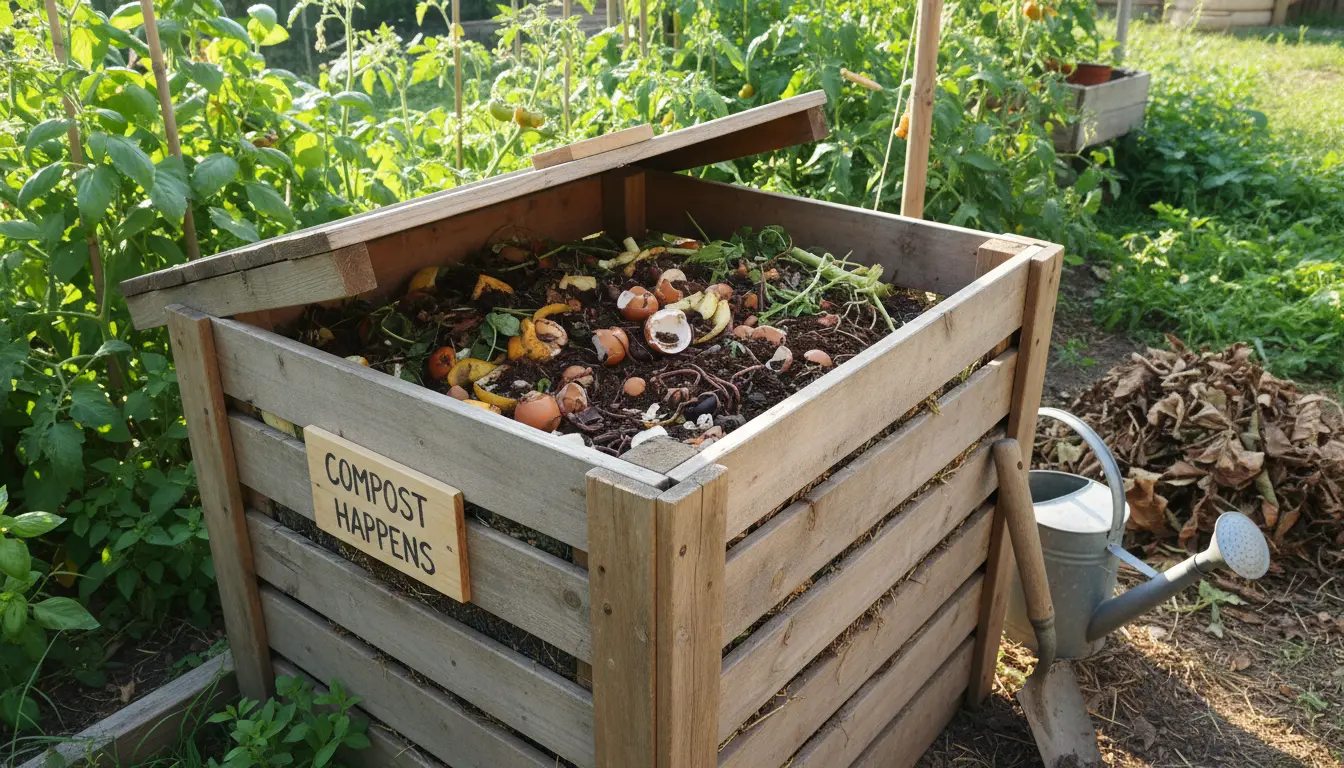
Composting at home turns kitchen and yard waste into a useful soil amendment. This guide gives clear, actionable steps to start and maintain home composting, whether you have a yard, balcony, or just a small kitchen.
What Is Home Composting and Why It Matters
Home composting is the natural breakdown of organic material into humus you can use in gardens or potted plants. It reduces landfill waste and improves soil structure and plant health.

Composting closes the loop on food waste and cuts greenhouse gas emissions from landfills. It also saves money on soil and fertilizer.
Basic Principles of Home Composting
Successful home composting balances four elements: carbon, nitrogen, moisture, and oxygen. Think of carbon-rich materials as ‘browns’ and nitrogen-rich materials as ‘greens.’
- Carbon (browns): dry leaves, cardboard, straw, shredded paper.
- Nitrogen (greens): vegetable scraps, coffee grounds, fresh grass clippings.
- Moisture: similar to a wrung-out sponge; not dripping wet, not bone dry.
- Oxygen: turn or aerate the pile to feed aerobic microbes.
How to Start Home Composting
Follow these simple steps to set up a reliable compost system at home. Choose a method based on space and time.
Step 1: Pick a System for Home Composting

Options include a backyard pile, tumbler, worm bin (vermicompost), or a bokashi system for small spaces. Pick one that fits your space and effort level.
Step 2: Choose a Location
Place bins on soil or a well-drained surface with partial shade. For balconies, use contained systems like tumblers or worm bins to manage odor and pests.
Step 3: Build Your First Layer
Start with coarse browns such as small branches or straw to improve airflow. Add alternating layers of greens and browns, aiming for roughly 2:1 or 3:1 browns to greens by volume.
Step 4: Maintain Your Compost

Turn the pile every 1–2 weeks if possible, or rotate a tumbler weekly. Check moisture and add water if too dry, or more browns if too wet.
What to Compost and What to Avoid
Knowing what materials work best prevents problems. Use this quick list as a guide.
- Good: fruit and vegetable scraps, coffee grounds, eggshells, yard trimmings, shredded paper.
- Use with caution: citrus peels in small amounts, onion skins, cooked food (small amounts only), pet hair.
- Avoid: meat, dairy, bones, oily foods, diseased plants, and pet feces (risk of pathogens).
Troubleshooting Home Composting Problems
Common issues are usually easy to fix by adjusting balance or airflow.
- Bad smell: Add more browns and increase aeration. Odors mean anaerobic conditions.
- Slow breakdown: Chop materials smaller and keep the pile moist and warm.
- Fruit flies: Cover fresh food scraps with a layer of browns or use a closed container.
Speeding Up Compost: Practical Tips
To accelerate composting, shred materials, maintain a 2–3:1 ratio of browns to greens, and keep the pile at least 1 cubic foot so it retains heat. Turning frequently and using a compost starter or finished compost can also boost microbial activity.
Case Study: Small Balcony Worm Bin for Apartment Composting
Maria, a city renter, started a 10-liter worm bin under her kitchen counter. She added shredded cardboard as bedding, red wiggler worms, and a mix of vegetable scraps and coffee grounds.
Within three months she harvested dark, crumbly vermicompost and cut her grocery waste by 60%. She uses the compost for potted herbs and saves around $25 per year on potting mix.
Key takeaways: consistent small feedings, avoiding citrus overload, and keeping the bin slightly moist produced steady results.
Using Finished Compost
Finished compost is dark, crumbly, and earthy-smelling. Use it to improve garden beds, mix into potting soil, or as a top dressing for lawns and potted plants.
Apply a 1–2 inch layer to beds or mix 20–30% compost into new potting mixes for better water retention and nutrient release.
Quick Checklist for Successful Home Composting
- Choose the right bin: tumbler, pile, or worm bin based on space.
- Balance browns and greens: aim for 2–3 parts browns to 1 part greens.
- Maintain moisture: similar to a wrung-out sponge.
- Turn or aerate regularly to avoid odors.
- Monitor and adjust: fix smells, pests, or slow breakdown quickly.
Home composting is flexible and scalable. Start small, learn by doing, and adjust the method to fit your living situation. With regular attention and the right balance, you’ll produce rich compost and reduce household waste.