
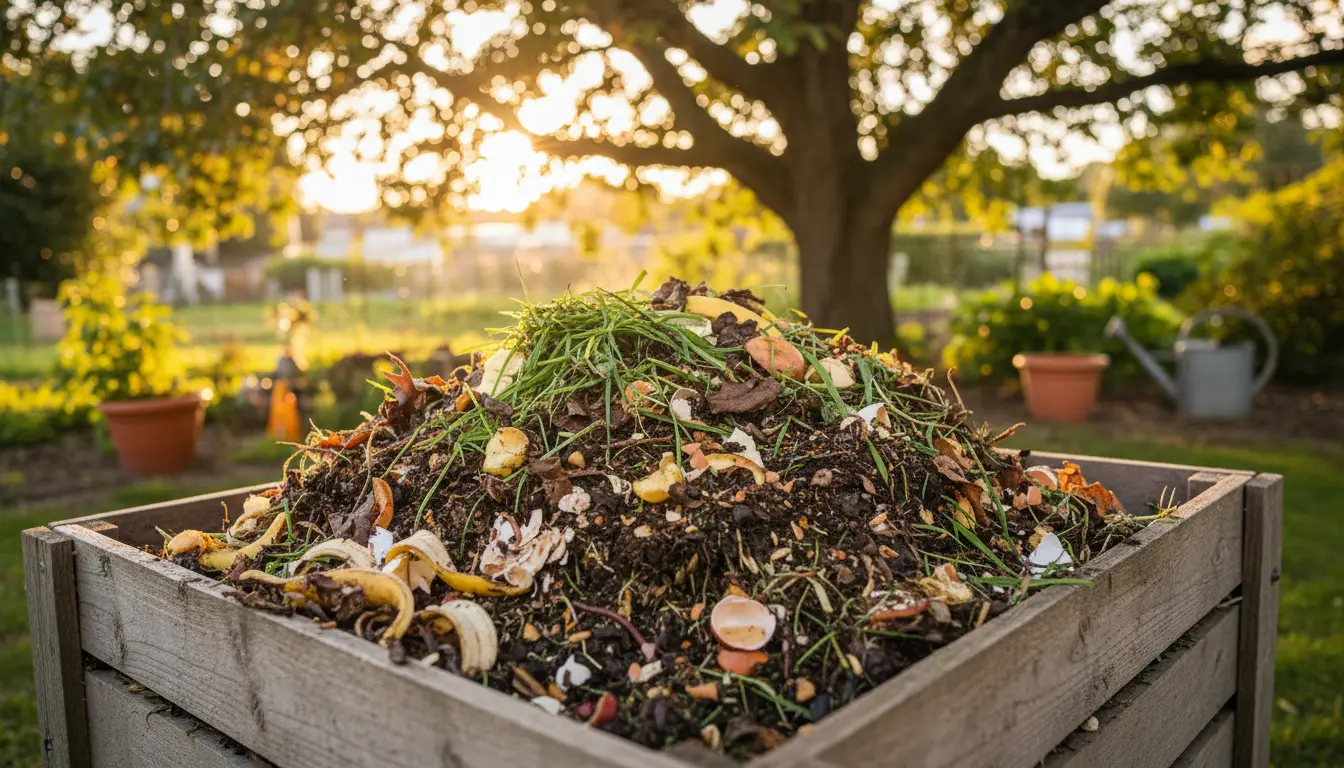
Why Home Composting Matters
Home composting turns kitchen scraps and yard waste into rich soil for plants. It reduces household waste, lowers methane from landfills, and improves garden health.
This guide covers simple, practical steps to start and maintain a home compost system you can rely on year-round.
Choose a Composting Method

Select a method that fits your space and lifestyle. Common options include backyard bins, tumblers, and small indoor or balcony systems for apartments.
- Backyard bin: Good for yards and large volumes of waste.
- Compost tumbler: Easier turning and faster results for small yards.
- Worm bin (vermicompost): Ideal for apartments and produces nutrient-rich worm castings.
Where to Place Your Compost Bin
Choose a level spot with partial sun and easy access to your kitchen and garden. Too much sun can dry out the pile; too much shade can slow decomposition.
Ensure the location has decent drainage and is away from neighbors’ fences if odors are a concern.
Materials: Greens, Browns, and What to Avoid

Compost works when you balance nitrogen-rich “greens” and carbon-rich “browns.” Aim for a rough 1:2 ratio (greens to browns) by volume.
Greens (Nitrogen)
- Vegetable and fruit scraps
- Coffee grounds and tea bags (remove staples)
- Fresh grass clippings
Browns (Carbon)
- Dry leaves, straw, and shredded paper
- Cardboard (shredded) and wood chips
- Small amounts of sawdust from untreated wood
Do not add meat, dairy, oily foods, diseased plants, or pet waste from carnivores. These cause odors and attract pests.
Building and Maintaining the Pile
Start with a 6–12 inch layer of coarse browns for airflow at the base. Add alternating layers of greens and browns while keeping the pile moist like a wrung-out sponge.
- Layering: Greens, then browns, then water if needed.
- Moisture: Water lightly during dry periods; cover during heavy rain.
- Airflow: Turn the pile every 1–2 weeks for aerobic composting.
Troubleshooting Common Problems
Smelly Compost

Bad odors usually mean too many greens or poor airflow. Add browns and turn the pile to reintroduce oxygen.
Pile Too Dry
Dry compost slows decomposition. Add water and more greens, or cover the pile to retain moisture.
Slow Breakdown
Low temperatures, lack of nitrogen, or large pieces can slow composting. Chop materials into smaller pieces and maintain a balanced mix.
Harvesting and Using Finished Compost
Compost is ready when the material is dark, crumbly, and earthy-smelling. Screening removes large pieces for another round of composting.
- Top dressing: Spread a 1–2 inch layer on garden beds.
- Potting mix: Blend 1 part compost to 3 parts soil for container plants.
- Seed starting: Use aged compost blended with sterile mixes, not pure compost.
Adding a handful of finished compost can boost soil microbial activity and improve water retention by up to 20 percent in sandy soils.
Simple Weekly Routine for Home Composting
- Collect kitchen scraps in a small container; empty into the main bin 2–3 times a week.
- Keep a small stash of shredded paper or dry leaves to add with wet scraps.
- Turn or tumble the pile weekly if possible; check moisture and add water if dry.
Tools and Supplies to Make It Easier
- Compost bin or tumbler suited to your space
- Pitchfork or compost aerator for turning
- Kitchen scrap container with a lid
- Thermometer (optional) to monitor pile temperature
Small Real-World Case Study
Case: Sarah, a city apartment dweller, started a small worm bin on her balcony. She used coffee grounds, vegetable peels, and shredded office paper.
Within three months she harvested worm castings and applied them to potted herbs. Her basil and mint showed noticeably greener leaves and better growth with only a tablespoon mixed into each pot every month.
Quick Start Checklist for Home Composting
- Pick a bin type: tumbler, backyard bin, or worm bin.
- Choose a level, semi-shaded location with drainage.
- Collect greens and browns and aim for a 1:2 ratio.
- Keep the pile moist and turn weekly when possible.
- Harvest when compost is dark and crumbly; reuse remaining pieces.
Final Tips for Success
Start small and adjust as you learn what materials work best in your climate and space. Consistency with layering, moisture, and turning will yield the best results.
Composting is both practical and rewarding; it reduces waste and feeds your garden naturally without chemical fertilizers.