
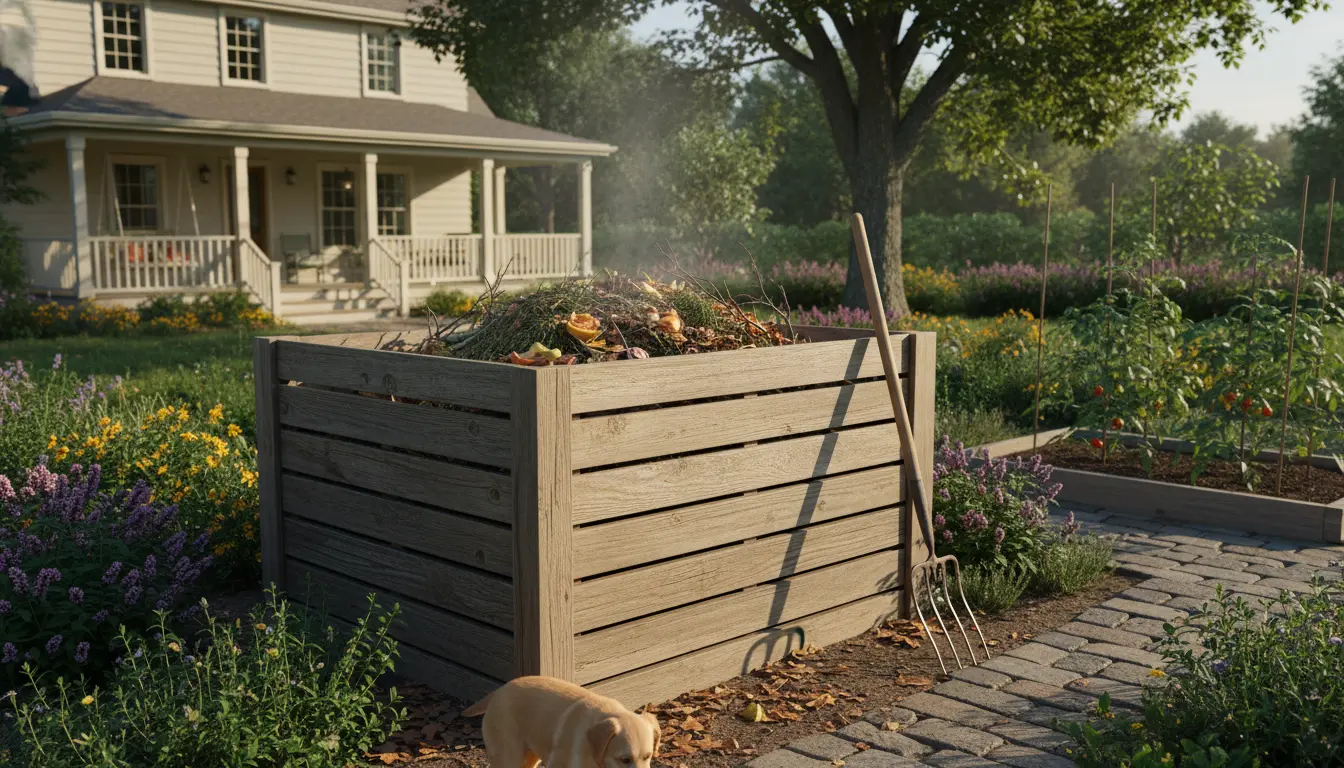
Composting at home turns kitchen scraps and yard waste into rich soil that improves plant health and reduces trash. This Home Composting Guide for Beginners shows practical steps you can follow today, whether you have a backyard or a small balcony.
Home Composting Guide for Beginners: Basics
Composting relies on a balanced mix of carbon (browns) and nitrogen (greens), moisture, air, and time. Microbes break down the materials and produce stable humus you can use in pots or garden beds.

Key benefits include fewer landfill trips, lower greenhouse gas emissions, and improved soil structure. The process can be done with a simple bin, tumbler, or even a worm composter (vermicompost).
Setting Up a Home Compost Bin
Choose a container
Options include open piles, plastic bins, wooden tumblers, or DIY pallets. Select a size that fits your waste volume and space — small households can start with a 20–30 gallon bin.
Pick the right location
Place the bin on soil for drainage and access to soil organisms. Choose a partly shaded spot to keep moisture stable and to avoid overheating in summer.
Materials to compost

Acceptable green items: fruit and vegetable scraps, coffee grounds, fresh grass clippings. Acceptable brown items: dried leaves, shredded paper, cardboard, straw.
- Do compost: fruit peels, vegetable trimmings, egg shells, coffee grounds, yard clippings.
- Avoid: meat, dairy, oily foods, diseased plants, pet waste.
How to Maintain Your Compost
Balance greens and browns
Aim for a rough ratio of 2–3 parts browns to 1 part greens by volume. If the pile smells, add more browns; if breakdown is slow, add greens and moisture.
Aeration and moisture
Turn the pile every 1–2 weeks to add oxygen. Keep moisture similar to a wrung-out sponge — too dry and microbes slow down, too wet and it becomes anaerobic and smelly.
Temperature and time

A hot composting pile (131–160°F / 55–70°C) breaks down material faster and kills seeds and pathogens. Cold composting takes longer but still produces good compost over months to a year.
Home Composting Guide for Beginners: Troubleshooting
Common issues are easy to fix once you know the signals. A sour or rotten smell means poor aeration or too much green material. Add dry browns and turn the pile.
- Slow decomposition: Add water and greens, chop materials smaller, and turn more often.
- Attracting pests: Bury food scraps in the center, use a closed bin, or add a layer of browns after fresh scraps.
- Flies: Cover fresh food with a layer of finished compost or browns and keep a lid on the bin.
Composting one household’s organic waste can reduce municipal waste by up to 30 percent and cut methane emissions from landfills.
Small Real-World Example
Case study: A four-unit apartment building in Portland started a shared compost bin in the courtyard. Residents added kitchen scraps and coffee grounds to a 60-gallon tumbler.
After six months, they diverted roughly 120 pounds of organic waste per month from the trash. The finished compost was shared among residents for balcony planters, reducing their need to buy soil amendments.
Composting Methods Compared
- Tumbler: Easier to turn, faster processing, good for small yards.
- Open pile: Low cost, needs more space and maintenance.
- Vermicompost: Great for indoor use and small volumes, produces nutrient-rich castings.
Quick Checklist to Start Composting
- Choose a bin type and location.
- Gather brown and green materials.
- Layer materials: start with browns, add greens, and cover.
- Monitor moisture and turn the pile regularly.
- Harvest finished compost when dark, crumbly, and earthy-smelling.
Final Tips from the Home Composting Guide for Beginners
Start small and be patient — composting is forgiving and scalable. Keep a countertop bucket for scraps to avoid tossing organics in the trash, and commit to checking the pile weekly.
Once you have finished compost, mix it into potting mixes, top-dress garden beds, or use it to feed container plants. Small steps at home lead to measurable waste reduction and healthier plants.