
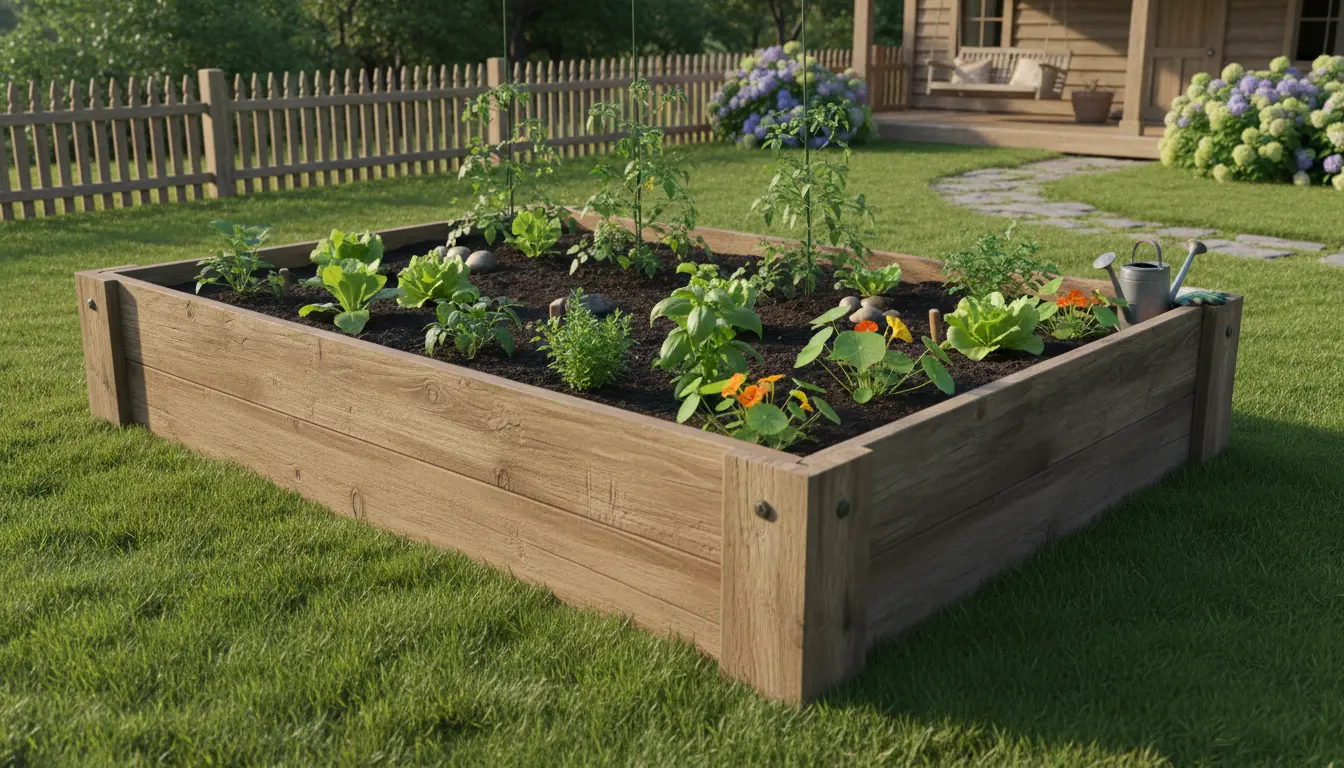
Why a Raised Garden Bed?
Raised garden beds improve drainage, warm faster in spring, and reduce soil compaction. They also make weeding and harvesting easier for gardeners of any skill level.
Planning Your Raised Garden Bed
Decide the location, size, and materials before you start. A well-placed raised garden bed saves time and gives plants better growing conditions.
Choose the Right Location

Pick a spot with at least 6 hours of daily sun for vegetables. Consider access to water and ease of maintenance.
Standard Sizes and Dimensions
Common widths are 3 to 4 feet to allow reaching the middle without stepping in. Lengths vary; 4×4 or 4×8 feet are practical. Heights range from 6 inches to 24 inches depending on plants and soil depth needed.
Materials and Tools for a Raised Garden Bed
Choose rot-resistant wood, composite, stone, or galvanized metal for the bed sides. Untreated cedar is a popular choice for durability and safety.
- Materials: cedar boards, screws, corner brackets, landscape fabric
- Soil mix: topsoil, compost, and coarse sand or perlite
- Tools: saw, drill, tape measure, level, shovel
Step-by-Step: How to Build a Raised Garden Bed

Follow these steps to build a simple wooden raised garden bed. This method is sturdy and beginner-friendly.
1. Measure and Cut the Boards
Measure boards to your chosen dimensions and cut them to length. For a 4×8 bed, cut two 8-foot and two 4-foot boards for sides.
2. Assemble the Frame
Attach boards at the corners using exterior screws or corner brackets. Check for square with a diagonal measurement before tightening all screws.
3. Prepare the Ground

Clear grass and debris where the bed will sit. If drainage is a concern, loosen the soil beneath the bed with a fork.
4. Optional: Add a Base Layer
Add a thin layer of gravel if the area is very wet, or lay landscape fabric to suppress weeds. Leave fabric loose so earthworms can work through the soil.
5. Fill with Soil Mix
Use a three-part mix: 40% topsoil, 40% compost, 20% coarse sand or perlite. This blend balances nutrients, drainage, and structure for most vegetables.
Planting and Crop Choices for a Raised Garden Bed
Plant taller crops on the north side so they don’t shade shorter plants. Rotate crops each season to reduce pests and nutrient depletion.
- Good choices: tomatoes, peppers, lettuce, carrots, herbs
- Companion planting: basil with tomatoes, marigolds to deter nematodes
Maintenance Tips for a Healthy Raised Garden Bed
Water consistently; raised beds dry faster than ground beds. Mulch the surface to retain moisture and suppress weeds.
Fertilizing and Soil Care
Add compost each season to replenish nutrients. Use a balanced organic fertilizer if growth is slow or leaves yellow.
Pest and Disease Management
Inspect plants regularly and remove diseased foliage. Use row covers for insect control and practice crop rotation to lower disease risk.
Troubleshooting Common Problems
If soil compacts, add coarse organic matter like chopped straw or wood chips and turn gently. For nutrient deficiencies, perform a simple soil test to guide amendments.
Drainage Issues
Improve drainage by adding coarse sand or gravel below the topsoil layer. Avoid compacting the soil during planting.
Slow Plant Growth
Check sunlight exposure and soil fertility. Most vegetables need full sun and nutrient-rich soil to thrive.
Simple Case Study: A Small Backyard Success
Case: A homeowner built a single 4×8 cedar raised garden bed in a sunny backyard corner. They used the 40/40/20 soil mix and planted tomatoes, basil, and lettuce.
Result: After one season, tomato yields increased compared to a previous in-ground patch. The gardener reported fewer weeds and easier harvesting, and the bed required less tilling.
Quick Checklist Before You Build a Raised Garden Bed
- Choose a sunny, level location near a water source
- Select rot-resistant materials and correct bed height
- Prepare a balanced soil mix and pre-plan crop layout
- Assemble securely and fill without compacting soil
- Mulch and water consistently after planting
Final Tips for a Lasting Raised Garden Bed
Seal cut wood ends with a non-toxic sealant to extend life. Consider modular beds for easy expansion and adjust height for accessibility if needed.
Building a raised garden bed is a practical project that pays back with healthier plants and less maintenance. With the right planning and simple materials, you can set up a productive bed in a weekend.