
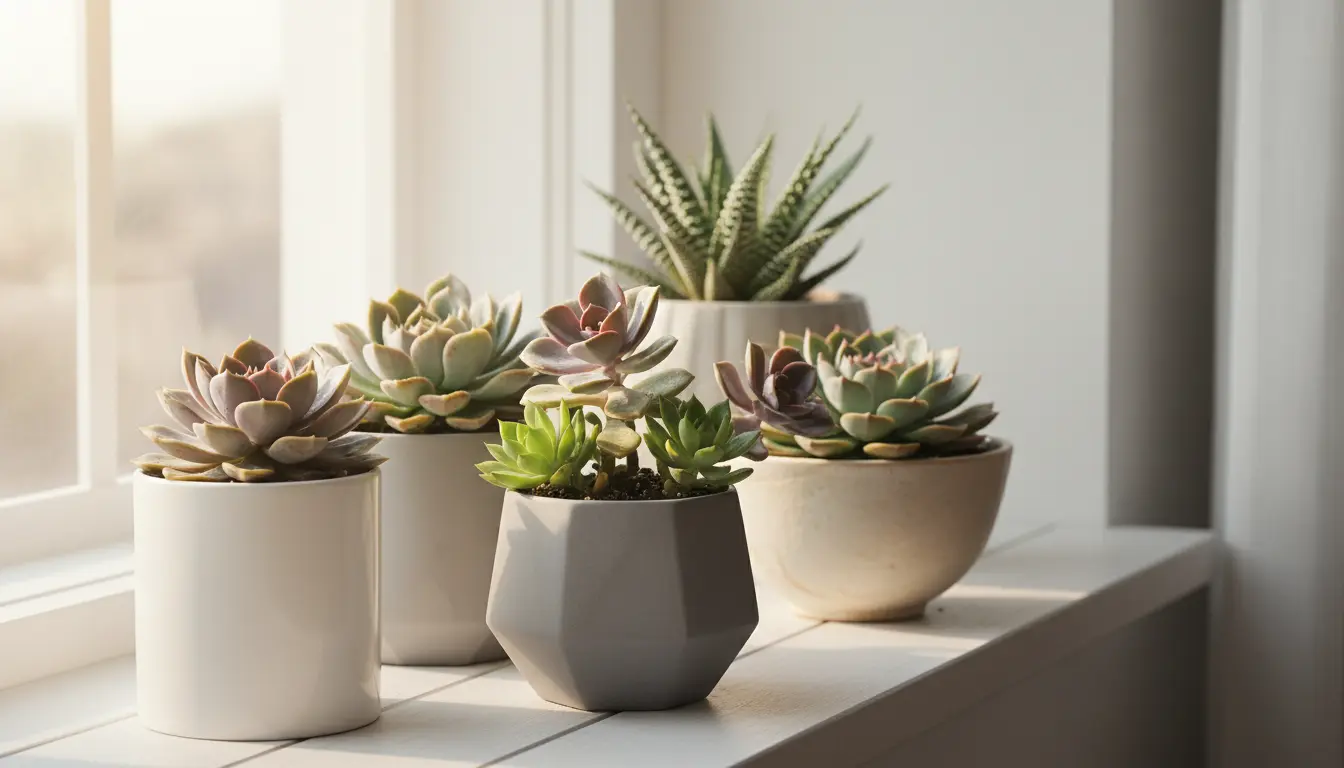
Indoor succulents are low-maintenance plants that suit apartments, offices, and small homes. This guide gives clear, practical steps to keep indoor succulents healthy with minimal fuss.
Why choose indoor succulents
Succulents store water in their leaves, stems, or roots, so they tolerate dry conditions better than many houseplants. They are ideal for beginners and for busy households where frequent watering is difficult.

They also come in many shapes and sizes, fitting a range of light conditions and decor styles.
Essential care basics for indoor succulents
Focus on four essentials: light, water, soil, and containers. Mastering these basics reduces common problems like rot, etiolation, and pests.
Light requirements for indoor succulents
Most indoor succulents need bright, indirect light for 6–8 hours daily. A south- or west-facing window is often best, but avoid intense afternoon sun on thin-leaved varieties.

If plants stretch and become leggy, they need more light. Use a grow light when natural light is insufficient, especially in winter.
Watering and soil for indoor succulents
Water deeply but infrequently. Allow the soil to dry out between waterings and then water until it drains from the pot’s drainage hole.
Use a fast-draining mix: combine regular potting soil with coarse sand, perlite, or pumice (about 50% soilless amendment). Good drainage prevents root rot.
Containers and drainage for indoor succulents

Choose pots with drainage holes to let excess water escape. Terracotta or unglazed ceramic pots help soil dry faster than plastic pots.
If you must use a decorative cachepot, keep the succulent in its drainage-pot inside the cachepot and remove it to water and dry.
Temperature and humidity
Most succulents prefer daytime temperatures of 65–80°F (18–27°C) and cooler nights. They tolerate low indoor humidity, which usually suits them better than high humidity.
Avoid placing succulents near cold drafts or directly above heat vents.
Troubleshooting common problems with indoor succulents
Recognize and correct problems quickly to keep plants healthy.
- Leggy growth (etiolation): Move to brighter light or use grow lights.
- Yellow, mushy leaves: Signs of overwatering—reduce water and check roots for rot.
- Brown, crispy edges: Often caused by underwatering or sunburn—adjust watering or move plant back from direct sun.
- White wool or tiny webs: Mealybugs or spider mites—treat with insecticidal soap or rubbing alcohol on a cotton swab.
Propagation and repotting indoor succulents
Propagation is easy and helps you expand your collection. Common methods include leaf cuttings, stem cuttings, and offsets.
For leaf propagation, gently twist a healthy leaf from the stem, let it callus for a day, then place it on well-draining soil. Roots and new rosettes will form in a few weeks.
Repot every 1–2 years or when a plant outgrows its pot. Repot in spring or early summer using fresh succulent mix and a slightly larger pot.
Simple indoor succulent care schedule
Use a predictable routine so plants get consistent conditions without overcare.
- Weekly: Check light exposure and remove dead leaves from the pot surface.
- Every 2–4 weeks (growing season): Water thoroughly, then let soil dry completely before the next watering.
- Every 6–12 months: Refresh top 1–2 inches of soil or repot if roots are crowded.
- Seasonal: Reduce watering in winter when growth slows.
Some succulents, like Haworthia and Gasteria, thrive in lower light than many other succulents, making them excellent choices for north-facing windows or interior rooms.
Real-world example: Small apartment success
Case study: Jenna, a city renter, kept a windowsill of mixed succulents in a north-east apartment. She chose compact varieties: Haworthia, Echeveria, and Sedum.
She used a cactus mix and terracotta pots with drainage. Jenna watered every 2–3 weeks in summer and every 4–6 weeks in winter, adjusting after checking soil moisture with a finger test.
Within six months, all plants were fuller and produced offsets. Her keys to success were consistent light, fast-draining soil, and avoiding overwatering.
Quick checklist for indoor succulent care
- Place succulents in bright, indirect light for 6–8 hours daily.
- Use a fast-draining soil mix and pots with drainage holes.
- Water deeply but allow soil to dry between waterings.
- Repot in spring if root-bound and propagate from healthy leaves or stems.
- Monitor for pests and correct overwatering promptly.
With a simple routine and attention to light and drainage, indoor succulents reward you with attractive, low-effort greenery. Start with a few hardy varieties, observe how they respond, and adjust care to your home’s light and temperature.