
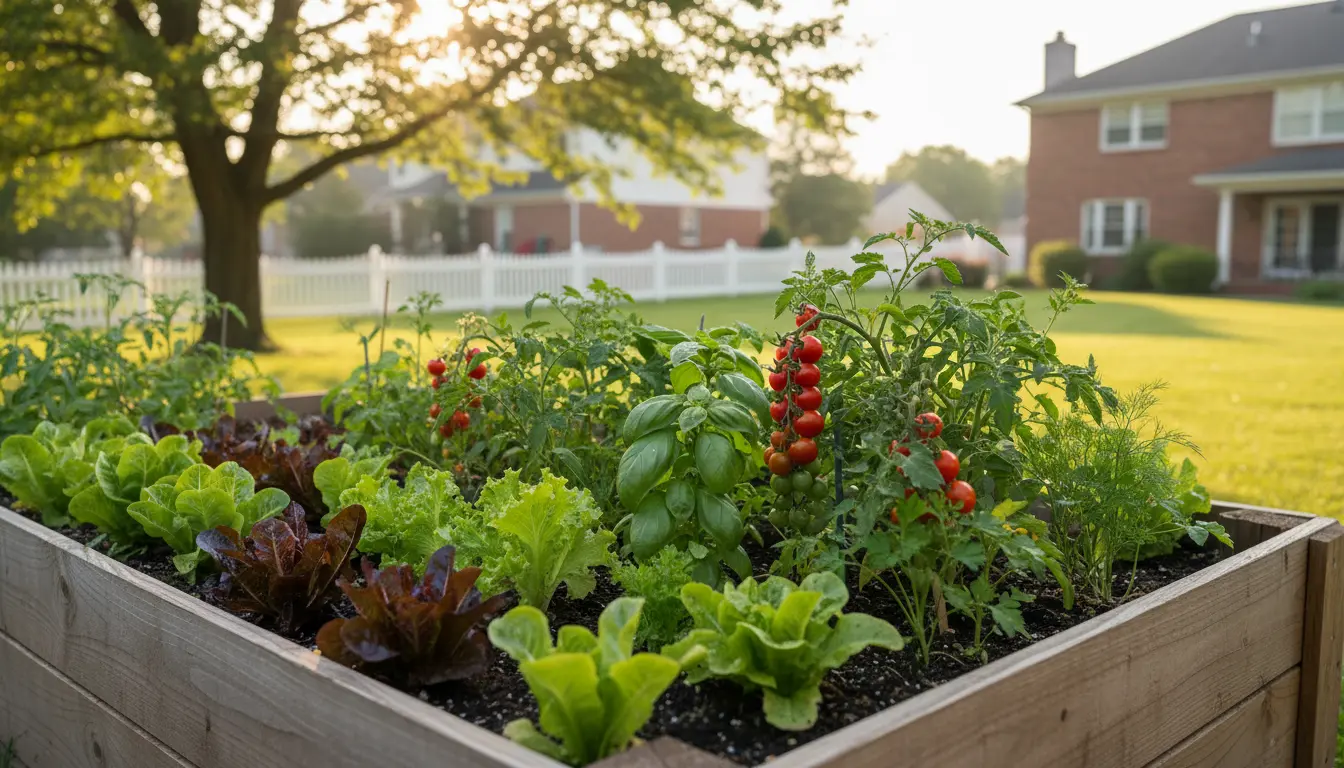
Starting a vegetable garden is a practical way to grow fresh food, save money, and spend time outdoors. This guide gives clear, step-by-step instructions to start a vegetable garden that produces reliable harvests for beginners.
Plan to Start a Vegetable Garden
Good planning reduces mistakes and wasted effort. Begin by choosing the garden type: in-ground beds, raised beds, containers, or vertical planters.

Consider sunlight, space, budget, and how much time you can commit each week. A small, well-managed garden often outperforms a large, neglected one.
Choose Location to Start a Vegetable Garden
Pick a spot with at least 6 hours of direct sun for most vegetables. Morning sun with afternoon shade works for some crops like lettuce and spinach.
Avoid low spots that stay wet or areas next to large trees that compete for water and nutrients.
Decide What to Grow

Start with easy, high-reward crops. Tomatoes, lettuce, beans, radishes, and herbs are forgiving and fast to harvest.
Grow what you will actually eat. If you dislike a vegetable, don’t plant it just because it’s easy.
Soil and Bed Preparation When You Start a Vegetable Garden
Soil is the foundation of a productive garden. Good soil drains, holds moisture, and supplies nutrients.

Test your soil pH with a simple kit. Most vegetables prefer pH 6.0–7.0. Amend soil based on the test results.
Improve Soil for a New Vegetable Garden
Mix in organic matter like compost or aged manure to improve structure and fertility. Aim for 2–4 inches of compost worked into the top 6–8 inches of soil.
For raised beds, use a blend of topsoil, compost, and a light amendment such as coconut coir or peat for moisture retention.
Planting Steps to Start a Vegetable Garden
Follow seed packet instructions for depth and spacing. Planting too deep or too close reduces emergence and growth.
Use a planting calendar or local extension service recommendations for first and last frost dates to schedule sowing times.
- Direct sow fast crops: radish, carrots, peas, beans.
- Transplant slower crops: tomatoes, peppers, brassicas (start indoors or buy seedlings).
- Sow succession plantings every 2–3 weeks for continuous harvests.
Watering and Mulching
Water deeply and less often to encourage strong roots. Most gardens need about 1 inch of water per week, more in hot weather.
Apply 2–3 inches of organic mulch to conserve moisture, regulate soil temperature, and suppress weeds.
Maintenance Tips After You Start a Vegetable Garden
Consistent care makes a garden productive. Check plants weekly for pests, disease, and moisture stress.
Weed early. Small weeds are easier to remove and compete less with vegetables for nutrients.
- Stake or cage tall plants like tomatoes early to avoid root disturbance.
- Fertilize lightly if growth slows; use balanced organic fertilizers or compost tea.
- Rotate crops annually to reduce disease buildup in soil.
Pest and Disease Management
Use prevention first: clean tools, remove diseased plant material, and choose resistant varieties when possible.
For minor pest issues, try hand-picking, row covers, or organic sprays like insecticidal soap. Reserve stronger measures for severe outbreaks.
Planting marigolds near vegetables can deter some pests and attract beneficial insects like hoverflies and parasitic wasps.
Harvesting Tips for Your Vegetable Garden
Harvest at peak maturity for best flavor and to encourage continued production. Check each crop’s ideal harvest cues on seed packets.
Pick frequently to prevent overripe vegetables from attracting pests or pulling energy from the plant.
Storage and Preservation
Store root vegetables in cool, dark conditions and leafy greens in the refrigerator wrapped in damp paper towels. Learn basic preservation: freezing, canning, and fermenting.
Small Case Study: Balcony Garden Success
Jane, an apartment dweller, started a vegetable garden on a south-facing balcony with four 12-inch containers. She chose cherry tomatoes, basil, salad greens, and bush beans.
By using a quality potting mix, weekly fertilizer, and drip irrigation, she harvested enough salad greens and herbs for two people during summer and doubled her tomato yield compared to the previous year.
Key takeaways: match container size to the crop, water consistently, and focus on a few high-yield plants.
Common Mistakes to Avoid When You Start a Vegetable Garden
Avoid these typical errors: overcrowding, overwatering, ignoring soil health, and planting at the wrong time of year.
Start small, learn from each season, and expand gradually as you gain confidence and experience.
Quick Checklist to Start a Vegetable Garden
- Choose a sunny location and garden type.
- Test and amend soil; add compost.
- Select easy, high-reward crops.
- Plant at the right time and water deeply.
- Mulch, weed, monitor pests, and harvest regularly.
Starting a vegetable garden is a repeatable, learnable process. With planning, proper soil preparation, and simple maintenance, beginners can grow satisfying, healthy produce even in small spaces.