
How to Start a Vegetable Garden: First Steps
Starting a vegetable garden begins with a simple plan. Choose a sunny spot, assess space, and decide whether you will use containers, raised beds, or in-ground rows.
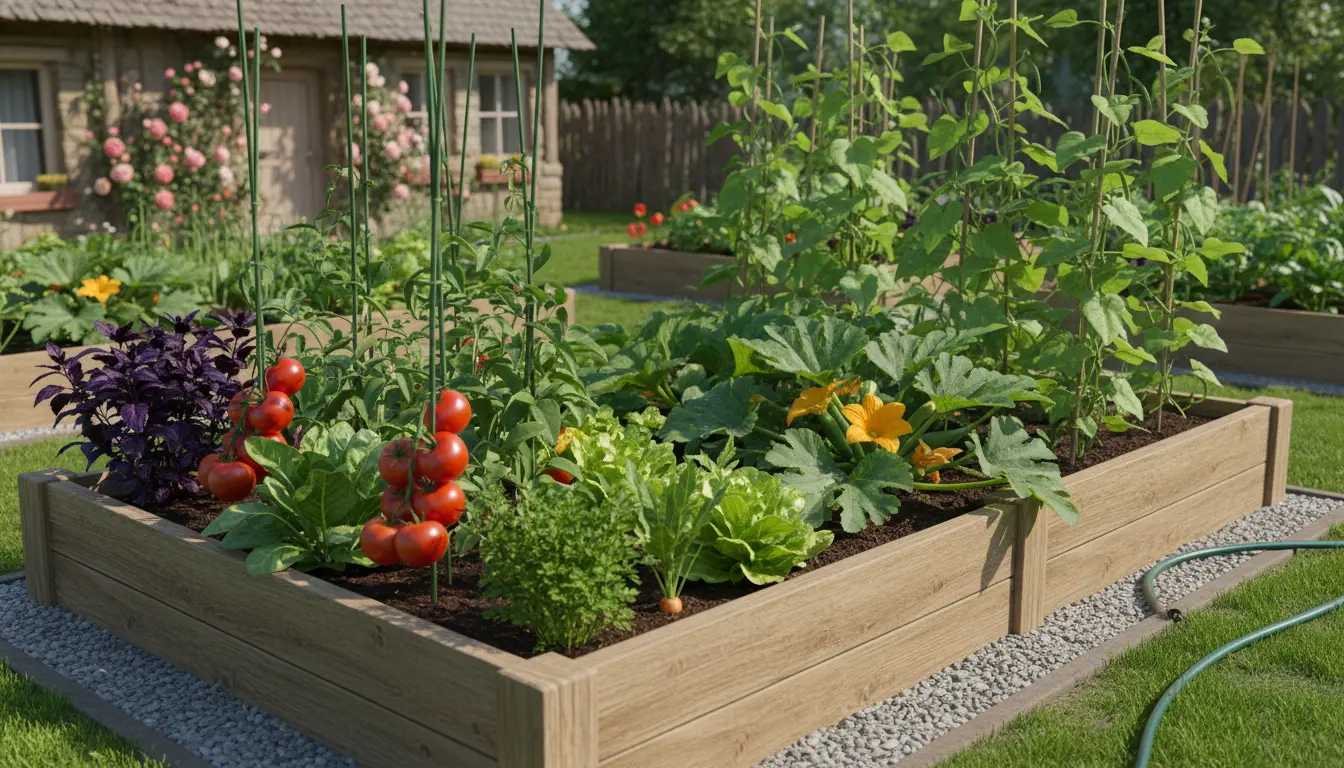
Keep your initial garden small to avoid overwhelm. A 4×8 foot raised bed or a few large containers can feed a household if planted thoughtfully.
Plan Your Garden Layout and Crops

Plan what to grow based on your climate, space, and the foods your household eats most. Focus on high-yield, easy crops like tomatoes, lettuce, beans, and herbs.
Use these quick guidelines when planning:
- Map sunlight: note which areas get full sun (6+ hours), partial sun, or shade.
- Rotate crops yearly to reduce disease risk and maintain soil nutrients.
- Group plants by water needs to simplify irrigation.
Example Plant List for Beginners
- Tomatoes (full sun, stake or cage)
- Lettuce and spinach (partial shade, quick harvest)
- Beans (vertical growth saves space)
- Carrots and radishes (root crops for succession planting)
- Basil and parsley (easy herbs that deter pests)
Prepare Soil to Grow Vegetables
Soil quality is the most important factor to start a vegetable garden successfully. Good soil holds moisture, drains well, and supplies nutrients.

Follow these steps to prepare soil:
- Remove grass and weeds from the area.
- Loosen soil to a depth of 8 to 12 inches for in-ground beds.
- Add organic matter like compost or well-rotted manure at 2 to 4 inches depth.
Soil Test and Amendments
Buy a simple home soil test kit or send a sample to a local extension service. Aim for a pH of 6.0 to 7.0 for most vegetables.
If the soil is low in nutrients, add a balanced organic fertilizer or more compost and retest after a season.
Planting: Seeds vs. Transplants

Decide whether to start from seed or buy young plants. Seeds are cheaper and offer more variety, while transplants save time and are easier for beginners.
When to plant depends on your last frost date. Use local planting calendars or extension resources to time sowing and transplanting.
Watering and Maintenance
Consistent watering is crucial. Most vegetable gardens need about 1 inch of water per week, delivered slowly to the root zone.
Use these maintenance tips to keep plants healthy:
- Mulch with straw or shredded leaves to conserve moisture and suppress weeds.
- Stake or cage vining plants to improve air circulation.
- Harvest regularly to encourage continued production.
Pest and Disease Management
Use a combination of practices rather than relying on one method. Good practices include crop rotation, sanitation, and encouraging beneficial insects.
For common issues consider:
- Handpicking large pests such as caterpillars.
- Using row covers to protect seedlings from insects.
- Applying organic controls like insecticidal soap when necessary.
Seasonal Care and Succession Planting
Plan for multiple harvests by staggering plantings. Succession planting keeps beds productive through the season.
In cooler months, use cold frames, cloches, or hoop houses to extend the growing season without complex equipment.
Simple Case Study: A Small Raised Bed Success
Case study: Sarah used a 4×8 foot raised bed in a suburban backyard. She filled the bed with compost-rich soil and planted tomatoes, bush beans, lettuce, and basil.
By following a simple watering schedule and using cages for tomatoes, Sarah harvested enough vegetables to supplement weekly meals and reduced grocery produce spending during summer months.
Practical Checklist to Start a Vegetable Garden
- Choose location with at least 6 hours of sun.
- Decide on containers, raised beds, or in-ground plots.
- Test and amend soil with compost and organic matter.
- Select beginner-friendly crops and schedule planting dates.
- Set up a watering plan and mulch paths and beds.
- Monitor for pests and rotate crops annually.
Planting basil near tomatoes can improve tomato flavor and may help reduce insect pests naturally.
Final Tips to Keep Your Garden Productive
Start small, keep records of planting dates and yields, and learn from each season. Gardening skills improve quickly with hands-on experience.
Experiment with varieties and techniques until you find what works for your soil and climate. The most important habit is consistent care.
Resources for Ongoing Learning
- Local extension services for planting calendars and soil testing.
- Community gardening groups for seed swaps and local advice.
- Books and online forums focused on organic vegetable gardening.
With planning, good soil, and regular care you can successfully start a vegetable garden that provides fresh produce and a satisfying hobby.