
Why start a vegetable garden
Growing vegetables saves money and gives you fresh, nutritious food. A small garden also connects you to seasonal rhythms and reduces trips to the store.
This guide explains how to start a vegetable garden using simple steps you can apply in a backyard, balcony, or community plot.
Choose the right site to start a vegetable garden

Location matters. Pick a spot with at least 6 hours of direct sun for most vegetables.
Also check for level ground, good drainage, and easy access to water. Better soil and sunlight increase your chance of success.
Quick site checklist
- Sun: 6–8 hours daily for tomatoes, peppers, and cucumbers.
- Shade tolerant: Leafy greens and herbs can handle less sun.
- Water access: within 25 feet of a hose or rain barrel.
- Protection: fences or netting if deer or rabbits are common.
Plan your garden layout
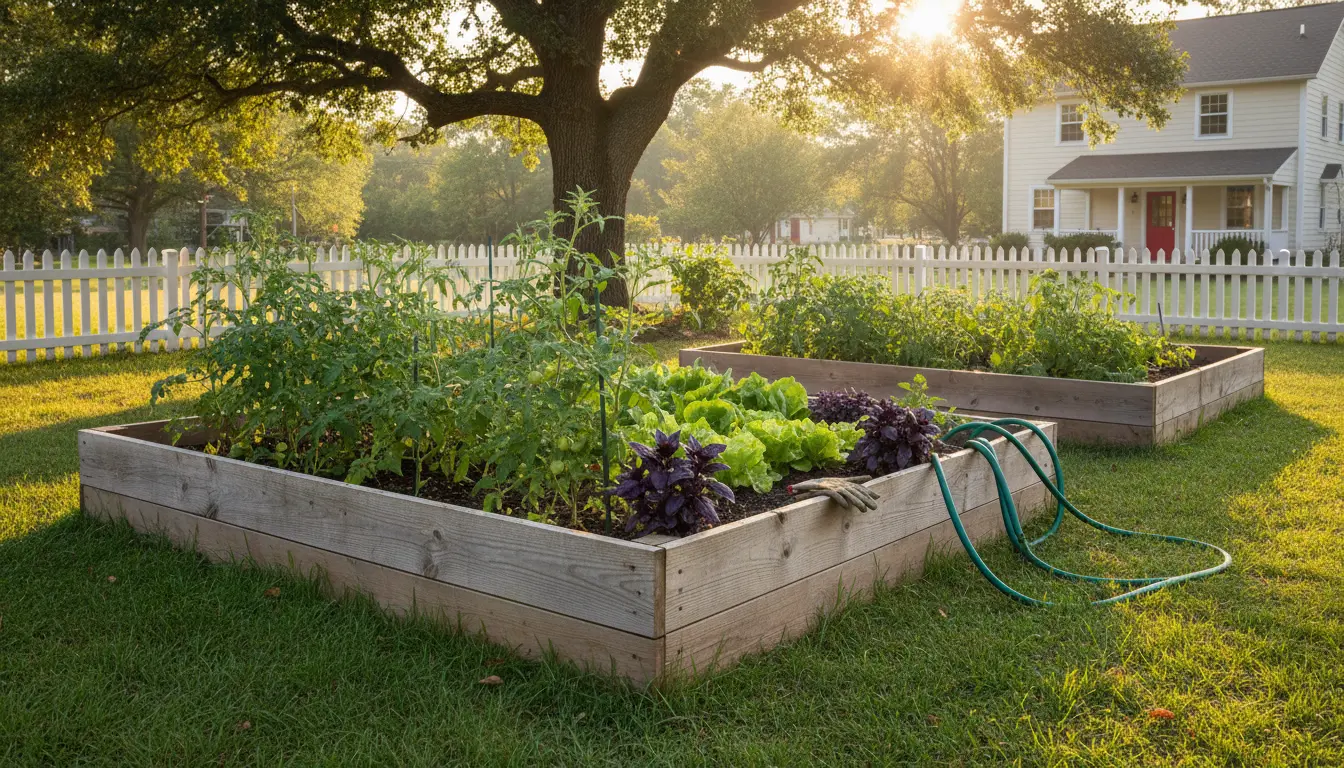
Decide how much space you can use and what you want to grow. Start small: a 4×8 foot bed is enough for a family to start.

Use raised beds, containers, or in-ground rows depending on space and soil quality.
Simple planting ideas
- Raised bed 4×8 ft: Tomatoes, peppers, basil, and lettuce.
- Containers: Herbs and salad greens on a balcony.
- In-ground row: Potatoes, carrots, and beans.
Prepare soil and plant correctly
Healthy soil is the foundation. Test soil pH if possible; most vegetables prefer pH 6.0 to 7.0.
Improve soil by adding compost and organic matter. This helps retain water and supplies nutrients slowly.
Soil preparation steps
- Clear weeds and debris from the site.
- Loosen soil to at least 8–12 inches deep.
- Mix in 2–3 inches of compost or well-rotted manure.
- Rake level and form beds or fill containers with quality potting mix.
Choose plants for your first season

Select easy, productive varieties designed for beginners. Fast-growing crops give quick wins and keep motivation high.
Beginner-friendly vegetables
- Leafy greens: Lettuce, spinach, arugula.
- Root vegetables: Radishes, carrots, beets.
- Vining and fruiting: Bush beans, cherry tomatoes, zucchini.
- Herbs: Basil, parsley, chives.
Planting and spacing basics
Follow seed packet or plant tag spacing recommendations. Overcrowding leads to disease and lower yields.
Stagger planting times for continuous harvest. For example, sow lettuce every 2 weeks to maintain fresh leaves.
Watering and fertilizing your vegetable garden
Water deeply and less often rather than shallow daily watering. Deep watering encourages stronger root systems.
Use a balanced organic fertilizer or side-dress with compost mid-season. Observe plants and adjust nutrients if growth is slow or leaves discolor.
Watering tips
- Early morning is the best time to water.
- Soaker hoses or drip irrigation reduce disease by keeping foliage dry.
- Mulch 2–3 inches to retain moisture and suppress weeds.
Pest and disease basics
Most problems are preventable with good practices: crop rotation, clean tools, and proper spacing.
Inspect plants weekly. Early detection makes non-chemical controls like hand-picking or row covers more effective.
Common interventions
- Row covers: Protect young plants from insects and birds.
- Companion planting: Marigolds and basil can deter pests from some vegetables.
- Neem oil or insecticidal soap: Use for soft-bodied pests as a last resort.
Harvesting and succession planting
Harvest vegetables when they’re mature but still tender. Regular picking often encourages more production.
After a harvest, plant another crop suited to the season. This keeps the bed productive throughout the year.
Companion plants like basil can improve tomato flavor and reduce pests. Planting a few herbs among vegetables also attracts beneficial insects.
Small case study: A beginner’s first season
Maria started a 4×8 raised bed in spring on a sunny apartment rooftop. She prepared the soil with compost and planted cherry tomatoes, lettuce, bush beans, and basil.
She watered twice weekly with a soaker hose, mulched the bed, and harvested lettuce in 30 days. By midsummer, the tomatoes yielded weekly for months.
Her tip: start small and keep a notebook of planting dates and harvests. That record helped her plan the next season better.
Simple tools and budget tips
You do not need expensive gear to start. Basic tools make gardening easier and last for years.
- Essential tools: spade, hand trowel, watering hose, gloves, and a rake.
- Budget tips: Use compost from yard waste, start seeds indoors, and swap seeds with neighbors.
Final checklist to start a vegetable garden
- Choose a sunny site and plan layout.
- Prepare soil with compost and check pH.
- Select easy crops and follow spacing instructions.
- Water deeply, mulch, and monitor for pests.
- Keep records and harvest regularly.
Following these practical steps will help you start a vegetable garden that produces food and enjoyment. Begin with a small plot, learn from the first season, and expand as you gain confidence.