
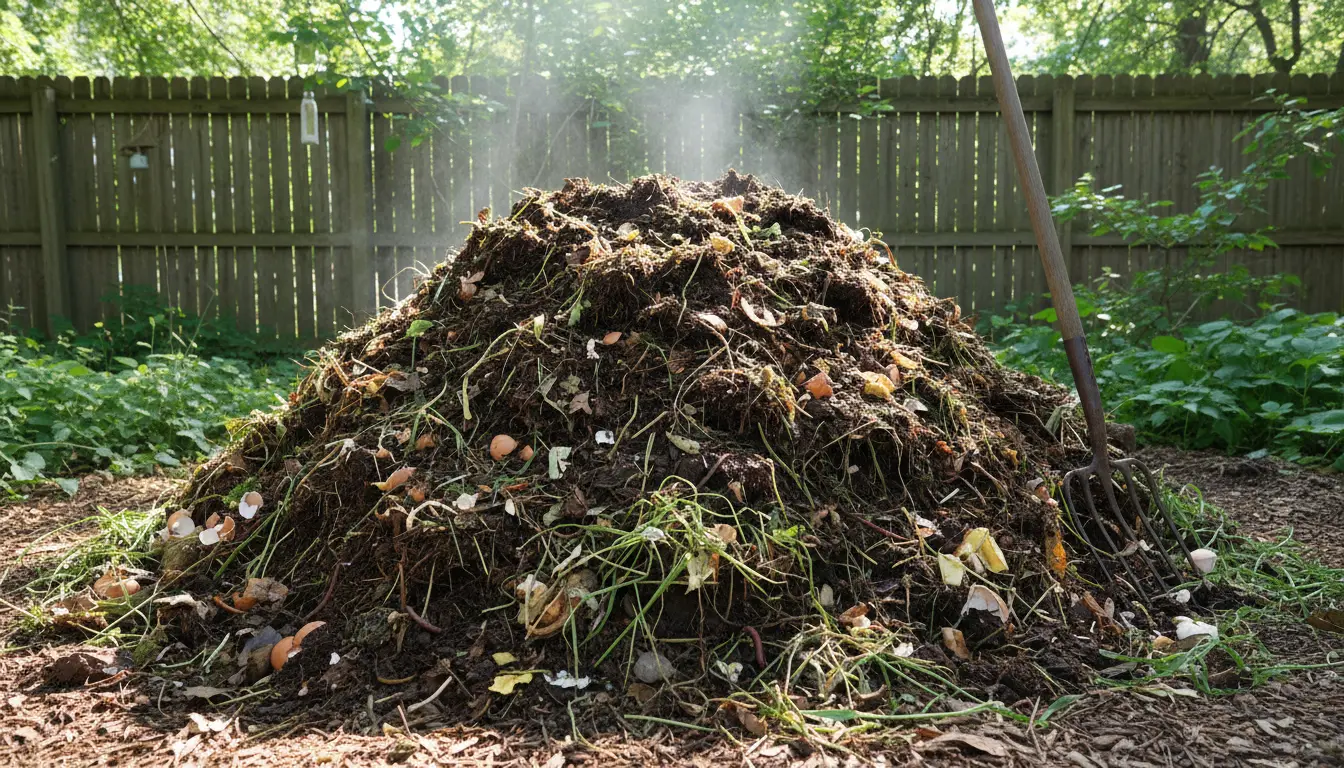
Home Composting Basics
Home composting turns kitchen and yard waste into useful soil amendment. It reduces household waste and improves garden soil structure over time.
This guide covers practical steps to begin home composting, how to choose a method, what to compost, and how to troubleshoot common problems.
Choosing a Home Composting Method

There are several methods suitable for different living situations. Pick one that fits your space, time, and volume of waste.
Common methods for home composting
- Traditional compost bin: A simple enclosed bin in a backyard. Best for homeowners with outdoor space.
- Compost tumbler: A sealed drum that is rotated to mix materials. Faster decomposition and neater appearance.
- Vermicomposting (worm bin): Indoor or outdoor bins using red worms. Good for small kitchens and apartments.
- Hot composting pile: Larger pile managed to reach high temperatures for faster breakdown. Requires more material and attention.
Each method supports the same basic inputs and management: balance of carbon and nitrogen, moisture, and airflow.
What to Compost in Home Composting
Successful composting depends on the right mix of materials. Think of carbon-rich and nitrogen-rich items.
Acceptable kitchen and garden items
- Greens (nitrogen): fruit and vegetable scraps, coffee grounds, fresh grass clippings.
- Browns (carbon): dry leaves, shredded paper, cardboard, straw.
- Small amounts of garden trimmings and plant debris.
Items to avoid
- Meat, fish, and dairy can attract pests and cause odors.
- Oily foods and large bones decompose slowly and may invite animals.
- Diseased plants, invasive weeds, and chemically treated wood should not be composted.
Setting Up Your Compost System

Placement, container choice, and initial layering matter. A good setup speeds decomposition and reduces maintenance.
Step-by-step setup for a basic bin
- Choose a level, partly shaded site with good drainage.
- Put a 4–6 inch layer of coarse browns at the bottom for airflow.
- Add alternating layers of greens and browns, aiming for roughly a 1:3 nitrogen to carbon ratio by volume.
- Moisten each green layer; the pile should feel like a damp sponge, not dripping wet.
- Cover the bin to retain moisture and heat while allowing some airflow.
For worm bins, use a shallow container with bedding of shredded paper and kitchen scraps, and keep conditions cool and moist.
Maintenance and Troubleshooting for Home Composting
Regular care keeps the composting process moving. Monitor moisture, temperature, and balance of materials.
Simple maintenance tasks
- Turn or mix the pile every 1–2 weeks for aerobic composting to add oxygen.
- Add water when the pile becomes dry; avoid waterlogging.
- Add more browns if the pile smells ammonia-like, or more greens if decomposition slows.
Common problems and fixes
- Bad odor: Add dry browns and turn the pile to introduce air.
- Pests: Avoid meat and dairy, use a closed bin or secure lid, and bury food scraps under browns.
- Slow breakdown: Chop materials into smaller pieces and ensure adequate moisture and nitrogen.

Compost can increase soil water retention by up to 20 percent while adding essential nutrients slowly over time.
How to Know When Compost Is Ready
Finished compost is dark, crumbly, and smells earthy. Most home systems produce usable compost in 2–12 months depending on method and management.
Screen or sift the compost to remove larger undecomposed pieces which can return to the bin for further breakdown.
Small Case Study: Urban Apartment Worm Bin
Marisol lives in a two-bedroom apartment and started vermicomposting with a 20-liter bin. She used red wiggler worms and shredded cardboard for bedding.
Within four months she produced enough castings to feed two balcony planters and reduced her kitchen waste by nearly half. Key steps were regular feeding, keeping bedding moist, and avoiding citrus and onion overload.
Practical Tips to Succeed with Home Composting
- Start small and scale up as you learn what works for your household.
- Keep a kitchen scrap container with a lid to reduce trips to the bin and odors indoors.
- Chop large items and mix materials to speed decomposition.
- Record observations: smell, temperature, and appearance help you adjust the process.
Final Notes on Home Composting
Home composting is a low-cost, practical way to reduce waste and improve soil. With basic attention to balance, moisture, and aeration, most households can produce quality compost.
Start with a method that fits your living situation, learn by doing, and use compost to nourish gardens, potted plants, or community green spaces.