
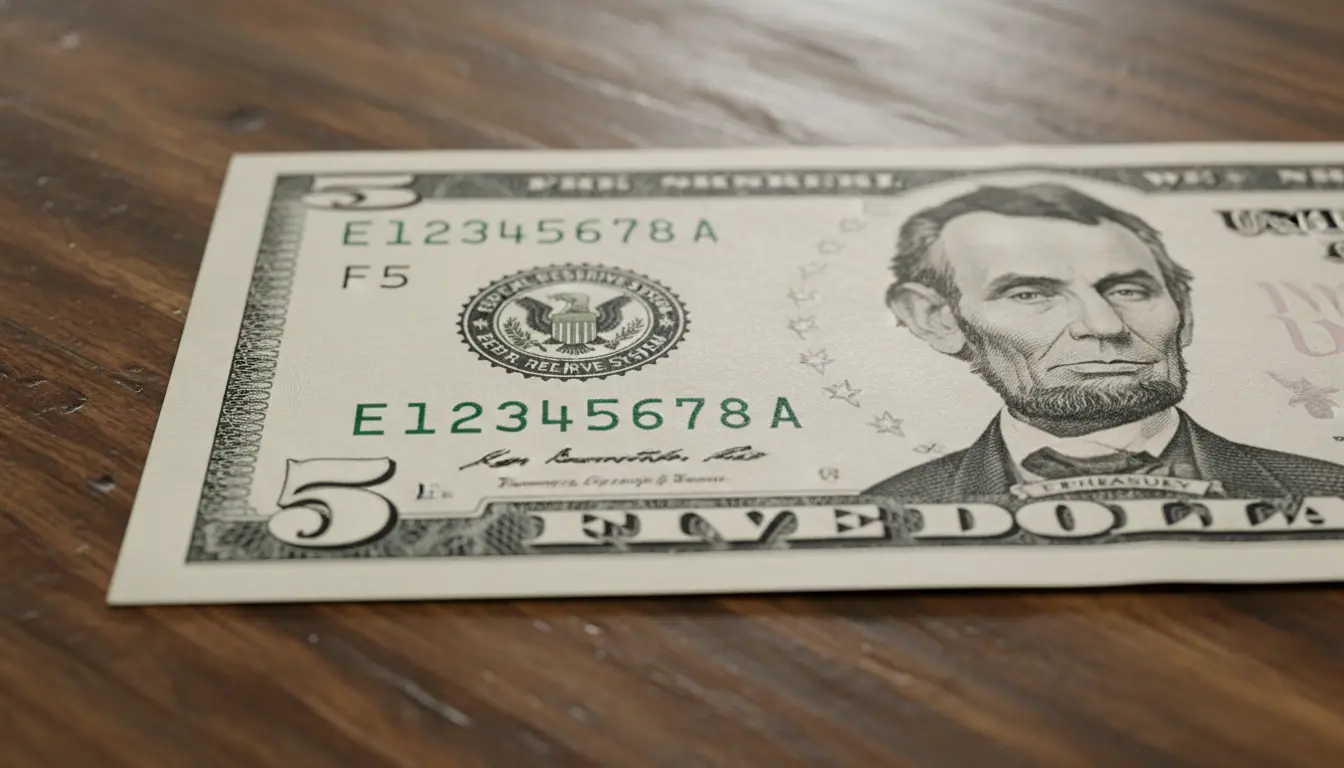
Small printing errors can make ordinary bills interesting to collectors. The 1995 $5 bill with inverted seal is one such error that people sometimes find in pockets, wallets, or change jars.
What is a 1995 $5 bill With Inverted Seal?
An inverted seal error occurs when the Treasury seal is printed upside down relative to the rest of the design. This is a printing-stage mistake and not a design variant from the Bureau of Engraving and Printing.

On 1995 series $5 bills, the seal location and orientation are easy to check visually. Knowing what to look for helps you decide if a note might be worth saving or authenticating.
How to identify a 1995 $5 bill With Inverted Seal
Use this short checklist when you pull a 1995 $5 note from your wallet or change:
- Confirm the series year on the bill reads 1995.
- Locate the green Treasury seal on the face of the bill.
- Check the seal orientation relative to the portrait of Abraham Lincoln and the serial numbers.
- Look for other printing anomalies such as misalignment, doubling, or missing elements.
Step 1: Confirm the series and basic features
Find the series year near the signature block. Make sure the bill is a 1995 series $5 note and not a later redesign. Familiarize yourself with standard features like the portrait, serial number placement, and the typical seal position.
Step 2: Inspect the Treasury seal

The Treasury seal is the round green emblem typically to the right of the portrait. On a correct note the seal has a consistent orientation. On an inverted-seal error the seal will appear rotated 180 degrees compared with normal notes.
Use a loupe or strong light to check details. If the seal is upside down but all other security elements look correct, you may have an inverted seal error.
Step 3: Rule out post-printing damage
Some marks or stains can look like printing errors. Fold lines, ink smears, or abrasion will not create a true inverted seal. A genuine inverted seal shows crisp, deliberate printing flipped relative to the rest of the design.
Quick visual checklist
- Series year: 1995 visible?
- Seal color: standard green?
- Seal orientation: upside down vs. upright?
- Printing clarity: crisp edges or smudged ink?
- Serial numbers and signatures present and consistent?

Inverted seal errors are caused during the inking or plate alignment stage. They are less common than simple misprints because the seal is a separate printing element on the press.
Authenticity and grading basics
If you believe you have a 1995 $5 bill with inverted seal, authenticity is the first priority. Collectible value depends on several factors beyond the error itself.
Condition, wear, tears, and folds all affect value. Bills in crisp uncirculated condition are far more desirable than those that are worn.
When to get a note authenticated
- If the bill appears to be a clear inverted seal and is in high-grade condition.
- If you plan to sell or insure the bill.
- If serial numbers, star notes, or other rare features are present.
Value guidance and market factors
Values for error notes vary widely. For modern series notes like 1995, small errors can fetch modest premiums in circulated condition and larger premiums when the note is uncirculated.
Factors that affect price include:
- Condition and grade
- Severity and visibility of the inversion
- Presence of star notes or unusual serial numbers
- Market demand and how well the error is documented
Example valuation ranges
As a practical guideline, expect a circulated inverted-seal 1995 $5 to sell for a modest premium over face value — often in the low tens to low hundreds of dollars. Uncirculated or eye-catching examples can command several hundred dollars or more. Exact prices depend on current collector demand.
Case study: Finding one in pocket change
Illustrative case: A person finds a 1995 $5 bill while emptying a jacket pocket. They notice the seal looks flipped and research online. After photographing the note and comparing it to reference images, they posted it on a collectors’ forum.
Forum members recommended authentication and suggested a conservative estimate of value based on condition. The owner then submitted the bill to a reputable third-party grading service to confirm the error and grade the note before listing it for sale.
Practical steps after you find a potential inverted seal
- Handle the note carefully. Avoid excessive folding or handling.
- Take clear photos from multiple angles, showing the seal, serial numbers, and series year.
- Compare images to reference examples from trusted collector resources.
- Seek advice from established collectors or currency forums before selling.
- Consider third-party grading for higher-value or uncirculated notes.
Where to get help and resources
Good resources include coin and currency clubs, specialist dealers, and online forums dedicated to paper money errors. Third-party grading companies can authenticate and grade notes professionally.
When in doubt, a measured approach is best: document, research, and consult before making sales or sending the note to a grader.
Finding a 1995 $5 bill with an inverted seal can be exciting. With careful inspection and proper documentation you can verify whether it is a genuine error and decide the best path for authentication or sale.