
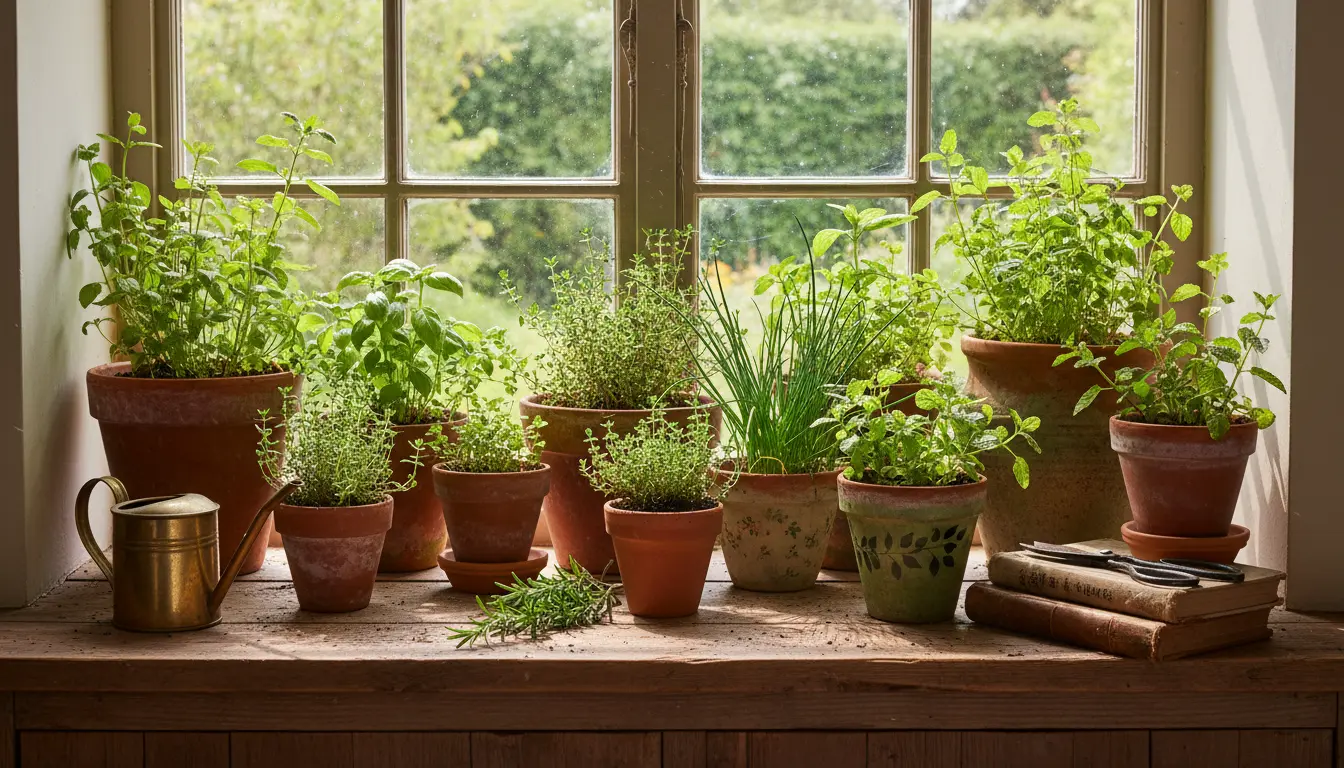
Growing herbs indoors is a low-cost way to add fresh flavor to cooking and bring greenery into small spaces. This guide explains what you need and how to care for a successful indoor herb garden in simple, actionable steps.
Why an Indoor Herb Garden Works
An indoor herb garden is practical for people with limited outdoor space or short growing seasons. Herbs are compact, forgiving, and deliver quick results compared with larger vegetable crops.

Benefits include year-round access to fresh herbs, lower grocery costs, and a small, satisfying gardening project you can manage from a windowsill.
Essential Supplies for an Indoor Herb Garden
Before you start, assemble a simple kit. You don’t need specialized tools to grow herbs indoors successfully.
- Containers with drainage holes (pots, troughs, or recycled jars with gravel)
- Quality potting mix formulated for containers
- Herb seeds or small starter plants (basil, parsley, mint, chives, rosemary)
- Grow lights (if natural light is limited)
- Small hand trowel, watering can, and a spray bottle
Choosing Containers and Soil
Use pots with drainage to prevent root rot. Terracotta pots dry faster and help avoid overwatering, while plastic retains moisture longer.

Pick a lightweight potting mix designed for containers. Avoid garden soil which compacts and drains poorly indoors.
Lighting Needs for an Indoor Herb Garden
Most culinary herbs need 6–8 hours of bright light. A south- or west-facing window is ideal for daytime sun exposure.
If natural light is insufficient, use a full-spectrum LED grow light positioned 6–12 inches above the plants for 10–14 hours daily.
Step-by-Step: Start Your Indoor Herb Garden

Follow these steps to set up your indoor herb garden and get steady growth from the start.
- Pick a location with adequate light and stable temperature (60–75°F / 15–24°C).
- Fill containers with potting mix, leaving 1 inch at the top for watering.
- Plant seeds or transplant nursery herbs at the recommended depth on seed packets.
- Water gently to settle the soil, then place pots in the chosen light area.
- Rotate pots weekly so all sides receive light and grow evenly.
Planting Tips for Common Herbs
- Basil: Warmth-loving; pinch back regularly to encourage bushy growth.
- Parsley: Slow to germinate; start with transplants if you want faster harvests.
- Mint: Vigorous spreader; keep in its own pot to avoid overrunning others.
- Chives: Tolerant of partial shade and great for small pots.
- Rosemary: Prefers bright light and well-draining soil; water sparingly.
Care and Maintenance for an Indoor Herb Garden
Simple, consistent care keeps herbs productive. Focus on watering, feeding, pruning, and light management.
Watering and Feeding
Water when the top 1 inch of soil feels dry. Many herbs prefer slightly drier conditions rather than constantly wet soil.
Feed with a balanced liquid fertilizer at half strength every 3–4 weeks during the growing season. Avoid over-fertilizing which reduces flavor intensity.
Pruning and Harvesting
Harvest leaves regularly to encourage new growth. For bushy herbs like basil, pinch above a pair of leaves to stimulate branching.
Remove any flowering shoots if you want to extend leaf production; flowers often signal a plant is shifting to seed production.
Pest Control
Check plants weekly for aphids, spider mites, and fungus. Wipe leaves and use a mild insecticidal soap if needed.
Good air circulation and avoiding overwatering are effective preventive measures.
Growing herbs indoors can reduce food waste: a single basil pot can supply dozens of meals over a season compared to buying multiple small store packs that spoil quickly.
Small Real-World Example: Case Study
Case study: A small apartment gardener placed three 6-inch pots on a sunny windowsill—basil, chives, and parsley.
Within six weeks the gardener had weekly harvests for salads and pasta. Annual grocery savings were estimated at $120, and the herbs required less than 2 square feet of space.
Common Problems and Quick Fixes
- Yellowing leaves: Often overwatering—allow soil to dry slightly between waterings.
- Leggy stems: Move plants to a brighter spot or add supplemental light.
- Slow growth: Check fertilizer routine and ensure pots are not root-bound.
- Strong odors or flavor loss: Over-fertilizing can reduce essential oils; cut back on feedings.
Final Tips for a Successful Indoor Herb Garden
Start small and expand as you gain confidence. Choose a few easy herbs and master their needs before adding more varieties.
Keep a simple log of watering and fertilizing to track what works for your light and home environment. Regular, small adjustments often produce the best long-term results.
With basic supplies, a consistent light source, and weekly attention, an indoor herb garden can provide fresh flavors and a pleasant hobby year-round.