
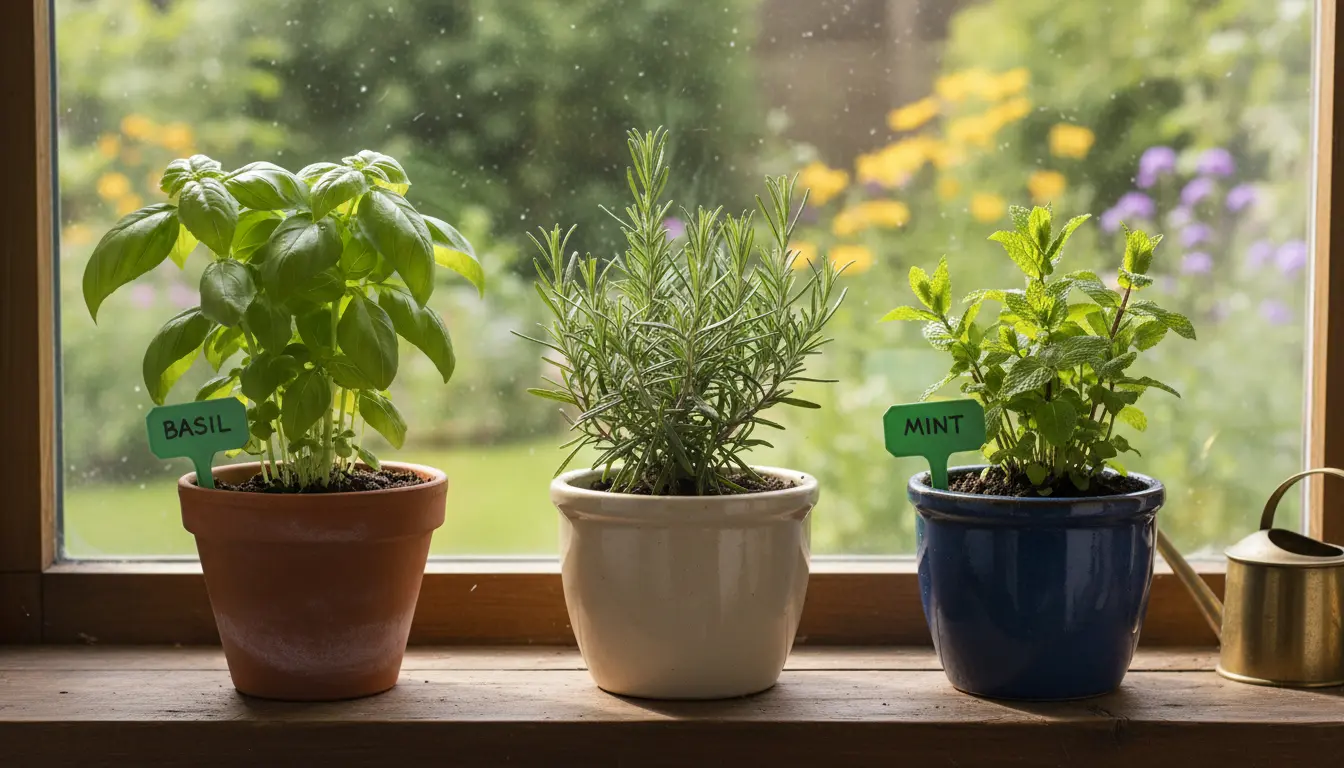
Indoor herb gardening is a low-cost way to add fresh flavors to your cooking and bring green life into your home. This guide explains the essentials for indoor herb gardening for beginners, with clear steps you can follow this weekend.
Why Choose Indoor Herb Gardening for Beginners

Indoor herb gardening is ideal if you have limited outdoor space. It offers quick rewards and a gentle learning curve for first-time growers.
Herbs are forgiving, productive, and can grow in small containers on a windowsill or shelf. That makes them a perfect starting point.
Benefits of indoor herb gardening
- Fresh herbs year-round
- Lower grocery costs
- Natural kitchen decor and aroma
- Simple care needs for most varieties
Essential Supplies for Indoor Herb Gardening
You do not need fancy gear. Gather a few basic items to start indoor herb gardening for beginners:
- Containers with drainage holes (pots or planter boxes)
- Quality potting mix (not garden soil)
- Seeds or starter plants from a nursery
- A saucer to catch excess water
- Basic hand trowel and pruning shears
- Optional: small grow light if natural light is limited
Choosing containers and soil

Select containers sized to the herb: 4–6 inch pots suit most herbs like basil or parsley. Use a well-draining potting mix formulated for containers.
Avoid heavy soils that compact and hold too much water, which can cause root rot.
Choosing Herbs for Indoor Herb Gardening
For indoor herb gardening for beginners, start with easy, fast-growing herbs:
- Basil — great for windowsills and frequent harvesting
- Parsley — slow to start but hardy long-term
- Mint — vigorous; use a separate pot to prevent spreading
- Thyme and oregano — low water needs and compact growth
- Chives — good in containers and tolerates moderate light

Consider what you cook most; choose herbs you will actually use.
Step-by-Step: How to Start Indoor Herb Gardening
Follow these steps to set up a simple herb garden indoors.
- Pick the spot — Most herbs need 4–6 hours of direct or bright indirect light. A south- or west-facing windowsill is ideal.
- Prepare containers — Place a layer of small stones or broken pottery over the drainage hole only if the pot is shallow. Fill with potting mix, leaving 1 inch from the rim.
- Plant — If using seedlings, gently loosen roots and plant at the same depth as nursery pots. If sowing seeds, follow seed packet depth and spacing.
- Water carefully — Water until excess drains. Allow the top 1 inch of soil to dry before watering again. Most herbs prefer slightly dry intervals between waterings.
- Feed lightly — Use a balanced liquid fertilizer at half strength once a month during the growing season.
- Prune and harvest — Harvest regularly to encourage bushy growth. Pinch back flower buds to keep herbs focused on leaf production.
Light and temperature tips
If natural light is insufficient, add a simple LED grow light on a timer for 10–14 hours daily. Most herbs prefer temperatures between 65–75°F (18–24°C).
Rotate pots weekly so plants grow evenly toward the light.
Many common herbs like basil and chives can be regrown from cuttings in water within 1–2 weeks, making propagation quick and easy for indoor gardeners.
Common Problems and Solutions for Indoor Herb Gardening
Pests and diseases are less common indoors, but you may encounter issues. Identify problems early and act fast.
- Yellow leaves: often overwatering — reduce frequency and improve drainage.
- Weak, leggy growth: not enough light — move plants closer to the window or add a grow light.
- Sticky residue or small insects: wipe leaves with mild soap solution and isolate affected plants.
Best practices
- Use clean pots and fresh potting mix when repotting
- Label pots with planting dates so you track growth
- Harvest small amounts regularly to promote new growth
Real-World Example: Case Study
Case Study: Sarah, a city apartment renter, started indoor herb gardening for beginners with three 4-inch pots: basil, chives, and mint. She placed them on a south-facing sill and watered weekly.
Within six weeks, Sarah had a steady supply of basil for pesto and chives for salads. She improved yields by trimming flower buds and rotating pots, and saved about $8 weekly on fresh herbs.
This simple approach shows how small containers and basic care deliver quick, usable results indoors.
Quick Care Checklist for Indoor Herb Gardening
- Light: 4–6 hours daily or supplemental LED light
- Water: let top 1 inch of soil dry between waterings
- Feed: diluted liquid fertilizer monthly
- Harvest: pinch tips regularly to encourage branching
Indoor herb gardening for beginners is a rewarding hobby with fast results and low barriers to entry. With the right spot, containers, and a little routine care, you can enjoy fresh herbs year-round.