
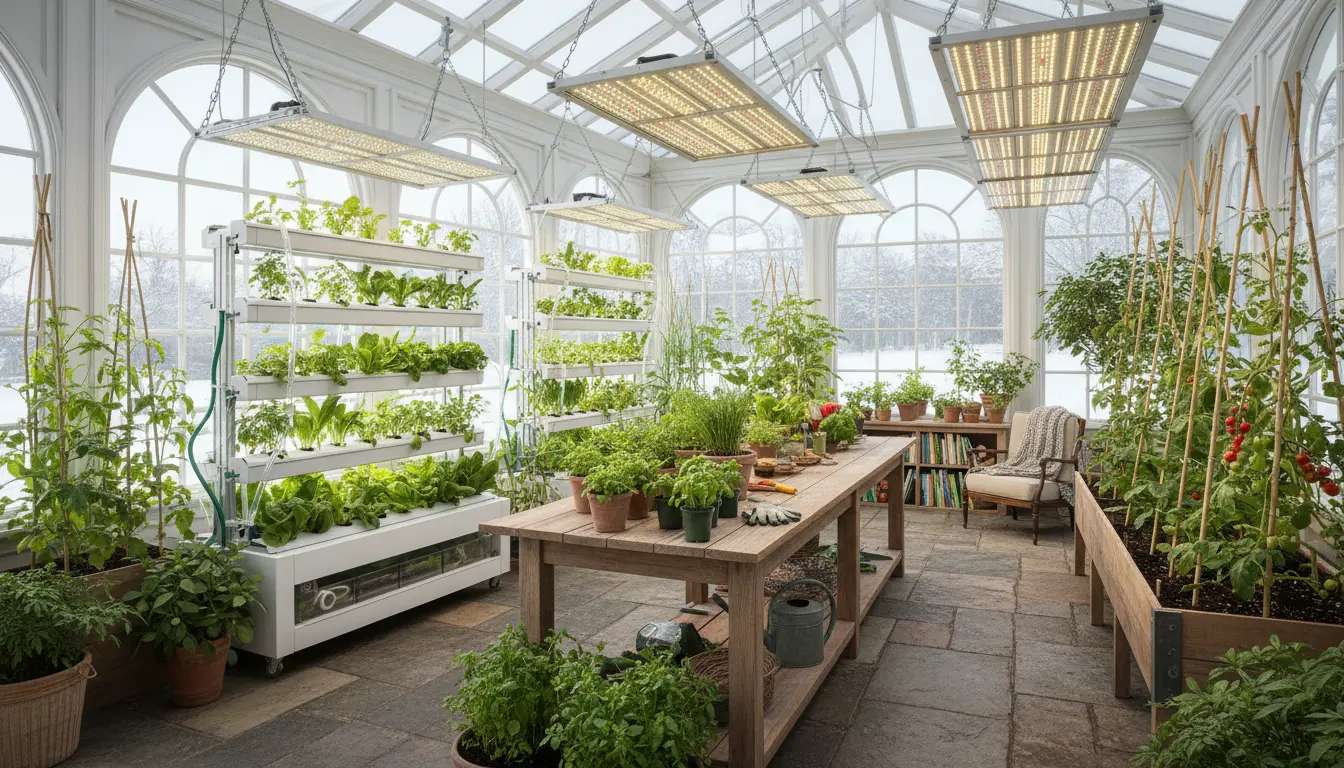
Indoor vegetable gardening lets you grow fresh produce year-round, even in small spaces. This guide covers practical steps to set up, maintain, and troubleshoot a productive indoor vegetable garden.
Indoor Vegetable Gardening Getting Started
Start by defining goals: which vegetables you want and how much space you have. Pick easy crops first such as leafy greens, herbs, and dwarf tomato varieties.
Choose the Right Location for Indoor Vegetable Gardening

Find a spot that can support containers, lights, and regular access for watering. A south-facing window, unused closet, or a shelf near a bright window works well.
Consider ventilation and humidity. Good air flow reduces mold and pest problems, while a tray under pots helps manage mess and humidity.
Select Containers and Soil for Indoor Vegetable Gardening
Choose containers with drainage and the right size for each crop. Small herbs do well in 4–6 inch pots, while tomatoes need 3–5 gallon containers.

Use a high-quality, well-draining potting mix formulated for containers. Avoid garden soil, which compacts and may carry pests.
Lighting for Indoor Vegetable Gardening
Light is the most common limitation indoors. Most vegetables require 12–16 hours of bright light daily to thrive.
Types of Grow Lights for Indoor Vegetable Gardening
- LED grow lights: Energy efficient, low heat, spectrum options for growth phases.
- Fluorescent (T5) lights: Good for seedlings and leafy greens, lower cost up front.
- High-intensity lights (HID): Powerful but produce heat and need more setup.
Mount lights 12–24 inches above plants for LEDs; adjust height as plants grow. Use a timer to keep a consistent daily schedule.
Watering, Feeding, and Maintenance for Indoor Vegetable Gardening

Indoor plants need consistent moisture but not constant wetness. Water when the top inch of soil feels dry for most vegetables.
Feed with a balanced liquid fertilizer every 2–4 weeks during the growing season. Use a fertilizer labeled for vegetables and follow label rates.
Pest and Disease Management in Indoor Vegetable Gardening
Inspect plants weekly for pests like aphids, spider mites, or fungus gnats. Early detection prevents outbreaks.
- Remove affected leaves and isolate new plants for two weeks.
- Use insecticidal soap or neem oil for small infestations.
- Improve drainage and airflow to prevent root rot and mildew.
Common Plant Choices for Indoor Vegetable Gardening
Pick crops that adapt well to containers and lower light. Examples include:
- Lettuce and other salad greens
- Herbs: basil, parsley, chives
- Compact tomatoes and peppers
- Radishes and baby carrots
Start with seedlings or high-quality seeds and label pots with dates to track growth.
Practical Tips and Workflow for Indoor Vegetable Gardening
- Set up a watering station with a watering can and pH test strips if needed.
- Keep a small fan on low to provide gentle air circulation.
- Rotate plants under lights to ensure even growth.
- Record harvests and problems to refine your routine season to season.
Case Study Indoor Vegetable Gardening Small Apartment Tomato Success
Maria, an apartment resident, grew cherry tomatoes on a 3-tier shelf with a 300W LED grow light. She used 3-gallon containers and a quality potting mix.
Within 12 weeks she harvested multiple small trusses by giving 14 hours of light daily and feeding biweekly. Key actions were regular pruning, staking, and keeping a small oscillating fan for pollination and airflow.
Leafy greens can be harvested as baby leaves in 3–4 weeks under good indoor light. Continuous cut-and-come-again harvesting extends yield without replanting.
Troubleshooting Common Issues in Indoor Vegetable Gardening
Yellow leaves often indicate overwatering or nutrient imbalance, while leggy growth points to insufficient light. Adjust one variable at a time to find the cause.
For persistent fungus gnats, allow the soil to dry slightly and use sticky traps. Replace the top layer of soil if larvae are present.
Quick Checklist Before You Start Indoor Vegetable Gardening
- Choose location with access to power and light.
- Select containers with drainage and the right size for crops.
- Install grow lights and set a timer for 12–16 hours.
- Use quality potting mix and a balanced fertilizer.
- Inspect plants weekly and maintain airflow.
Indoor vegetable gardening is manageable with the right setup and simple routines. Start with a few pots, learn from each cycle, and scale up as you gain confidence.