
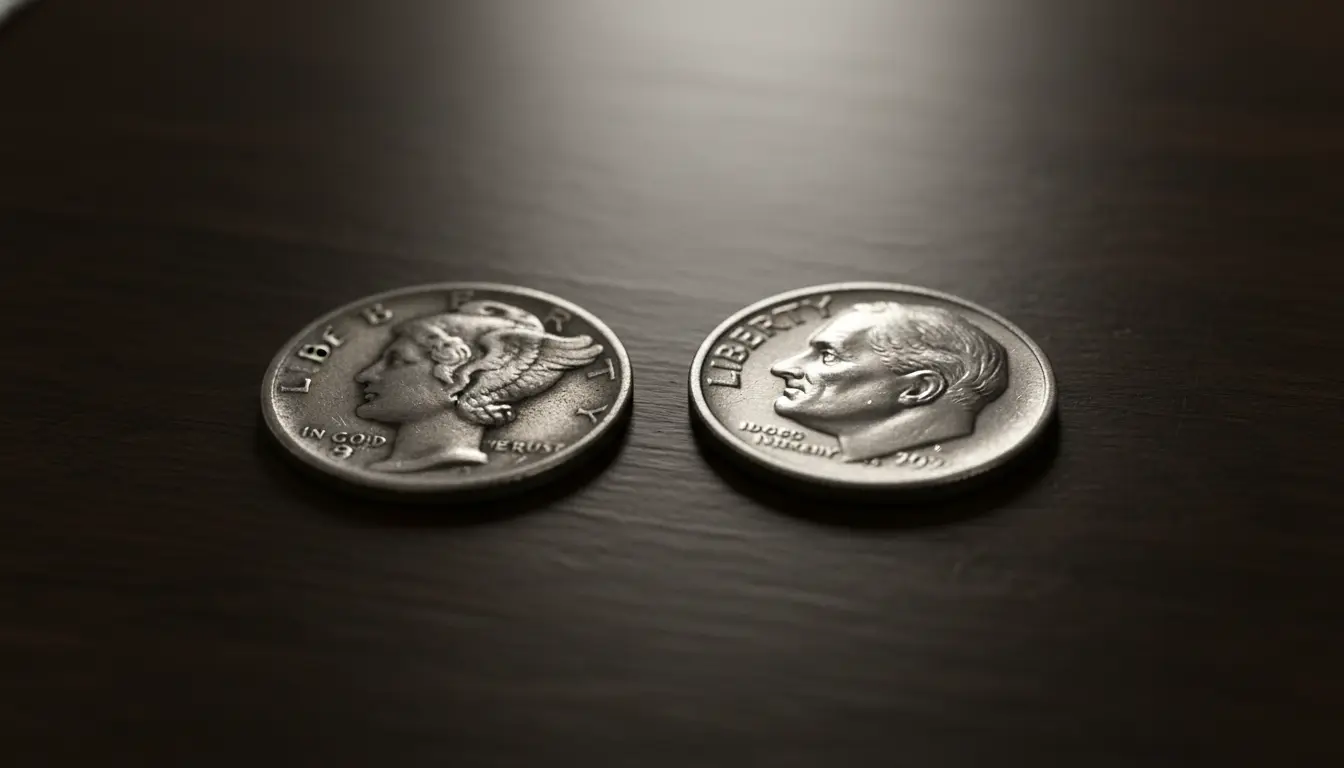
Collectors and casual finders often ask the same practical question: between a Mercury dime and a Roosevelt dime, which small coin is worth more? The short answer: it depends on date, condition, and rarity. This guide helps you compare the two series so you can estimate value and spot coins to keep.
Mercury vs Roosevelt Dimes: basic differences
Mercury dimes (officially the Winged Liberty Head) were minted from 1916 to 1945. They are 90% silver and 10% copper, and many are sought after by collectors because of age and some low-mintage dates.

Roosevelt dimes began in 1946 and continue today. Dimes dated 1964 and earlier are 90% silver like the Mercury series. Dimes dated 1965 and later are clad copper-nickel and generally have only face or modest collector value unless rare or in exceptional condition.
Silver content and melt value
Both Mercury dimes (1916–1945) and Roosevelt dimes through 1964 contain 0.07234 troy ounces of pure silver. At current silver prices, that fixes a baseline melt value for pre-1965 dimes.
- Pre-1965 dimes = silver melt value + collector premium
- Post-1964 Roosevelt dimes = typically face value unless collectible or error coin
Which series tends to be worth more?
On average, Mercury dimes command higher collector premiums than common Roosevelt silver dimes because they are older and include several key dates with low surviving populations.

That said, value depends on specific coin traits: date, mint mark, condition (grade), and whether it is a proof, overstruck, or error piece. A high-grade Roosevelt proof or a scarce error can outvalue a common Mercury dime.
Key factors that change value
- Date and mint mark: Low-mintage years are more valuable.
- Condition/grade: Uncirculated coins and higher MS grades bring big premiums.
- Rarity and demand: Popular series and famous rarities sell for more.
- Errors and proofs: These can push modern Roosevelt dimes above older common Mercury pieces.
How to identify Mercury vs Roosevelt dimes
Knowing visual differences helps quick identification. Look at the obverse portrait and the reverse design for instant recognition.
- Mercury obverse: Winged liberty cap (often mistaken for Mercury). The word LIBERTY is around the edge and the date sits below.
- Mercury reverse: Fasces (a bundled rod and axe) with an olive branch.
- Roosevelt obverse: Portrait of Franklin D. Roosevelt with the word LIBERTY and the date.
- Roosevelt reverse: Torch with olive and oak branches representing liberty, peace, and strength.
Where to check the mint mark
Mint marks can affect value. On Mercury dimes, the mint mark appears on the reverse near the fasces. Roosevelt dime mint mark location changed historically, so check the coin carefully or consult a reference for your year.

The Mercury dime was designed by Adolph A. Weinman and is often called the Mercury dime because Liberty wears a winged cap. The Roosevelt dime was introduced to honor President Franklin D. Roosevelt after his death in 1945.
Practical steps to estimate a dime’s worth
Follow these steps to get a quick, practical value estimate for any dime you find.
- Identify the series: Mercury (1916–1945) or Roosevelt (1946–present).
- Check the date and mint mark. Note any unusual features or errors.
- Assess condition: Look for wear, luster, and sharp details. Photos help for online lookups.
- Compare to market: Check recent auction results and reputable price guides for similar date and grade.
- Account for silver: For pre-1965 dimes, calculate melt value using current silver spot and 0.07234 oz per dime.
Example: quick valuation
Find a 1943 Mercury dime in good circulated condition. It contains 0.07234 oz silver, so its melt value equals 0.07234 × silver spot price. Add a typical collector premium — circulated Mercury dimes often sell for a small premium above melt, while high-grade examples sell for significantly more.
Real-world case study
A local collector bought a box of old dimes from an estate sale. Among the Roosevelt and Mercury dimes was a 1916-D Mercury dime in worn but collectible condition. After authentication, the coin sold at a regional auction for several thousand dollars because the 1916-D is a recognized key date with low surviving numbers.
This case shows how a single rare date can make an otherwise ordinary lot suddenly valuable.
When to seek professional appraisal
If you find an older silver dime that looks unusually sharp, shows minting errors, or has a date/mint mark you don’t recognize, get it graded or appraised by a trusted coin dealer or professional grader.
Professional grading can confirm condition and often uncovers value that casual inspection misses.
Quick takeaways
- Mercury dimes are generally more collectible and can be worth more, especially for key dates like the 1916-D.
- Roosevelt dimes dated 1964 or earlier share the same silver content and baseline melt value as Mercury dimes.
- Post-1964 Roosevelt dimes are usually only face value unless they are rare errors, proofs, or in high grades.
- Always check date, mint mark, and condition — these determine real market value.
With these steps you can quickly sort through a jar of dimes and focus attention on the handful most likely to be worth more than face value. When in doubt, have the coin examined by an experienced dealer or grading service.