
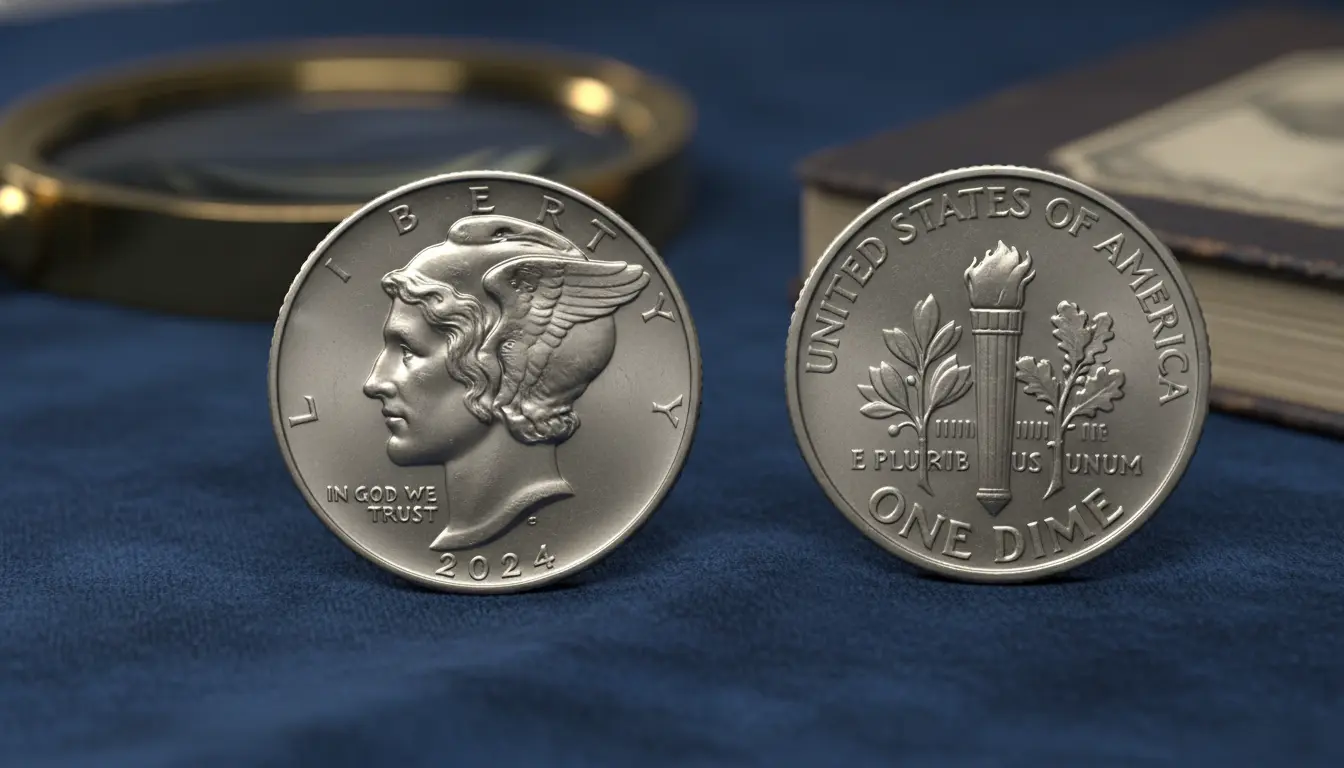
Mercury vs Roosevelt Dimes: Quick Overview
The Mercury dime and the Roosevelt dime are two small U.S. coins that collectors watch closely. Many people ask which one is worth more and why values vary so much between them.
This article compares Mercury and Roosevelt dimes, explains the main value drivers, and shows how to check a coin you might own. Follow practical steps to estimate and protect potential value.
Why Mercury vs Roosevelt Dimes Matter

Both coins have been widely used and saved, but they appeal to different collectors. Mercury dimes are older and often have higher collector premiums. Roosevelt dimes include many modern issues and are common unless rare errors or high grades are involved.
Mercury vs Roosevelt Dimes: Age and Composition
Mercury dimes were minted 1916 through 1945 and are 90% silver. Roosevelt dimes began in 1946 and were 90% silver until 1964; from 1965 onward they are copper-nickel clad and contain no silver.
Silver content gives older dimes intrinsic melt value, while age and scarcity give additional numismatic value.
Key Factors That Determine Value

Several consistent factors affect whether a Mercury or Roosevelt dime is worth more. Learn these so you can quickly screen coins in a collection.
- Date and mint mark — Rare dates and low-mintage coins can be worth far more.
- Condition/grade — Higher grades produce exponentially higher prices for many classic coins.
- Metal content — Silver dimes have intrinsic melt value; clad dimes do not.
- Errors and varieties — Misstrikes, doubled dies, and overdates can add significant value.
- Market demand — Popular series and iconic designs sell for premiums.
Examples of Typical Value Differences
Common circulated Mercury dimes often sell for a modest premium above silver melt because they are older. A worn Mercury dime might still be worth more than a worn Roosevelt dime from the 1970s because the latter contains no silver.
High-grade Mercury dimes and key dates can command collector prices that far exceed silver melt, while most modern Roosevelt dimes are worth face value unless rare or graded.
How to Identify Valuable Coins

Use a few simple checks to identify potentially valuable Mercury or Roosevelt dimes. These quick steps help decide if you should research further or get professional grading.
- Check the date and mint mark on the obverse or reverse depending on the series.
- Look for wear patterns and overall strike quality.
- Search for visible errors: doubled devices, cuds, off-center strikes, or repunched mint marks.
- Test for silver with a magnet (silver is non-magnetic) and consider a professional assay if needed.
Where to Look on the Coin
Mercury dimes show the mint mark on the reverse near the bottom left. Roosevelt dimes generally show the mint mark on the obverse to the right of the torch for later years, but location varies by year.
Knowing where to look speeds identification and prevents needless handling that can reduce value.
The coin commonly called the Mercury dime actually depicts Liberty wearing a winged cap. It was designed by Adolph A. Weinman and is officially the Winged Liberty Head dime.
Practical Steps to Price a Coin
Follow these steps to estimate what a Mercury or Roosevelt dime is worth before selling or grading.
- Identify the date and mint mark precisely.
- Compare condition to photos in a current price guide or online auction results.
- Check silver spot price to estimate melt value for silver dimes.
- Look for recent auction sales of the same date, mint, and grade to set realistic expectations.
- If the coin looks rare or is high-grade, consider professional grading (PCGS/NGC) to maximize sale price.
Quick Valuation Example
If a 1943 Mercury dime shows heavy wear and no special marks, its value is often driven by silver content and common-date premiums. A mid-grade Mercury might sell for a small premium over melt. A 1916-D Mercury dime in even modest condition can be worth significantly more due to scarcity.
Small Case Study: A Real-World Find
A collector bought a mixed lot of old coins at an estate sale and found a worn 1916-D Mercury dime in one coin folder. The collector compared images in a price guide, confirmed the mint mark, and found similar sales on auction sites.
After lightly cleaning nothing and submitting the coin for grading, the owner sold it at auction for several hundred dollars, well above initial expectations. The sale shows how key dates and modest condition can add significant value.
Final Tips for Collectors and Sellers
When deciding if a Mercury or Roosevelt dime is worth more, focus on date, condition, and metal content. Mercury dimes often command higher collector interest because of age and key dates.
For Roosevelt dimes, check 1946–1964 silver issues for melt value and search for errors or high grades among post-1965 issues for collector premiums.
- Keep coins in flips or capsules to avoid damage.
- Use reputable price guides and recent auction results for pricing.
- Consider grading only when the coin may earn a price premium that exceeds grading fees.
With these steps you can make a practical, informed choice about whether a Mercury or Roosevelt dime in your collection is worth more. Careful identification and realistic market research are the best tools for maximizing value.