
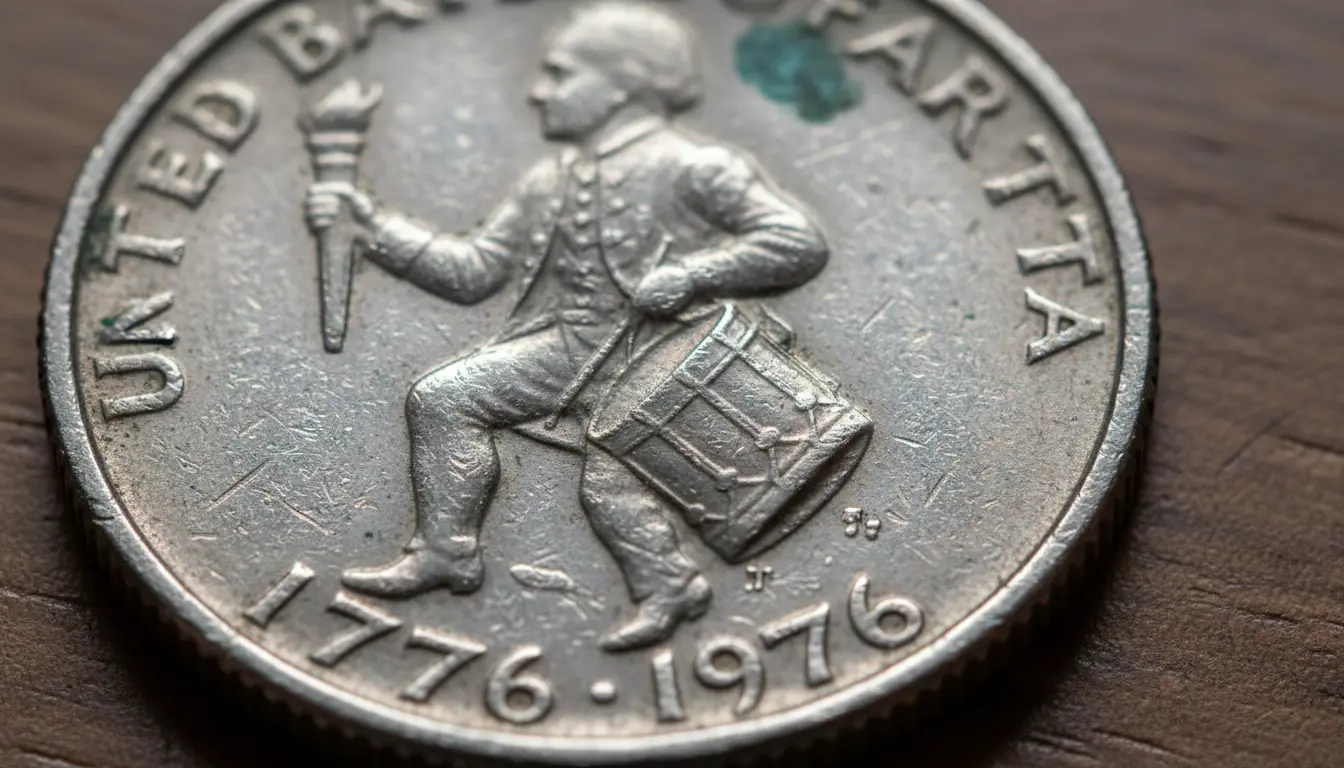
Why the Bicentennial Quarter Rumor Exists
Stories of a Bicentennial quarter worth $11 million circulate online and in collector forums. Most of these claims are exaggerated or based on misunderstandings about coin rarity, grading, and provenance.
This article explains how a Bicentennial Quarter could become valuable, common error types that increase value, and practical steps to verify and sell a potentially rare coin.
How a Bicentennial Quarter Could Become Valuable

The 1776–1976 Bicentennial quarter was produced in large numbers, so ordinary specimens have modest value. To be valuable, a Bicentennial Quarter usually needs one or more of the following:
- Major mint error (off-metal planchet, broadstrike, clipped planchet)
- Strong die varieties or doubled dies
- Exceptional grade from a professional grading service
- Provenance or a documented chain of ownership linking it to a notable find
Each factor affects market value. A high grade and a rare error together are what can make a coin collectible and sometimes sell for significantly more than face value.
Common error types that raise value
Collectors and dealers look for certain error types on Bicentennial Quarters. These types are more likely to attract attention and a premium:
- Off-metal strikes (quarter struck on a dime or clad on a copper planchet)
- Misaligned or rotated dies
- Double die obverse or reverse
- Broadstrikes and clipped planchets
- Overstrikes where one coin was struck over another
How to Authenticate a Rare Bicentennial Quarter

If you think you have a rare Bicentennial Quarter, start with basic non-destructive checks. Careful observation is often enough to catch obvious errors or fakes.
Steps to verify a potential rarity
- Examine under magnification. Use a 10x loupe or microscope to look for doubling, die cracks, or evidence of tooling.
- Check weight and diameter. Compare with standard specifications: modern quarters should weigh about 5.67 grams and measure 24.3 mm in diameter.
- Look for unusual metal color or edge differences, which suggest an off-metal strike.
- Compare with reference photos and guides from reliable sources such as the American Numismatic Association or major grading services.
- Document everything with clear photos of obverse, reverse, and edge before sending the coin for professional review.
These steps help you decide if professional grading or expert consultation is warranted.
Professional Grading and Authentication
High-value coins must be authenticated and graded by established services such as PCGS or NGC. Grading provides a standardized condition rating and provenance record, and it greatly improves buyer confidence.

Expect to pay submission and grading fees. For potentially valuable error coins, consider the higher-level submission tiers that include authenticity checks and variety attribution.
Most Bicentennial quarters were produced by the Philadelphia and Denver mints and are common. Genuine, high-grade error coins are rare and usually command premiums from collectors, not millions unless paired with extreme rarity and provenance.
What to Do If You Find a Suspected Valuable Bicentennial Quarter
Follow a practical process to avoid damage and maximize value. Do not clean or polish the coin — cleaning can destroy collector value.
- Keep the coin in a soft holder to prevent further wear.
- Take high-resolution photos of both sides and the edge.
- Get initial opinions from reputable coin dealers or local numismatic clubs.
- If opinions are positive, submit for professional grading and authentication.
- Use reputable auction houses or certified dealers for sales once authenticated.
Pricing and sale channels
After grading, you can choose private sale, auction, or sale through a dealer. Each channel has pros and cons. Auctions offer public visibility and competitive bidding, while private sales may be faster and lower risk for both parties.
Case Study: A Local Find and What Happened Next
A collector in a small town discovered a Bicentennial quarter with a clear off-metal strike. The coin showed the correct designs but had a lighter weight and odd edge color.
The collector documented the coin, sought advice from a regional coin club, and then sent it to a major grading service. The coin was authenticated as an off-metal strike and graded. It sold through a reputable auction house, fetching a strong premium relative to face value, though not a sensational multi-million dollar price.
This example shows the practical path from discovery to sale: document, consult, authenticate, and then list through credible channels.
Key Takeaways About the 11 Million Dollar Claim
- Sensational values are rare. Most Bicentennial quarters are common and not worth large sums.
- Valuable coins typically combine rare errors, exceptional grade, and solid provenance.
- Authenticate through major grading services before accepting any high-value estimate.
- Never clean a suspected rare coin and keep thorough documentation.
Following these practical, step-by-step actions will help you evaluate a Bicentennial Quarter responsibly. If you suspect you have a genuine rarity, professional authentication is the most important next step.