
Remote work productivity is about more than logging hours. It combines environment, routines, tools, and clear communication to produce reliable output.
Why remote work productivity matters
Companies and individuals rely on consistent remote work productivity to meet deadlines and maintain well-being. Without structure, output and morale can fall quickly.

This article gives practical, repeatable steps you can apply immediately to improve focus and results.
Set up your workspace for remote work productivity
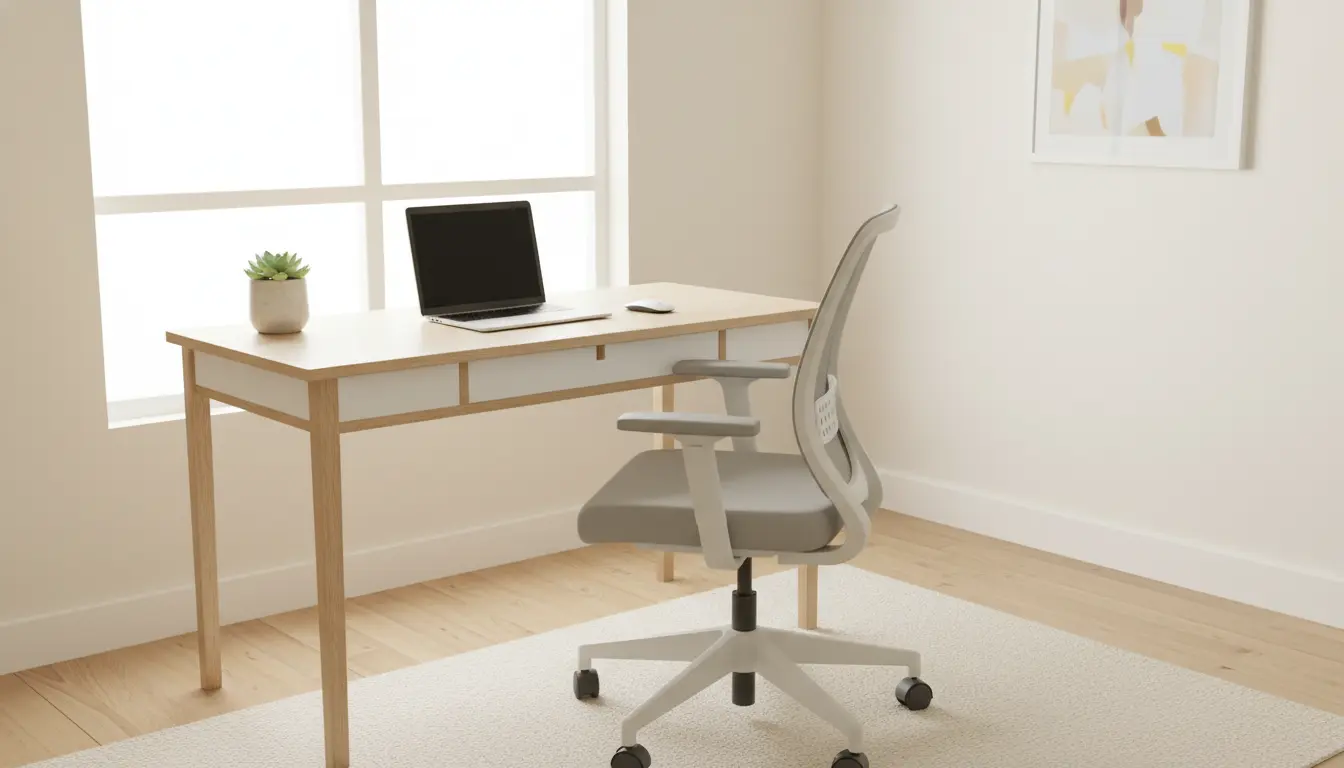
A dedicated workspace signals your brain it is work time. Even a small, consistent spot reduces context switching and distractions.
Ergonomics and lighting for remote work productivity
Good ergonomics reduce fatigue. Position your screen at eye level and use a chair that supports your back. Natural light improves mood and alertness.

Simple investments like a laptop stand and external keyboard can make a big difference.
Minimize distractions to protect remote work productivity
Identify your top distractions and remove them. That may mean turning off nonessential notifications or using a white noise machine.
Use physical signals — headphones or a closed door — to indicate focused work periods.
Time management strategies for remote work productivity

Time alone won’t ensure productivity. You need methods to structure work and manage energy.
Use time blocking and the Pomodoro technique
Time blocking assigns chunks of the day to specific tasks. The Pomodoro technique alternates 25 minutes of focused work with short breaks.
Combine both: block a 2-hour slot for deep work made of four Pomodoro cycles, then take a longer break.
Prioritize tasks to focus on impact
Use a simple prioritization method, such as the Eisenhower matrix, to separate urgent from important tasks.
- Do first: High impact, high urgency
- Schedule: High impact, low urgency
- Delegate: Low impact, high urgency
- Eliminate: Low impact, low urgency
Tools and routines that boost remote work productivity
Select tools that reduce friction and support your chosen workflows. Too many apps increase context switching.
- Task manager: Todoist, Microsoft To Do, or a simple text file
- Calendar: Block focus time and visualize deadlines
- Communication: Slack or Microsoft Teams with notification rules
- Focus apps: Forest or website blockers to limit interruptions
Establish daily routines: a short morning planning session and an end-of-day wrap-up to list next-day priorities.
Communication and collaboration for remote work productivity
Clear communication prevents rework. Define expected response times and preferred channels for different types of messages.
Use brief status updates at the start and end of the day so teammates know progress without multiple check-ins.
Short breaks during focused work improve long-term concentration. Research shows brief mental rests reduce decision fatigue and help sustain performance.
Small real-world example: Freelance designer case study
A freelance designer struggled with missed deadlines and irregular income. She implemented a simple routine: a dedicated workspace, two 90-minute deep-work blocks per day, and a weekly planning session on Mondays.
Within six weeks her on-time delivery rate rose from 60% to 92%, and client requests became easier to schedule because she published available time slots on her calendar.
Quick checklist to improve remote work productivity
- Designate a consistent workspace and optimize ergonomics
- Block calendar time for focused work and breaks
- Limit notifications to essential channels during focus blocks
- Use a single task manager and review it each morning
- Communicate availability and response expectations to teammates
- Measure one or two productivity metrics (completed tasks, focused hours)
Common pitfalls and how to avoid them
Overworking and working without breaks reduce long-term productivity. Set clear stop times and protect personal time.
Another pitfall is tool overload. Periodically audit your apps and remove those that add friction rather than value.
Improving remote work productivity is a steady process of setting up the right environment, committing to disciplined routines, and choosing tools that reduce friction. Start with one change this week and measure its effect.