
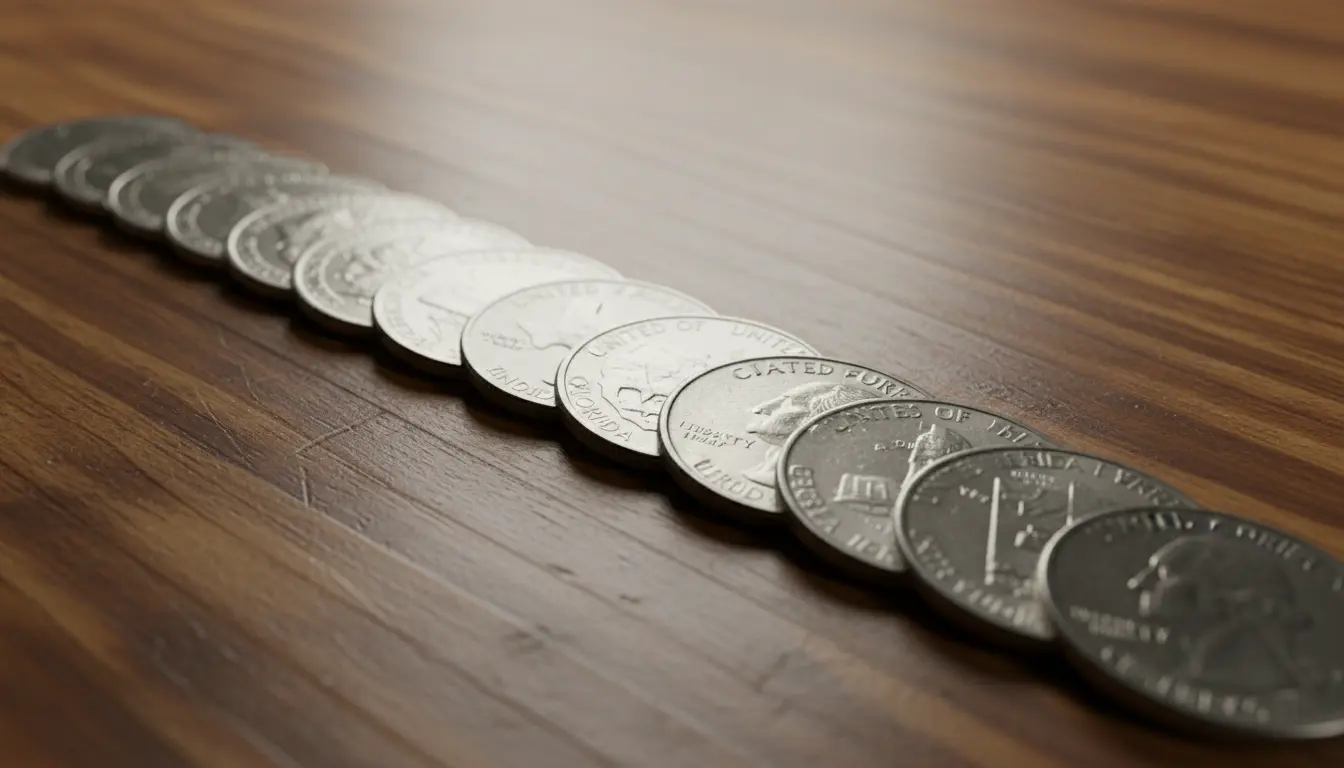
The State Quarters program changed modern U.S. coin collecting by putting 50 state designs into circulation between 1999 and 2008. Over the next decade plus, collectors and investors tracked how design varieties, mint marks, and grades affected market values. This article explains how values changed across 11 years, what drove those changes, and how you can analyze State Quarters today.
Understanding the State Quarters Program
The State Quarters program ran from 1999 to 2008 and released five state designs each year. Each design honored a state’s history or symbols and circulated widely, bringing casual interest to coin collecting.

These quarters were minted in Philadelphia and Denver and often produced in huge quantities. Wide availability initially suppressed large market premiums, but varieties and mint-condition pieces later created pockets of value.
Why State Quarters matter to collectors
State Quarters are a gateway series: they attracted new collectors and created demand for complete sets and uncirculated coins. Collecting motivations include completing state sets, finding errors or varieties, and investing in high-grade specimens.
Key value drivers include rarity, condition (grade), mint mark, and known errors or varieties. Provenance and certified grades from major services also influence prices.
Tracking 11 Years of Value Changes for State Quarters

Over an 11-year period values shifted as the collectors’ market matured and attention moved from novelty to rarity. Early years showed modest secondary-market prices, while later years revealed selective spikes.
The main phases were initial saturation, discovery of varieties, and a later stable collector base that supported steady prices for specific coins. Values moved differently for circulated coins, mint sets, and high-grade certified pieces.
Common patterns in value changes
- Circulated common-state quarters stayed low in value due to high mintage numbers.
- Uncirculated Mint sets and Proof sets retained premiums and appreciated slowly.
- Error coins and rare varieties experienced the fastest price growth when discovered and publicly documented.
- Market sentiment and collector trends (TV shows, price guides, online marketplaces) caused short-term spikes.
Market Trends Affecting State Quarters
Several market trends influenced quarter values over 11 years. Online marketplaces increased price transparency and made rare coins easier to find. Certification services standardized grading and created a premium for high grades.

Economic cycles also played a role. During stronger markets collectors often bid more for desirable coins, while recessions reduced speculative buying and favored basic collecting.
Factors to watch in the State Quarters market
- Grading population reports — low population in high grades often signals value potential.
- Documented error varieties — well-documented errors can move from hobby interest to established premiums.
- Online sale history — completed sales show realistic price ranges compared to listing prices.
- Collector interest cycles — renewed interest in a state or anniversary can increase demand temporarily.
How to Analyze State Quarters: Practical Steps
Evaluating quarters across an 11-year trend requires simple, repeatable steps. Follow a checklist to arrive at reasonable value expectations for buying or selling.
- Identify the coin: state, year, and mint mark. Note any unusual features.
- Check condition: grade as best you can and consider third-party grading for premium coins.
- Research varieties: look for known errors or distinct varieties that affect value.
- Compare recent sale prices: use auction records and completed online sales, not just asking prices.
- Factor in demand: regional interest or anniversary events can affect short-term prices.
These steps help separate long-term value trends from short-term volatility. Keep records of sale prices and notes to monitor changes over time.
Tools and resources for pricing State Quarters
- Numismatic price guides and catalogs (print and online)
- Grading service population reports (PCGS, NGC)
- Completed listings on major auction sites
- Local coin dealers and regional coin shows for hands-on inspection
Some State Quarters varieties are identified by subtle die differences visible only under magnification. These small details can produce disproportionate value gains when verified and documented.
Case Study: A Real-World Example
In 2011 a regional coin dealer cataloged a small group of uncirculated 2004 Wisconsin State Quarters showing an “extra leaf” variety. The variety had been publicized earlier and attracted collector attention.
The dealer graded several pieces and sold one certified high-grade example through an online auction. It closed at a price substantially above a common uncirculated quarter but below speculative peaks reported in earlier years. The sale illustrated how certification and proven rarity, combined with market timing, set realistic value expectations.
Lessons from this case study: proper authentication, clear listing of the variety, and using completed sale history are essential. Even known varieties must be marketed correctly to reach interested buyers.
Practical Tips for Collectors Tracking Value Changes
- Document your collection: record date acquired, price, and source to measure appreciation over time.
- Use third-party grading selectively: it helps for high-value pieces but may not be cost-effective for low-value coins.
- Stay informed: follow numismatic publications, forums, and auction results to track trends.
- Diversify: mix common coins for enjoyment with a few well-researched potential value pieces.
Tracking value changes over 11 years shows a maturing market. While most State Quarters remain affordable, targeted research and careful grading practices can reveal meaningful opportunities.
Whether you are completing a set or looking for select varieties, practical, methodical analysis will yield better decisions than chasing every market headline. Focus on documentation, realistic pricing, and patient selling to capture value when demand rises.