
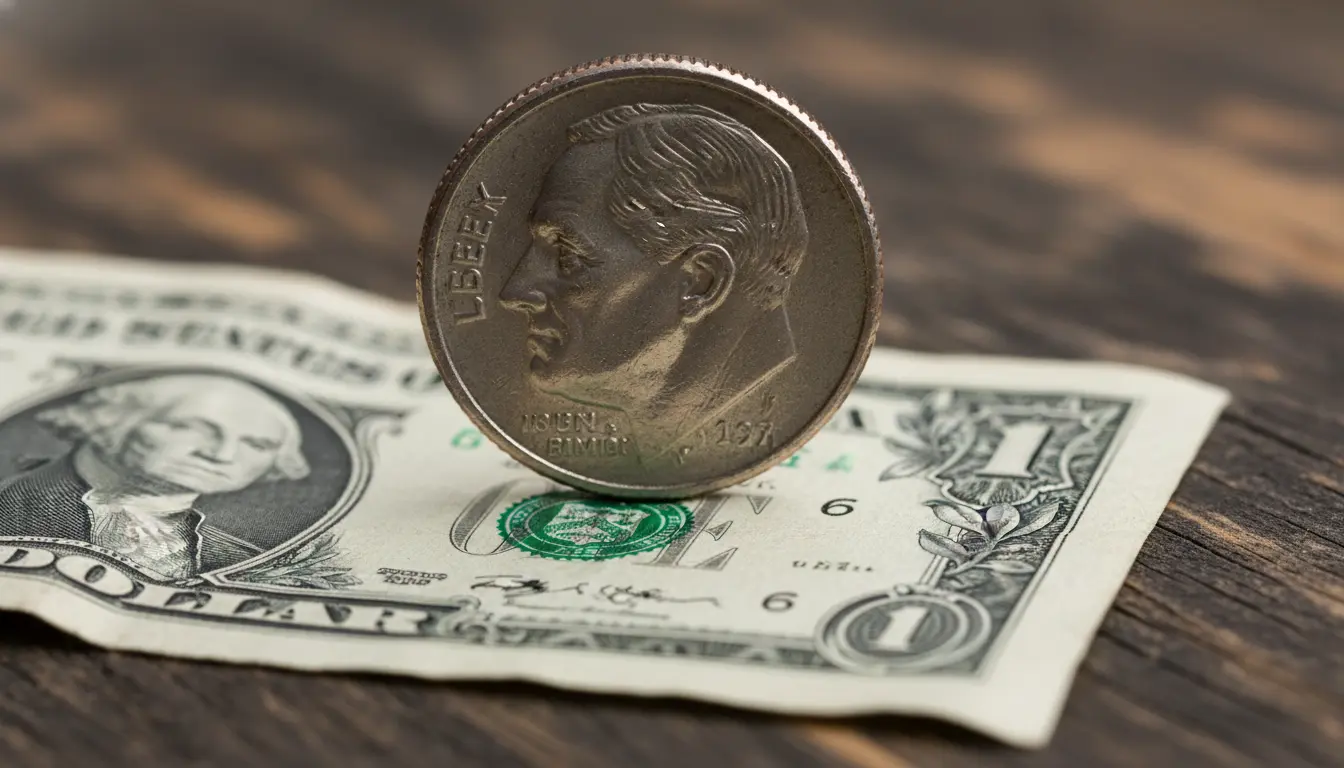
Roosevelt Dime vs Sacagawea Dollar: Quick Comparison
This guide compares the Roosevelt Dime vs Sacagawea Dollar in clear, practical terms. You will learn differences in size, metal, history, and collectible value.
Basic physical differences: Roosevelt Dime vs Sacagawea Dollar
The Roosevelt Dime is small and thin, measuring 17.9 mm in diameter and weighing 2.27 grams. It has been produced since 1946 and changed composition in 1965 from 90% silver to copper-nickel clad.

The Sacagawea Dollar measures 26.5 mm in diameter and weighs 8.1 grams. Introduced in 2000, it uses a manganese-brass alloy that gives it a golden color. Size and color differences make the two coins instantly distinguishable.
Quick facts
- Roosevelt Dime: Smaller, thinner, older design, silver content pre-1965.
- Sacagawea Dollar: Larger, golden color, modern dollar coin introduced in 2000.
- Both are legal tender but serve different roles in vending and collecting.
History and purpose: Roosevelt Dime vs Sacagawea Dollar
The Roosevelt Dime honors President Franklin D. Roosevelt and was issued soon after his death. Its design has been consistent, which helps collectors identify date and mint differences more easily.
The Sacagawea Dollar honors the Shoshone guide Sacagawea and was created to replace the unpopular Susan B. Anthony dollar. Its goal was to provide a dollar coin that felt and looked different from other coins.
Metal and intrinsic value differences

One major difference in the Roosevelt Dime vs Sacagawea Dollar comparison is metal value. Dimes minted before 1965 contain 90% silver and usually carry intrinsic metal value above face value.
Most Roosevelt dimes after 1965 and all Sacagawea Dollars are base-metal coins with little melt value above face. Sacagawea composition (manganese brass) resists corrosion and maintains color but has negligible bullion value.
Collecting value: Roosevelt Dime vs Sacagawea Dollar
Collectability depends on date, mint mark, condition, and rarity. Key Roosevelt Dime dates and mint marks—such as earlier silver dimes—tend to be more valuable to collectors.

Sacagawea Dollars have notable varieties and errors, especially from the early 2000s. High-grade uncirculated examples, proof sets, and some error coins can attract premiums, but many circulated examples remain worth face value.
What collectors look for
- Roosevelt Dime: 1946–1964 silver dimes, mint marks (S, D), proof strikes, and high grades.
- Sacagawea Dollar: Early dates (2000–2001), mint errors, business strike vs. proof, and high MS grades.
Practical uses and everyday handling
In daily life the Roosevelt Dime and Sacagawea Dollar serve different uses. Dimes remain common in change and coin rolls. Dollars are used for vending machines, transit systems, and some retail situations.
Because the Sacagawea Dollar is larger and distinctive in color, people are more likely to notice and save them. That can reduce the number of Sacagawea Dollars in circulation compared with common dimes.
How to inspect and grade coins
Use a magnifier and good light to inspect date, mint mark, and surface condition. Look for wear on high points, rim damage, and scratches. For small coins like the Roosevelt Dime, magnification makes a big difference.
Grades range from Poor (P) to Mint State (MS). For both Roosevelt Dime vs Sacagawea Dollar, the higher the grade the higher the potential collector value.
Where to buy, sell, or appraise
Local coin shops, reputable online dealers, and auction platforms are common for buying and selling. For high-value coins, consider third-party grading by PCGS or NGC before sale to maximize trust and price.
For modest coins, local dealers or online marketplaces will do. Keep records, photos, and provenance for more valuable pieces.
Storage tips
- Store coins in acid-free holders or coin flips to avoid damage.
- Keep high-value coins in a dry, stable environment away from direct sunlight.
- Use coin tubes for dimes and padded holders for dollars to prevent scratches.
The Roosevelt Dime replaced the Mercury Dime in 1946 to honor FDR. Roosevelt dimes minted before 1965 are composed of 90% silver, while Sacagawea Dollars introduced in 2000 use a manganese-brass alloy and are not silver.
Small case study: Finding value in pocket change
Case: A commuter emptied a jar of loose change and found a 1963 Roosevelt dime and a 2000 Sacagawea Dollar. The 1963 dime, being silver, attracted attention for silver melt or collector interest.
The commuter sold the silver dime to a local dealer for slightly above melt value and kept the Sacagawea as a novelty. The Sacagawea, in average circulated condition, was more likely to hold sentimental value than cash value.
Lesson: Older Roosevelt dimes can have immediate metal or collector value. Most Sacagawea Dollars will need rarity or high grade to exceed face value.
Which should you keep: Roosevelt Dime vs Sacagawea Dollar?
If you find a pre-1965 Roosevelt Dime, keep it or seek an appraisal because of silver content and collector demand. For Sacagawea Dollars, check date and condition; only early dates, proofs, or error coins typically rise above face value.
For most casual collectors, building sets of both coin types makes sense. Dimes fill small-value collections while Sacagawea Dollars add modern variety and historical representation.
Summary: Practical takeaways
- Identify the coin first: date, mint mark, and condition matter most.
- Pre-1965 Roosevelt dimes often have intrinsic silver value; Sacagawea Dollars usually do not.
- Collect both for different reasons: dimes for historical and metal value; Sacagawea for modern commemorative appeal and larger, distinct presence.
Use this comparison of Roosevelt Dime vs Sacagawea Dollar to make informed choices on saving, selling, or collecting. Focus on condition and rarity to find real value.