
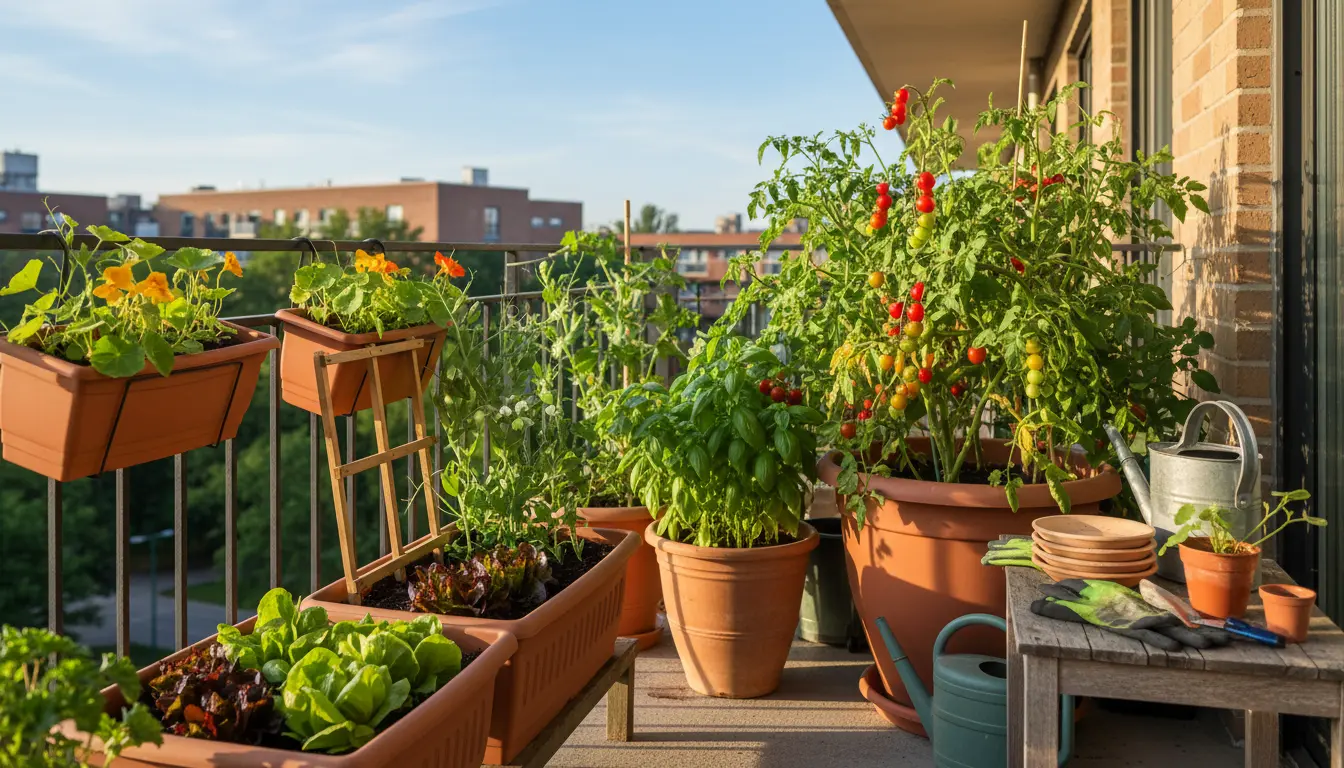
Why start a small vegetable garden
Starting a small vegetable garden is a practical way to grow fresh food, save money, and learn simple gardening skills. It works for yards, balconies, patios, or even a sunny windowsill.
This guide gives clear steps you can follow today so you get reliable results without wasting time or money.
Choose a site for your small vegetable garden
Light and access for your small vegetable garden

Most vegetables need at least 6 hours of direct sun a day. Observe a potential spot for a few days to confirm sunlight patterns.
Also consider access to water, and how easy it will be to reach plants for harvesting and maintenance.
Space and layout for your small vegetable garden
Decide between ground beds, raised beds, and containers. Containers are best for balconies and patios while raised beds suit small yards.
- Ground bed: lowest cost, needs good soil.
- Raised bed: better drainage and soil control.
- Containers: flexible and ideal for limited space.
Soil and containers for a small vegetable garden
Choosing soil and mix for a small vegetable garden

Good soil is the most important factor. For beds, improve native soil with compost and a balanced mix of organic matter.
For containers, use a high-quality potting mix with compost. Avoid using garden soil directly in pots because it compacts and drains poorly.
Container sizes for a small vegetable garden
Match container size to plant needs. Examples:
- Leafy greens: 6-8 inch deep pots.
- Tomatoes and peppers: 12-20 inch deep containers.
- Root crops (carrots, beets): 10-12 inch deep containers.
Planting and care for your small vegetable garden
What to plant first in a small vegetable garden

Start with easy, fast-growing crops to build confidence. Good starter choices include lettuces, radishes, bush beans, and herbs like basil or parsley.
Use a planting calendar for your region to avoid frosts and to plant at optimal times.
Watering and feeding your small vegetable garden
Water deeply and less often rather than shallow daily watering. Check soil moisture by sticking a finger 1-2 inches into the soil.
Feed plants with a balanced organic fertilizer or regular compost tea every 3-4 weeks during the growing season.
Pest control and maintenance in a small vegetable garden
Use simple, non-toxic methods first: hand-pick pests, use row covers, and encourage beneficial insects with flowers.
Rotate crops and avoid planting the same family in the same spot each year to reduce disease build-up.
Easy crops for a small vegetable garden
Pick crops that give high yields in small spaces. Examples include:
- Lettuce and salad greens: quick harvest and continuous picking.
- Cherry tomatoes: high yield in containers.
- Radishes: ready in 3-4 weeks.
- Bush beans: compact and productive.
- Herbs: basil, mint, cilantro for constant use.
Simple schedule for a small vegetable garden
Follow a weekly routine to keep tasks small and manageable. Example schedule:
- Weekly: Check watering and remove dead leaves.
- Biweekly: Check for pests and stake tall plants.
- Monthly: Add compost or feed with organic fertilizer.
Case study small vegetable garden
Case study: A two-person household in a city grew a productive balcony garden in 10 containers. They used 5-gallon pots for tomatoes and peppers and shallow troughs for lettuce and herbs.
Within three months they harvested regular salad greens, basil for pesto, and enough cherry tomatoes for fresh eating and occasional canning. Initial investment was under 150 for pots and soil. Minimal maintenance was required once plants were established.
Tips and examples to avoid common mistakes
- Avoid overcrowding plants. Follow spacing on seed packets to reduce disease and improve yields.
- Label containers to remember plant varieties and planting dates.
- Start small. A few productive containers teach more than a large overcrowded plot.
Final checklist to start your small vegetable garden
- Pick a sunny site close to water.
- Choose containers or build a raised bed.
- Buy quality potting mix and compost.
- Select 3-5 easy crops to begin.
- Set a simple weekly maintenance routine.
Follow these steps, adjust based on your local climate, and grow steadily. A small vegetable garden can provide fresh food and gardening satisfaction with low cost and manageable time.