
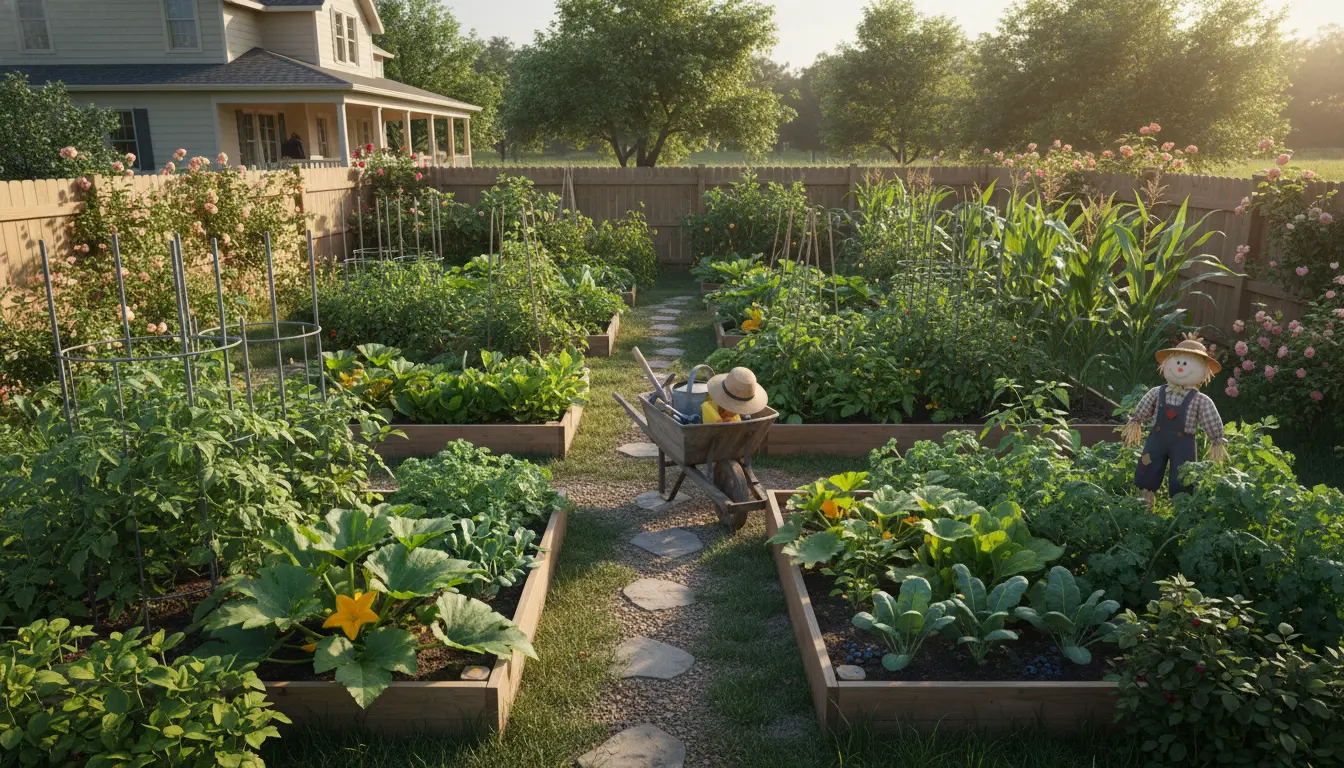
Starting a small vegetable garden is practical and achievable, even with limited space. This guide gives clear, step-by-step instructions to plan, plant, and maintain a productive garden.
Choose the Right Location for Your Small Vegetable Garden
Sunlight is the single most important factor. Most vegetables need 6 to 8 hours of direct sun each day.

Look for a flat spot with good drainage and easy access to water. Avoid low areas that collect cold air or flood after rain.
Assess light and access
- Observe sun patterns for several days before deciding the spot.
- Consider proximity to a hose or irrigation for easier watering.
- Place beds near your kitchen or patio for regular attention and harvesting.
Plan Layout and Size for a Small Vegetable Garden
Keep the layout simple: raised beds, containers, or in-ground rows work well. For small yards, a set of two or three 4×8 raised beds provides substantial production.
Paths should be narrow but usable so you can reach plants without stepping on beds. Allow at least 18 inches for a walkway.
Benefits of raised beds
- Improved drainage and warmer soil in spring
- Less soil compaction when you avoid walking in beds
- Easier to build good soil with compost and amendments
Prepare Soil for Your Small Vegetable Garden

Good soil is the foundation of a productive garden. Test or feel your soil to determine texture and fertility.
Most vegetables prefer a loose, loamy soil with pH 6.0 to 7.0. If your native soil is heavy clay or poor, use raised beds filled with a mix of topsoil, compost, and a small amount of sand or aggregate.
Simple soil improvement steps
- Add 2 to 4 inches of compost and work it into the top 6–8 inches of soil.
- Use a soil test kit to check nutrient levels and pH. Adjust with lime or sulfur if needed.
- Apply a balanced organic fertilizer at planting if soil test shows low fertility.
Choose Plants and Planting Schedule for a Small Vegetable Garden
Select vegetables that match your climate, taste preferences, and harvest goals. Start with easy crops that give reliable yields.

Good beginner choices include tomatoes, lettuce, radishes, bush beans, and zucchini. Mix short-season crops with longer-season crops to spread harvests.
Succession planting and companion tips
- Plant fast crops like radishes and lettuce between slower crops to maximize space.
- Use companion planting to deter pests — for example, basil near tomatoes.
- Rotate plant families each year to reduce disease buildup in the soil.
Watering and Maintenance for Your Small Vegetable Garden
Consistent watering is critical, especially during germination and fruit development. Aim for deep, less frequent watering to encourage strong root systems.
Mulch helps retain soil moisture, reduce weeds, and moderate soil temperature. Apply 2–3 inches of organic mulch around established plants.
Practical maintenance checklist
- Water early in the day to reduce evaporation and disease risk.
- Check plants for pests weekly and remove damaged leaves promptly.
- Support vining crops with stakes or trellises to save space and improve airflow.
Natural Pest and Disease Management for Small Vegetable Garden
Use preventative measures first: clean tools, crop rotation, and proper spacing reduce problems. Hand-pick larger pests and encourage beneficial insects like ladybugs.
For persistent issues, use targeted organic controls such as insecticidal soaps or neem oil, following product instructions carefully.
When to seek help
- If more than 10–15% of foliage is damaged, identify the pest and act quickly.
- For unknown diseases, take a sample to a local extension or garden center.
Harvesting and Storing Produce from Your Small Vegetable Garden
Harvest regularly to encourage more production and to enjoy vegetables at peak flavor. Pick leafy greens, herbs, and small fruits frequently.
Store produce properly: cool, dry storage for root vegetables and refrigeration for most harvested fruits and vegetables.
Simple preservation methods
- Blanch and freeze excess vegetables like beans and peas.
- Make quick pickles for cucumbers and small cucurbits.
- Dry herbs or use them fresh in cooking within a few days of harvest.
Most tomato varieties produce their first ripe fruit 60 to 80 days after transplanting. Choosing early-maturing types can extend your harvest window in small gardens.
Small Real-World Case Study
Example: A homeowner turned three 4×8 raised beds into a summer garden in a suburban backyard. They planted tomatoes (6 plants), basil (4 plants), lettuce (8 heads), bush beans (16 plants), and zucchini (2 plants).
With basic soil amendment (3 inches of compost) and drip irrigation, the beds produced about 60 pounds of vegetables over four months. Daily checks for pests and weekly mulching reduced water use and kept plants healthy.
Final Tips for a Successful Small Vegetable Garden
Start small, learn each season, and expand as you gain confidence. Keep notes on planting dates, varieties, and yields to improve year to year.
Consistency is more important than perfection. Regular attention, simple soil care, and right plant choices will give you steady harvests from a small vegetable garden.