
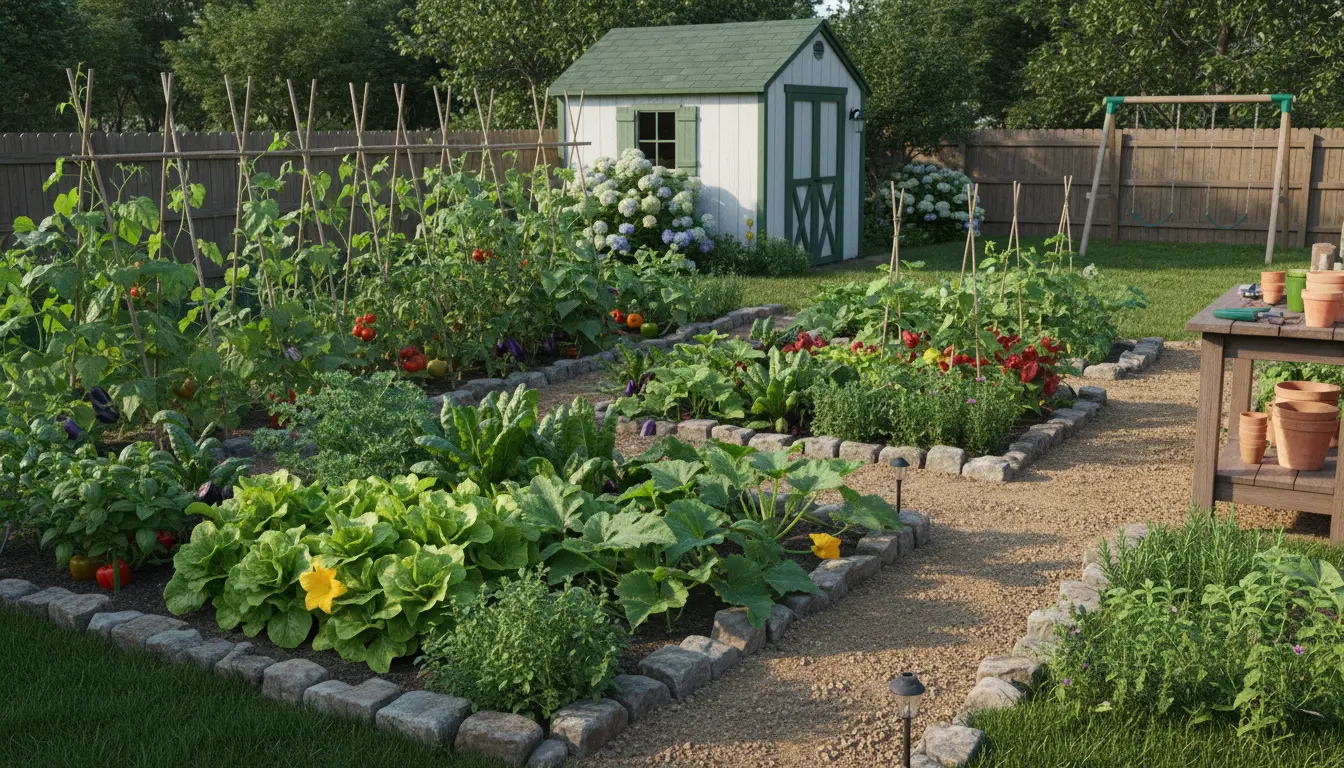
Starting a vegetable garden at home is practical and rewarding. This guide gives clear steps so you can plan, plant, and maintain a productive garden.
Why start a vegetable garden
A home vegetable garden saves money and delivers fresher produce than store-bought options. It also gives control over varieties, growing methods, and harvest timing.

Gardening improves mental well-being and creates a reliable source of seasonal food for your household. Even small spaces can produce a meaningful yield.
How to plan your vegetable garden
Good planning reduces mistakes and wasted effort. Begin by assessing space, sun, water access, and your available time for maintenance.
Decide what vegetables you and your family eat most. Focus on easy-to-grow, high-yield crops for first-time gardeners.
Choose the right location for a vegetable garden

Pick a spot with at least six hours of direct sunlight per day for most vegetables. Avoid low areas that stay wet after rain.
Consider proximity to a water source and ease of access for weeding and harvesting. If space is limited, use containers or raised beds.
Decide what to grow
Start with a few reliable crops: tomatoes, lettuce, carrots, beans, and herbs like basil or parsley. These give quick results and build confidence.

Match crops to your climate and growing season. Use seed packets and plant tags for spacing and days-to-maturity guidance.
Preparing soil and beds for a vegetable garden
Healthy soil is the foundation of a successful vegetable garden. Test your soil if possible, or assume you need to improve it with organic matter.
Add compost and well-rotted manure to increase fertility and structure. For poor soils, build raised beds filled with a mix of topsoil, compost, and other organic materials.
Soil preparation steps
- Remove weeds, grass, and debris from the plot.
- Loosen soil to about 8–12 inches for most vegetables.
- Work in 2–3 inches of compost or aged manure and mix well.
- Mulch paths to reduce weeds and keep beds clean.
Planting and spacing in your vegetable garden
Follow seed packet or plant tag instructions for depth and spacing. Crowded plants compete for light and nutrients and invite pests.
Use succession planting for continuous harvest: sow quick crops like lettuce every 2–3 weeks or follow an early crop with a later one in the same space.
Watering and maintenance tips for a vegetable garden
Consistent watering is crucial. Most vegetables need about 1 inch of water per week; adjust for local weather and soil type.
Water at the base of plants early in the morning to reduce evaporation and disease risk. Use drip irrigation or soaker hoses for efficiency.
Pest and disease basics
Monitor plants weekly for common pests like aphids and slugs. Remove affected leaves, use physical barriers, or apply organic options such as neem oil or insecticidal soap when needed.
Rotate crops each year to reduce soil-borne disease buildup. Keep garden clean of plant debris and practice good spacing and airflow.
Harvesting and storage from your vegetable garden
Harvest vegetables at peak ripeness for best flavor and nutrition. Learn specific signs for each crop—e.g., tomatoes should be fully colored and firm but slightly soft.
Store harvests properly: leafy greens in cool, moist conditions, root vegetables in cool dark places, and tomatoes at room temperature for best taste.
Some compact tomato varieties and salad greens can produce a harvest in as little as 45–60 days from planting, making them ideal for beginner gardeners.
Simple calendar and checklist for a vegetable garden
- Week 1: Test soil and decide location, order seeds or seedlings.
- Week 2: Prepare beds and mix in compost.
- Weeks 3–4: Plant cool-season crops or start seeds indoors for warm-season crops.
- Ongoing: Water regularly, weed weekly, monitor pests, and harvest as crops mature.
Case study: One-year result from a small backyard vegetable garden
Sarah, a beginner in a suburban yard, converted a 10×6 foot sunny patch to two raised beds. She started with tomatoes, lettuce, bush beans, and herbs.
By following a simple schedule—watering twice weekly, adding compost monthly, and rotating beans with leafy greens—Sarah harvested enough produce to cut her grocery produce bill by about 30% over the growing season.
The key factors were choosing manageable crops, consistent watering, and weekly observation to address issues early.
Final tips to keep your vegetable garden productive
- Start small and expand as you learn what works.
- Keep records: planting dates, varieties, and results help next year’s planning.
- Use companion planting and beneficial insects to reduce pests naturally.
With a little planning and steady care, anyone can start a vegetable garden at home and enjoy fresh, homegrown food. Begin with easy crops, improve soil, and learn season by season.