
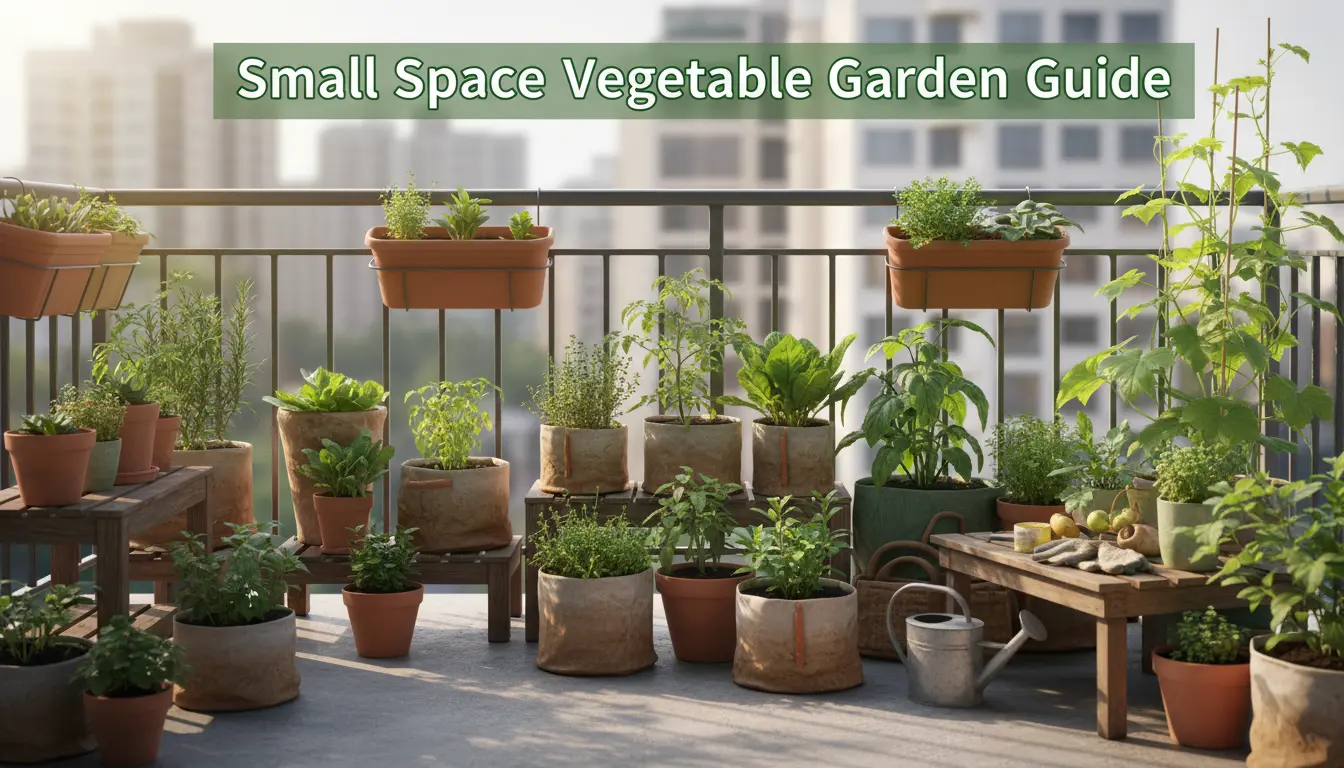
Plan Your Vegetable Garden in Small Spaces
Starting a vegetable garden in small spaces begins with a simple plan. Assess light, wind, and available square footage before choosing containers and plants.
Identify the keyword goals for your garden: quick harvests, low maintenance, or year-round production. This focus shapes plant and container choices.
Assess Site Conditions for Small Space Vegetable Gardening

Measure sunlight hours and note which areas receive morning or afternoon sun. Most vegetables need 5–8 hours of direct sun.
Check for nearby obstacles such as overhangs or tall buildings that could cast shade. Also observe wind patterns that can dry containers quickly.
Light and Microclimates in Small Areas
Even small spaces can have microclimates—warmer corners or sheltered nooks. Use those to grow heat-loving crops like tomatoes or peppers.

For shadier spots, select leafy greens, herbs, or root vegetables that tolerate less sun.
Choose Containers and Soil for a Small Space Vegetable Garden
Container choice affects root space, drainage, and mobility. Use containers large enough for the mature root system of your plants.
Buy a high-quality potting mix formulated for vegetables, or mix your own: good drainage, organic matter, and nutrients are essential.
- Suitable container types: fabric grow bags, 10–20 gallon plastic pots, window boxes, vertical planters.
- Soil mix basics: 40% compost, 40% peat or coconut coir, 20% perlite or coarse sand.
- Drainage: always add holes and a raised platform to prevent root rot.
How Much Soil Per Plant

Match container volume to plant needs. Examples:
- Leafy greens: 1–3 gallons per plant.
- Bush beans and herbs: 3–5 gallons.
- Cage or stake tomatoes: 10–20 gallons.
Pick the Best Vegetables for Small Space Gardens
Select compact, fast-maturing, and high-yield varieties. Dwarf and patio types are designed for containers.
Prioritize crops that give more produce per square foot and are easy to harvest.
- Easy picks: lettuce, spinach, radishes, bush beans, salad peas, cherry tomatoes.
- Herbs: basil, parsley, chives, cilantro.
- Vertical climbers: peas, pole beans, cucumbers trained on a trellis.
Succession Planting for Continuous Harvests
Use succession planting to maximize a small area. Sow fast crops early, then follow with heat-tolerant plants in summer.
Stagger sowing every 2–3 weeks for continuous harvest rather than a single large yield.
Watering and Feeding in Small Space Vegetable Gardens
Containers dry faster than ground beds. Establish a consistent watering routine and check soil moisture daily during heat waves.
Use slow-release organic fertilizer at planting and top-dress with compost every 4–6 weeks to keep nutrients balanced.
- Watering tips: water deeply until runoff, then wait until the top inch of soil is dry.
- Fertilizer: use a balanced 5-5-5 or a vegetable-specific feed according to package directions.
- Mulching: a light mulch conserves moisture and moderates soil temperature.
Pest Control and Disease Management in Small Gardens
Small spaces make monitoring pests easier. Inspect leaves regularly for early signs of damage or disease.
Use physical barriers like row covers, hand-pick pests, and introduce beneficial insects whenever possible.
- Preventive steps: clean tools, rotate container locations, avoid overwatering.
- Organic controls: insecticidal soap, neem oil, and diatomaceous earth for specific pests.
Maintenance Schedule for Small Space Vegetable Gardens
Maintenance is lighter but regular. Plan 15–30 minutes three times a week for watering, pruning, and checking for pests.
Monthly tasks include feeding, deadheading, and rotating crops if using mobile containers.
Seasonal Checklist
- Spring: clean containers, refresh soil, start seedlings.
- Summer: monitor water, support vines, harvest regularly.
- Fall: clear spent plants, add compost, plan cool-season crops.
Real-World Example: A Balcony Tomato and Herb Setup
Case study: a 6×4 ft balcony used three 15-gallon pots for indeterminate cherry tomatoes, two 5-gallon pots for peppers, and a vertical tower for herbs.
With morning sun and afternoon shade, the gardener used drip irrigation and a weekly fish emulsion feed. By mid-summer they harvested cherry tomatoes every 2–3 days and maintained a steady supply of basil and parsley.
Key takeaways: choose the right-sized pots, match plants to light, and invest in simple irrigation to reduce daily labor.
Quick Tips to Boost Success in Small Space Vegetable Gardening
- Start with a few easy crops to build confidence.
- Use vertical space—trellises and hanging baskets multiply area.
- Keep tools and supplies organized to save time.
- Record planting dates and harvests to improve next season.
Starting a vegetable garden in small spaces is practical and rewarding. With the right plan, containers, and plant choices, even a tiny balcony can become a productive kitchen garden.