
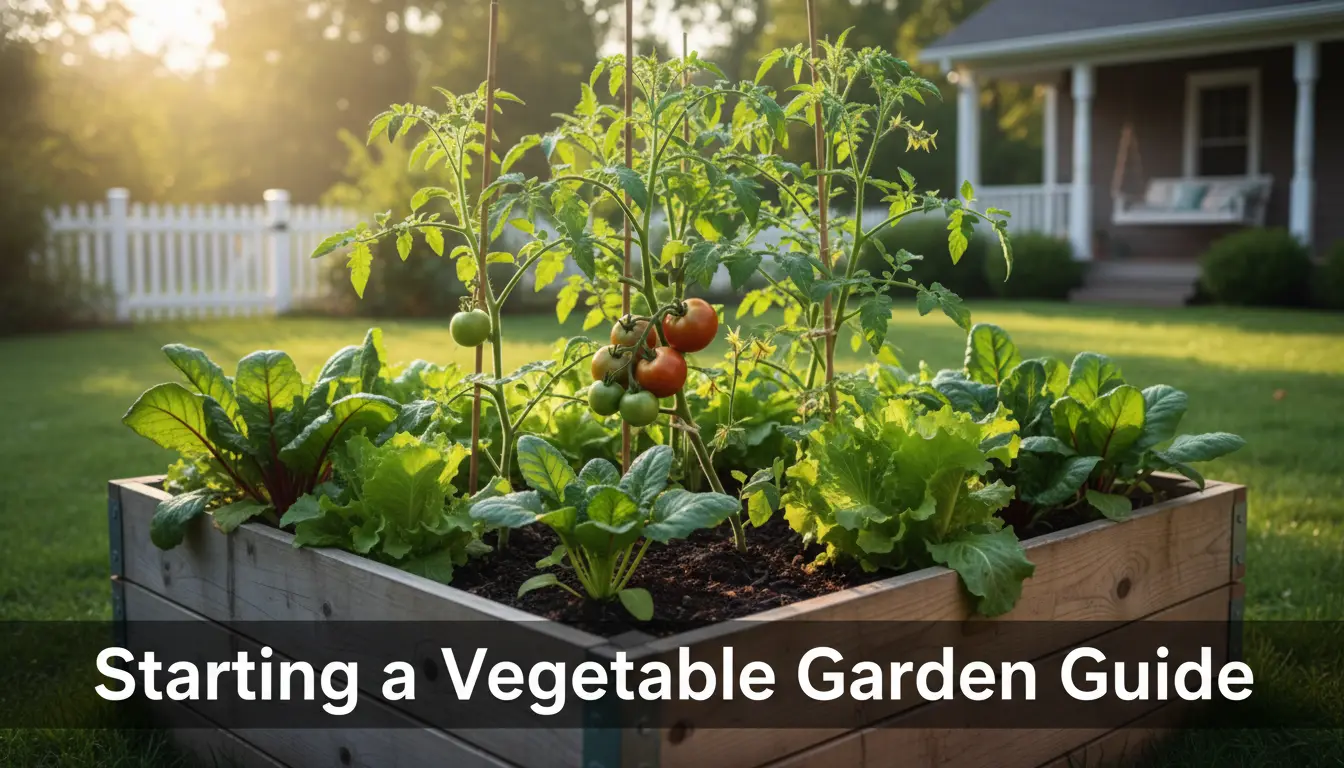
Why starting a vegetable garden is practical
Starting a vegetable garden is a practical way to save money, eat fresher food, and learn a useful skill. Many people assume it is difficult, but a small, planned garden can be simple and productive.
This guide gives clear, step-by-step instructions for beginners. Follow these practical steps to establish a healthy garden suited to your space and climate.
Planning your vegetable garden

Good planning reduces wasted time and effort. Start by deciding what you want to grow and how much space you have.
Consider these factors before you begin:
- Available sunlight (at least 6 hours a day for most vegetables).
- Space type: in-ground, raised beds, or containers.
- Water access and drainage.
- Local climate and first/last frost dates.
Choosing crops
Choose crops that match your preferences and climate. Fast-growing plants like lettuce, radishes, and bush beans are good first choices.

Plants that typically succeed for beginners include tomatoes, peppers, carrots, and herbs like basil and parsley.
Site selection and layout for starting a vegetable garden
Site selection is critical for success. Most vegetables need full sun and well-drained soil.
Lay out beds so they are easy to reach from all sides. Use paths between beds to avoid compacting soil.
Sunlight and spacing

Map sun exposure across the day. Morning and midday sun matter more than late afternoon shade.
Use spacing guidelines on seed packets or plant labels to reduce overcrowding and disease.
Soil and bed preparation
Healthy soil is the foundation of a productive garden. Test the soil pH if possible; most vegetables prefer pH 6.0–7.0.
Improve soil by adding organic matter like compost or well-rotted manure. This boosts fertility and structure.
- For raised beds: fill with a mix of topsoil, compost, and a small amount of coarse sand if drainage is poor.
- For in-ground beds: loosen the soil to a depth of 8–12 inches and incorporate 2–4 inches of compost.
- For containers: use a high-quality potting mix with good drainage and added compost.
Planting and timing
Follow the planting times for your zone. Start seeds indoors for long-season crops like tomatoes, or sow directly for cool-season crops like peas.
Stagger plantings to extend harvests. For example, sow lettuce every two weeks for continuous greens.
Seedlings versus seeds
Seeds are cheaper and give more variety, but seedlings offer a head start. Use seedlings for tomatoes and peppers if you want quicker harvests.
Read seed packet instructions for depth and spacing; small seeds often need only a light covering of soil.
Maintenance and troubleshooting
Regular maintenance keeps plants healthy and productive. Water consistently, weed regularly, and monitor for pests.
Key maintenance tasks include:
- Watering deeply once or twice a week rather than shallow daily watering.
- Mulching to conserve moisture and suppress weeds.
- Inspecting leaves for early signs of disease or pests.
- Supporting tall plants with stakes or cages to improve air circulation.
Common problems and solutions
A few common problems and quick fixes:
- Yellow leaves: check watering and soil drainage.
- Stunted growth: add compost or balanced fertilizer and test pH.
- Pests like aphids or slugs: use hand removal, barriers, or organic controls like neem oil.
Harvesting, storage, and crop rotation
Harvest vegetables when they are at peak ripeness for best flavor. Regular harvesting can encourage more production.
After the season, plan simple crop rotations to reduce disease. Avoid planting the same family in the same spot year after year.
Small real-world example: Urban balcony case study
Case study: Maria, a city renter, started a vegetable garden on a south-facing balcony. She used four 12×24 inch containers and a small tomato cage.
Her first season she grew cherry tomatoes, basil, and salad greens. She improved yield by rotating containers and adding compost after each harvest.
Result: Maria harvested fresh salads weekly and reduced grocery purchases for fresh herbs by half. This shows small spaces can yield meaningful results.
Tomato plants can produce fruit for several months if you remove spent flowers and maintain consistent watering. This simple step extends productive harvests.
Quick checklist for starting a vegetable garden
- Choose location with at least 6 hours of sun.
- Decide on bed type: in-ground, raised, or containers.
- Amend soil with compost and test pH when possible.
- Plant suitable crops for your season and space.
- Water deeply, mulch, and inspect plants weekly.
Final tips for success
Start small and expand after your first successful season. Learning to observe plants regularly is the fastest way to improve results.
Keep simple records: planting dates, varieties, and yields. These notes help you plan better next season and reduce trial-and-error time.