
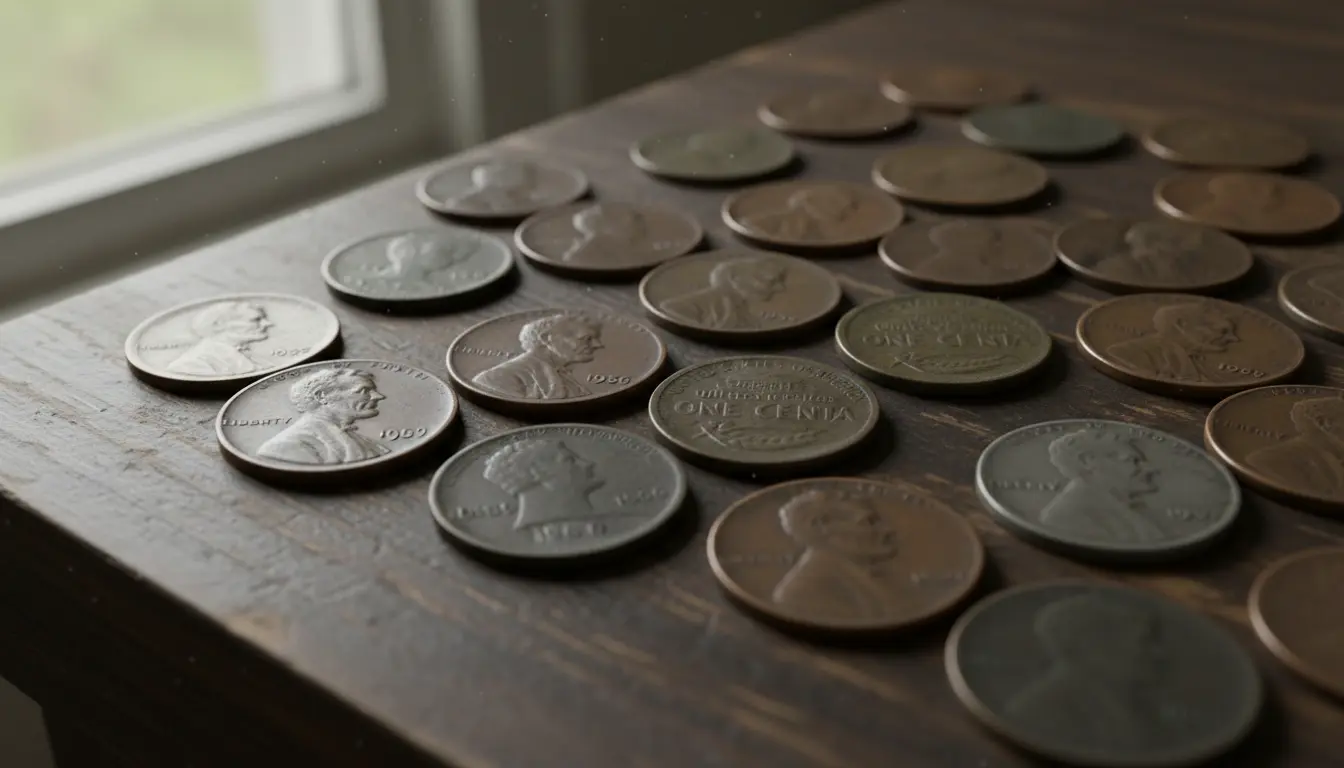
Collecting rare pennies from the twentieth century can be both rewarding and profitable. This guide highlights ten important coins to know, how to identify them, and realistic value ranges for collectors and sellers.
Top 10 Rare Pennies of the Twentieth Century
1. 1909-S VDB Lincoln Cent
The 1909-S VDB is the first Lincoln cent with designer Victor D. Brenner’s initials on the reverse. San Francisco minted relatively few, making high-grade examples scarce.

Look for the prominent VDB initials at the bottom of the reverse and sharp strike details on the wheat stalks. Values vary from a few thousand dollars for high mint state examples to lower amounts for well-worn pieces.
2. 1909-S Lincoln Cent (no VDB)
Also scarce, the 1909-S without VDB differs by the absence of Brenner’s initials and is sought after by date-run collectors. It’s rarer in higher grades because many were circulated.
Collectors pay premiums for nice surfaces and original luster; certified grades help establish market value.
3. 1914-D Lincoln Cent

The 1914-D has a low mintage from the Denver Mint and is a cornerstone for advanced collections. The D mintmark under the date is the key identifier.
Even well-worn examples command sizable prices; uncirculated pieces can reach into five figures depending on grade.
4. 1922 No D Lincoln Cent (plain)
The 1922-D often appears as a plain 1922 without a visible mintmark due to a weak or missing punch. True 1922 plain cents (no mintmark struck) are extremely rare and highly collectible.

Authentication is essential; grading services can verify whether a coin is an original plain strike or a damaged/masked mintmark.
5. 1931-S Lincoln Cent
1931-S is a key date in the Lincoln wheat cent series because of its low mintage from San Francisco. High-grade survivors are uncommon.
Condition matters: a clean XF/AU example will fetch much more than a heavily worn coin. Collectors often seek certified pieces for accuracy.
6. 1943 Copper Lincoln Cent
Most 1943 cents were struck in steel to conserve copper for wartime needs. Copper examples exist due to leftover planchets and are extremely rare.
Because of value and counterfeiting risk, professional authentication is mandatory. Genuine copper 1943 cents have sold for tens to hundreds of thousands of dollars at auction.
7. 1955 Double Die Obverse Lincoln Cent
The 1955 doubled die obverse shows clear doubling on Lincoln’s date and motto, creating a dramatic visual error. It’s one of the most famous error coins for mid-century collectors.
Condition and strike clarity drive value; certified examples can sell for high prices depending on grade and doubling severity.
8. 1969-S Doubled Die Obverse Lincoln Cent
This San Francisco doubled die is rare and highly desirable when doubling is strong on Lincoln’s portrait and date. Look for clear, misplaced elements on the obverse.
Due to its rarity, certification is essential. Auction results vary widely based on the degree of doubling and preservation.
9. 1972 Doubled Die Obverse Lincoln Cent
The 1972 doubled die obverse is a popular modern error with noticeable doubling on the date and inscriptions. It’s easier to spot and more affordable than earlier rarities, but premium examples still command significant prices.
Collectors should compare suspected doubled dies to reliable reference images and, if valuable, obtain grading verification.
10. 1992 Close AM Lincoln Cent
A modern variety, the 1992 Close AM (reverse) shows the A and M of AMERICA close together. It’s not as rare as the earlier keys, but certified mint state examples can be collectible.
Variety collectors track small die differences; this coin is a good example of how modern errors and varieties have collector interest.
How to Identify and Protect Rare Pennies
Identification starts with date, mintmark, and visible die characteristics. Use a loupe or magnifying glass and compare with trusted references or variety guides.
For coins likely to be valuable, do not clean or buff them. Keep coins in inert holders and consider professional grading for significant pieces.
Quick Checklist for Rare Penny Hunters
- Check date and mintmark placement and clarity.
- Look for designer initials (e.g., VDB) and doubled die characteristics.
- Compare to reference photos for known varieties.
- Avoid cleaning; it can destroy collector value.
- Use third-party grading for verification when in doubt.
Some valuable pennies were found in everyday change. The 1955 doubled die was discovered by bank tellers and customers who noticed the strong doubling. Small discoveries still happen.
Case Study: Finding a 1955 Doubled Die in Circulation
A collector in the Midwest discovered a worn 1955 doubled die obverse while sorting change from an estate. After sending images to a coin forum, experienced collectors confirmed the variety and advised professional grading.
The coin, graded and authenticated, sold at auction. The sale highlighted how careful checking of common dates can reveal significant finds that reward patience and knowledge.
Practical Tips for New Collectors
Start by learning key dates and varieties from reputable guides. Join local clubs or online communities to see real examples and ask experienced collectors for feedback.
Build gradually: focus on condition, provenance, and verified authenticity rather than chasing high estimates from hearsay.
Knowing the top 10 rare pennies of the twentieth century helps prioritize what to look for in circulation and estate lots. Careful observation, conservative expectations, and professional verification will protect your investment and increase your chances of finding a true rarity.