
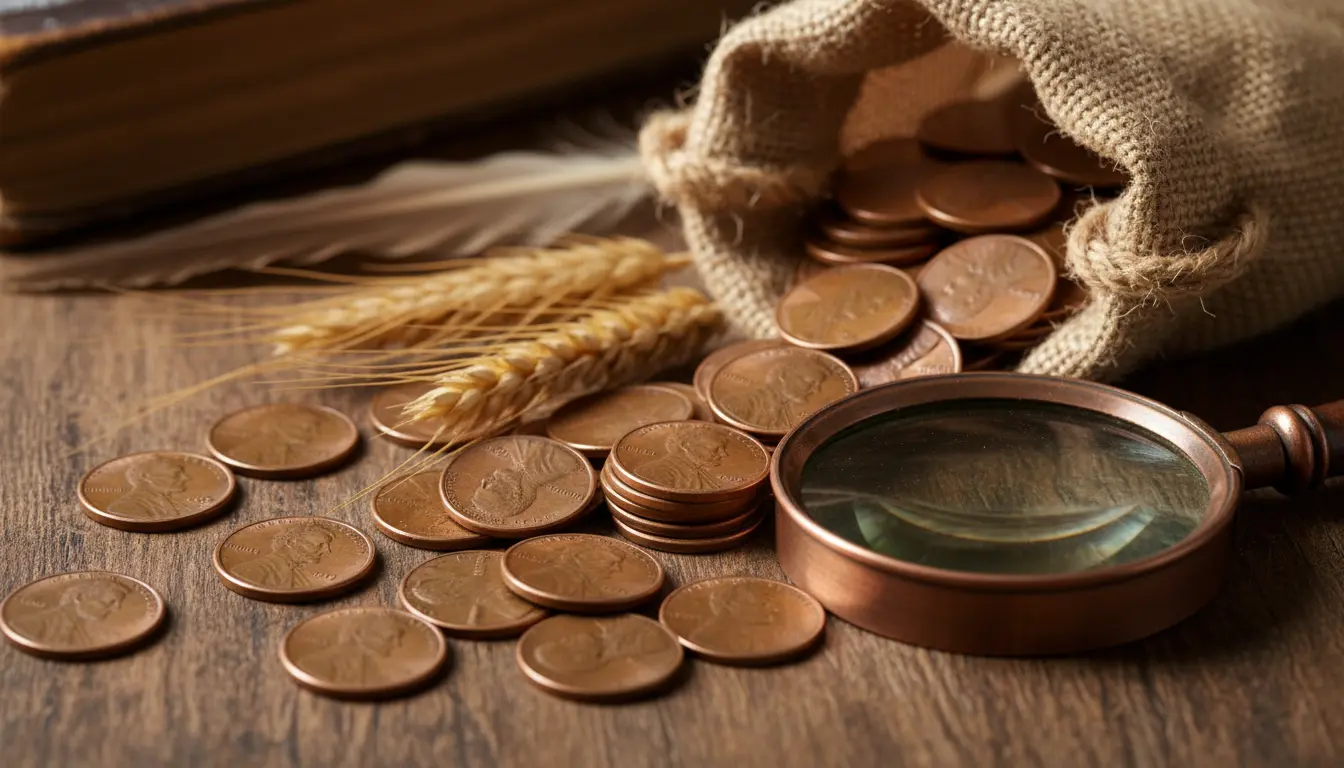
If you collect Lincoln wheat cents from 1909–1958, knowing which dates and mint marks carry value is essential. This guide gives practical grading tips, a concise collector’s value chart for key issues, and pointers on market trends to help you buy, sell, or appraise coins.
Wheat Penny Price Guide 1909–1958: Quick Overview
The majority of wheat pennies are common and worth modest sums in circulated grades. Key exceptions are low-mintage dates, popular error coins, and high-grade survivors from earlier years.

Values depend on date, mint mark, and condition. Error types and certified Mint State coins command premiums. This guide focuses on realistic market expectations and practical checks you can use at home or when shopping online.
How to Use This Wheat Penny Price Guide
- Start with date and mint mark—those two facts eliminate most uncertainty.
- Grade conservatively: most circulated coins are G4–F12 and worth face value to a few dollars.
- Look for eye appeal, full details, and any doubling or planchet errors.
Complete Collector’s Value Chart (Key Dates 1909–1958)
Below is a focused chart covering the most collectible wheat pennies. Values are approximate ranges in US dollars for common grade levels as of current market conditions. Use certified examples (PCGS/NGC) for top-end pricing.
| Date & Mint | Rarity | Typical Value: G–F | Typical Value: EF–AU | Typical Value: MS60+ |
|---|---|---|---|---|
| 1909-S VDB | Very Scarce | $900–$1,500 | $2,000–$8,000 | $8,000–$50,000+ |
| 1909-S (no VDB) | Scarce | $400–$800 | $1,200–$3,500 | $3,500–$20,000+ |
| 1914-D | Scarce | $400–$1,200 | $2,000–$6,000 | $8,000+ |
| 1922 (Plain) | Very Scarce | $200–$800 | $1,500–$5,000 | $6,000+ |
| 1931-S | Scarce | $150–$400 | $1,200–$3,000 | $4,000+ |
| 1955 Doubled Die | Error, High Demand | $200–$1,000 | $2,000–$10,000 | $10,000+ |
| 1943 Bronze (Copper) | Extremely Rare Error | — | $50,000+ | $100,000+ |
| Common Dates (e.g., 1940s–1950s) | Common | Face–$0.15 | $0.20–$1.50 | $1.50–$25 |
Note: This chart highlights key collectible issues and price bands. For a full run by grade for all dates 1909–1958, consult major pricing services or recent auction results.
Grading Basics for Wheat Penny Price Guide 1909–1958

Grade categories make the largest price differences. Learn to spot the following grades yourself before relying on professional grading for high-value coins.
- Good (G): Major details worn but date and mint mark readable.
- Fine (F) to Extremely Fine (EF): More details visible; rim and lettering clearer.
- Mint State (MS60+): No circulation wear. MS65+ coins command large premiums.
Authentication and Certification
High-value wheat pennies should be certified by PCGS or NGC. Certification confirms authenticity and secures marketplace trust. Avoid raw coins priced well above market without paperwork.
Market Trends Affecting Wheat Penny Values
Several market forces shape wheat penny pricing: collector demand, economic conditions, bullion markets, and auction activity. Error coins and certified high-grade examples have seen the strongest growth over the past decade.
- Demand for key dates remains steady among specialists.
- Certified Mint State coins show the most volatility and upside.
- Major auction records often reset retail expectations for rare issues.

The Lincoln cent design with wheat ears was produced from 1909 to 1958 and replaced in 1959 by the Lincoln Memorial reverse. Many high-value wheat cents are from the first year 1909 and from low-mintage branch mints.
Storage, Cleaning, and Preservation Tips
Never clean coins with abrasives or chemical dips. Cleaning destroys eye appeal and can reduce value dramatically.
- Store in acid-free flips or certified coin holders.
- Keep humidity low and avoid PVC plastics that off-gas.
- Handle by the edges and limit direct contact to preserve surfaces.
Real-World Example: How the Guide Helps a Collector
Case study: A new collector bought a mixed roll of wheat pennies and found a strong 1955 doubled die. Using this guide, they identified the error, submitted images to an online forum, and pursued grading. The certified coin sold for a substantial premium compared with common 1955 cents.
This example shows how basic date identification, awareness of error types, and certification improve sale prices and buyer confidence.
Where to Learn More and Keep Prices Current
Prices change with market activity. Use multiple sources: recent auction results, major dealer price lists, and certification services. Track trends for high-grade and error coins specifically.
Joining a local coin club or an online numismatic community can also provide live feedback and trading opportunities among collectors focused on wheat pennies.
Use this Wheat Penny Price Guide 1909–1958 as a practical reference when examining coins, making offers, and preparing items for sale. Focus on date, mint mark, grade, and certification to estimate fair market value.