
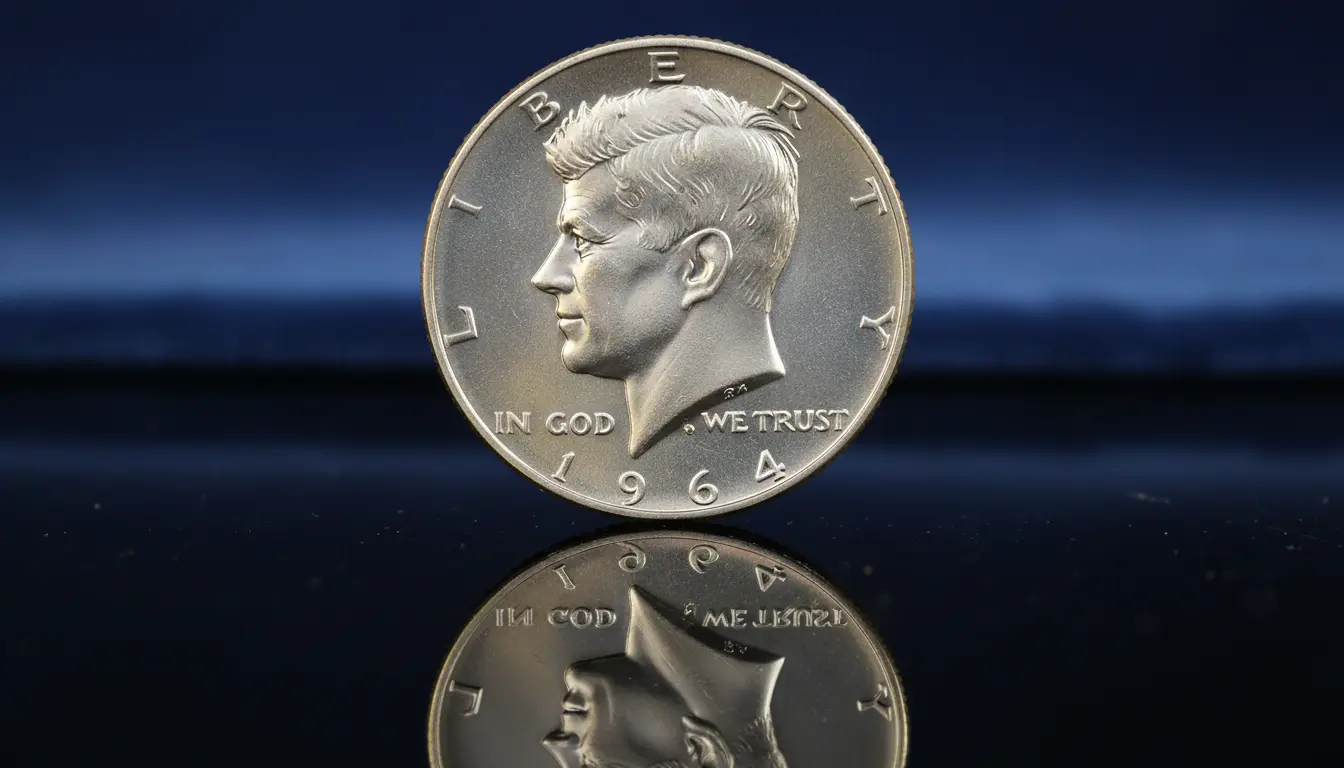
The Kennedy half dollar is one of the best-known United States coins, but you rarely see one in day-to-day transactions. This article explains the practical reasons these coins seldom move through circulation, and what to do if you find one.
Why Kennedy Half Dollars Rarely Circulate
Several factors combine to keep Kennedy half dollars out of pocket change. Production decisions by the U.S. Mint, collector and investor demand, and simple retail habits all play a role.

Understanding these causes helps collectors, casual finders, and businesses make smart choices with the coins they receive.
Mint production and distribution policies
Since their introduction in 1964, Kennedy half dollars have been produced in varying volumes and compositions. The U.S. Mint often focuses production on coins in demand for circulation, like quarters and dollar coins.
When demand for half dollars is low, the Mint limits distribution to bank orders or to special mint sets. Reduced supply to banks means fewer coins reach everyday commerce.
Composition changes and collectability

Early Kennedy halves (1964) were 90% silver, and later issues (1965–1970) used 40% silver. These silver coins were frequently removed from circulation for their metal value and collector interest.
Modern half dollars (post-1971) are clad copper-nickel but still carry the historical association that makes them attractive to hobbyists and casual hoarders.
Collector and hoarding behavior
Many collectors deliberately order rolls or bags of Kennedy halves from the Mint or buy them from dealers. Others keep any half dollars they receive because they are larger, visually distinct, and perceived as more valuable.

This hoarding reduces the number of half dollars available for everyday transactions and increases the odds you won’t find one in your change.
Practical reasons retailers and the public avoid half dollars
Retailers and consumers both influence coin circulation. Businesses do not routinely stock half dollars in cash drawers or coin dispensers. Tellers and vending machines are often configured for quarters, dimes, nickels, and dollar coins, not halves.
Because half dollars are bulky and inconvenient for day-to-day change, many cashiers simply avoid using them. Over time, this reduces their presence in circulation further.
Vending and machine compatibility
Most vending machines, parking meters, and coin-counting machines are calibrated for smaller denominations. Half dollars may jam or be rejected, so machines are not programmed to accept or dispense them.
This technical mismatch discourages merchants from stocking them and prevents bank ATMs from returning them as change.
How to identify valuable Kennedy half dollars
Not all Kennedy halves are valuable, but certain dates and mintmarks matter. Silver coins (1964 and 1965–1970 40% silver) are worth at least their metal value, often more.
Key collectible dates include early silver issues, errors, and low-mintage varieties. Condition also affects value; uncirculated or certified coins command premiums from collectors.
- 1964: 90% silver; commonly collected.
- 1965–1970: 40% silver composition.
- 1971–present: clad composition; value mainly face unless in exceptional condition.
- Look for mintmarks (D, S) and known error types.
What to do if you find a Kennedy half dollar
If you find a Kennedy half dollar, decide whether to spend, save, or sell. Your choice depends on rarity, condition, and personal preference.
For common modern halves, spending or depositing at a bank is reasonable. For silver or potentially collectible examples, consider these practical steps:
- Check the date and mintmark. Silver dates are immediately more valuable than face value.
- Compare condition to online references or price guides.
- Ask a local coin dealer for a quick appraisal if you think the coin may have premium value.
- Consider selling through a reputable dealer or online marketplace if you want cash instead of keeping the coin.
Many U.S. post-1971 Kennedy half dollars remain in Mint rolls or coin collections rather than circulating. This built-in reserve helps explain why you’re unlikely to receive one in daily change.
Real-world example: a community bank case
A regional credit union ordered several boxes of half dollars in 2018 to supply a local casino and coin-operated laundromats. After delivery, staff found most machines rejected the coins and customers rarely used them at teller windows.
The credit union returned part of the order to the Federal Reserve and sold the remaining rolls to local collectors. The effort showed how even purposeful distribution can fail when retail demand and machine compatibility are missing.
Lessons from the case study
- Even if institutions attempt to push half dollars into circulation, retailers and machines must accept them.
- Demand from businesses and consumers ultimately determines coin use more than Mint production alone.
Summary: why Kennedy half dollars rarely circulate
In short, several straightforward reasons explain why you seldom see a Kennedy half dollar in your change. Limited Mint distribution, collector hoarding, earlier silver content, and low retail demand all contribute.
Knowing these reasons helps you decide what to do when you encounter a half dollar. Check the date and condition, and then choose whether to keep it, spend it, or sell it to a collector or dealer.
If you want your coins to circulate, encourage local businesses to accept them and speak with your bank about coin orders. Otherwise, enjoy the occasional find as a small piece of numismatic history.